
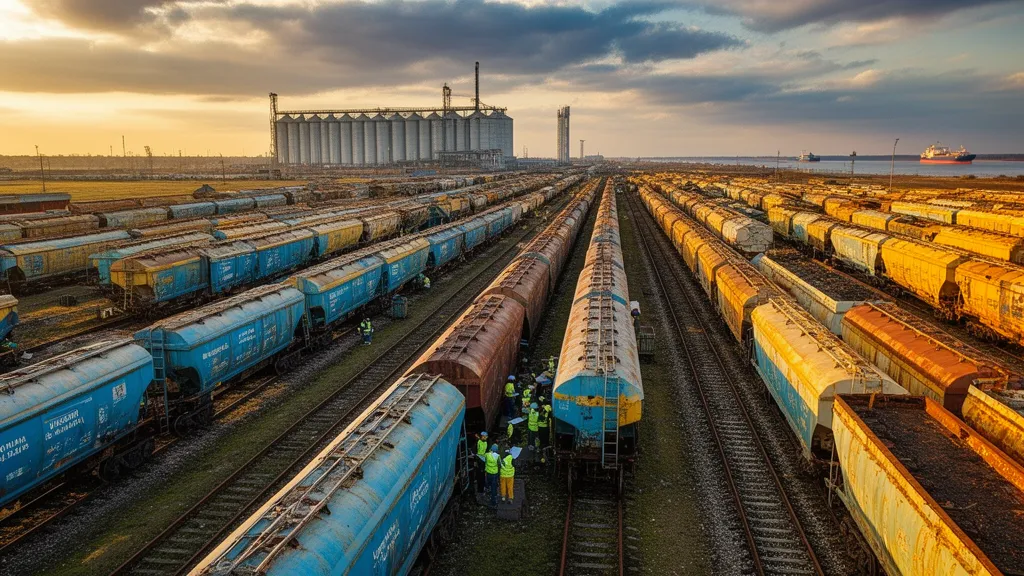
- Bearish logistics impact: Ukrzaliznytsia’s grain railcar fleet is projected to shrink by 73% from 2,600 to about 700 units by end-2025.
- Peak-season bottlenecks: Accelerated withdrawals of 500 cars per month from May–July threaten rail capacity during Ukraine’s critical grain export window.
- Funding constraints: Repairs have halted due to budget shortfalls, with long-term shipper contracts proposed as a key solution to stabilize fleet size.
- Freight cost risk: Tighter railcar availability could drive higher rail tariffs and shift flows to trucking, western border crossings, and river routes.
Ukrainian Rail Grain Capacity Set to Drop 73% by End of 2025
JSC Ukrzaliznytsia’s “Center for Transport Logistics” has confirmed a sharp reduction in its grain-carrying railcar fleet, signaling a major constraint for Ukraine’s grain export logistics through 2025.
Fleet Reduction Schedule
| Period | Planned Railcar Withdrawals |
|---|---|
| Current Fleet | ≈ 2,600 grain railcars |
| March 2025 | 200 railcars |
| April 2025 | 200 railcars |
| May 2025 | 500 railcars |
| June 2025 | 500 railcars |
| July 2025 | 500 railcars |
| Projected Fleet by End-2025 | ≈ 700 grain railcars (73% reduction from current level) |
During a March 5 online meeting with agricultural market participants, branch head Igor Tribis stated that the grain fleet currently stands at around 2,600 units but will be drawn down aggressively. Withdrawals begin with 200 railcars in March and another 200 in April, before accelerating to 500 units per month from May through July, a period that typically coincides with peak Ukrainian grain exports via rail to seaports.
Funding Constraints and Proposed Solutions
Ukrzaliznytsia cited a lack of funding as the main driver of fleet reductions, noting that repairs on grain railcars have effectively stopped due to budget limitations. Without repair financing, aging railcars are being withdrawn from service rather than overhauled, directly eroding available capacity for grain shippers.
To address this, the railway operator has proposed long-term contracts with agricultural shippers. Such contracts could provide predictable revenue streams to finance repairs and keep more railcars operational, potentially stabilizing fleet numbers above the projected 700-unit floor and ensuring capacity to meet contractual transport obligations.
Market and Logistics Impact
The planned 73% reduction in grain railcar capacity is broadly bearish for Ukrainian grain logistics and Black Sea export throughput. The steepest cuts align with the May–July export window, risking rail bottlenecks, slower wagon turnarounds, and higher freight rates as competition for remaining capacity intensifies.
Exporters and traders may increasingly pivot to alternative routes, including trucking to western border crossings, greater reliance on river transport, or multimodal solutions combining rail, river, and road. The ultimate severity of disruption will depend on whether Ukrzaliznytsia can secure sufficient long-term shipper commitments to restore and maintain more of the existing fleet.
Source: Market Data
Leave a Reply