
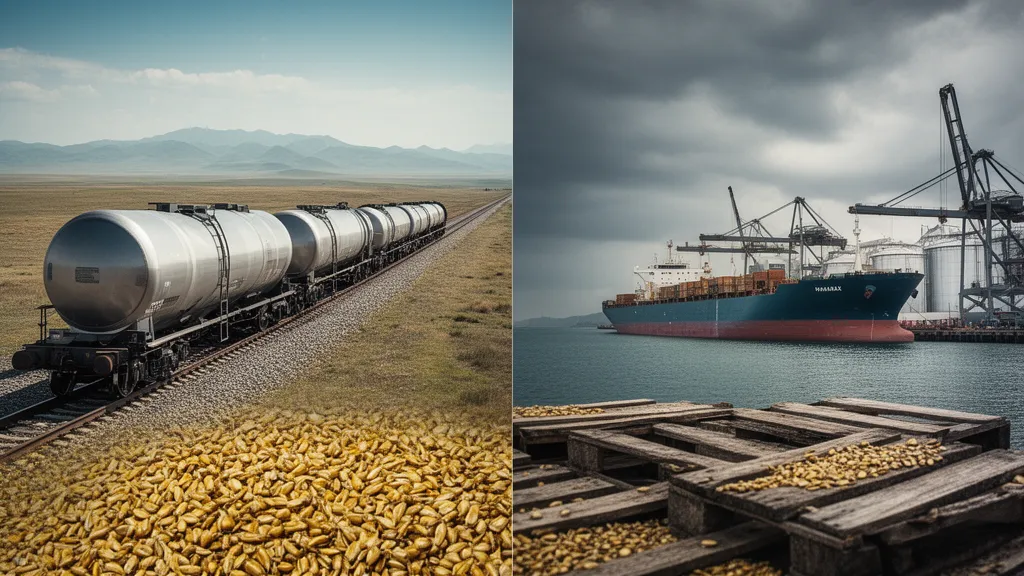
- Kazakhstan Gains Share: China’s sunflower oil imports from Kazakhstan surged, lifting its market share from 10% in 2024 to 28% in 2025 at the expense of Russian and Ukrainian suppliers.
- Demand Slump: China’s total sunflower oil imports dropped to around 500,000 tons in 2025, a multi-year low as high prices curbed buying interest.
- Record-Low Stocks: Chinese sunflower oil reserves fell to roughly 70,000 tons by early March 2026, suggesting import demand is likely to recover as inventories are replenished.
- Freight Headwinds: Increased sourcing from landlocked Kazakhstan via overland routes is structurally bearish for Black Sea–to–China maritime freight.
- Potential Partial Recovery: Any 2026 import rebound could offer limited support to Black Sea freight if Russian and Ukrainian exporters adjust pricing to regain competitiveness.
China Sunflower Oil Import Shift
China’s sunflower oil import structure shifted notably in 2025, with Kazakhstan capitalizing on a price-quality edge to expand its share of Chinese imports from 10% in 2024 to 28% in 2025. This growth has come largely at the expense of traditional Black Sea suppliers in Russia and Ukraine, whose shipments to China have been steadily declining.
At the same time, overall Chinese sunflower oil imports contracted sharply to about 500,000 tons in 2025, marking the lowest volume seen in many years as elevated prices suppressed consumption and import demand. The combination of weaker buying and supplier diversification has left Black Sea exporters facing a more challenging competitive environment in the Chinese market.
Inventory Levels and Demand Outlook
By early March 2026, China’s sunflower oil stocks had fallen to approximately 70,000 tons, a historic low that underscores how deeply inventories have been drawn down. Such critically low reserve levels point to limited scope for further destocking, implying that Chinese buyers will likely need to step up imports in 2026 to restore minimum operating stocks and meet baseline consumption needs.
Industry participants expect some recovery in Chinese sunflower oil imports over the course of 2026, though the scale of the rebound will depend on price dynamics and the relative competitiveness of Kazakhstan versus Black Sea suppliers. Any price concessions from Russian and Ukrainian exporters could help them regain lost share, but Kazakhstan’s strengthened position suggests the recovery for Black Sea flows may be only partial.
Freight and Logistics Implications
The evolving trade pattern is structurally bearish for Black Sea maritime freight linked to sunflower oil exports to China. The growing role of Kazakhstan—a landlocked origin relying on overland corridors—reduces demand for tanker and bulk freight from Black Sea ports to the Far East. While an eventual import rebound in 2026 may bring some recovery in seaborne volumes, the shift toward overland logistics means Black Sea freight is unlikely to return to past highs unless Russian and Ukrainian suppliers regain price competitiveness.
| Metric | 2024 | 2025 / Early 2026 |
|---|---|---|
| Kazakhstan share of China sunflower oil imports | 10% | 28% (2025) |
| Total China sunflower oil imports | Higher prior-year level (multi-year norm) | ≈500,000 tons (2025, multi-year low) |
| China sunflower oil reserves | Above current levels | ≈70,000 tons (early March 2026, historic low) |
Source: Market Data
Leave a Reply