
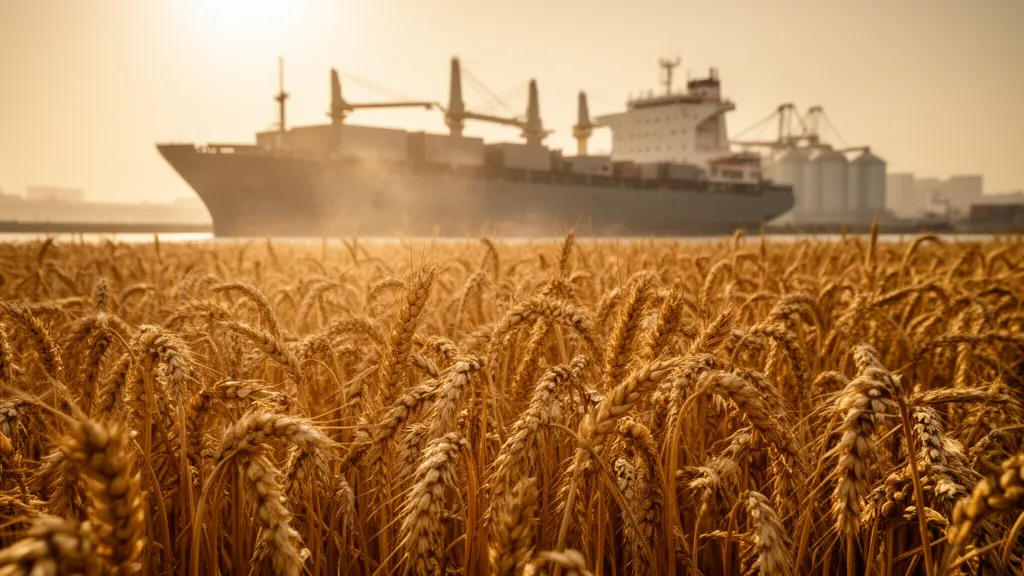
- India heat stress: Record March temperatures are hitting wheat and rapeseed during critical grain filling, threatening yield potential.
- Export risks: Lower Indian wheat output could delay the country’s planned return to export markets, tightening global supply.
- Price support: Potential supply disruption from the world’s second-largest wheat producer is broadly supportive for global wheat prices.
- Black Sea benefit: Reduced Indian competition may be bullish for Black Sea wheat exporters targeting Asian and Middle Eastern buyers.
India Heat Wave Threatens Winter Crop Yields
Meteorologists are forecasting one of the hottest March periods on record across India, with above-average temperatures concentrated in key wheat and rapeseed-growing states. The heat wave coincides with the grain filling and ripening stages of winter crops, when elevated temperatures can inflict maximum yield damage.
India, the world’s second-largest wheat producer and the largest importer of vegetable oils, had been targeting a record harvest to facilitate the resumption of wheat exports and to curb palm, soybean, and sunflower oil imports. Wheat and rapeseed were sown between October and December on record acreage for the 2026 harvest, amplifying the stakes of current weather risks.
Ashwini Bansod, Vice President of Commodity Research at Phillip Capital India, notes that sustained high temperatures through the first half of March could significantly intensify heat stress on crops that typically require relatively cool conditions throughout their growth cycle. Prolonged warmth during this period would likely cap yield potential despite expanded planted area.
Market Impact: Bullish for Black Sea Wheat
Weather-driven production risks in India are emerging as a supportive factor for global wheat markets, particularly for Black Sea exporters. Should Indian wheat yields underperform, the country may postpone its return to export markets, limiting additional supply to the global balance sheet.
At the same time, any reduction in domestic rapeseed output would sustain India’s strong import demand for vegetable oils, indirectly tightening oilseed and vegetable oil markets. For Russian and Ukrainian wheat, reduced competition from India in key Asian and Middle Eastern destinations could improve pricing power and market share.
The situation underlines weather risk as a critical supply variable. While initial forecasts pointed to comfortable global wheat availability on the back of optimistic production expectations, India’s heat wave introduces renewed upside risk for prices if final yields fall short of earlier projections.
Source: Market Data
Leave a Reply