
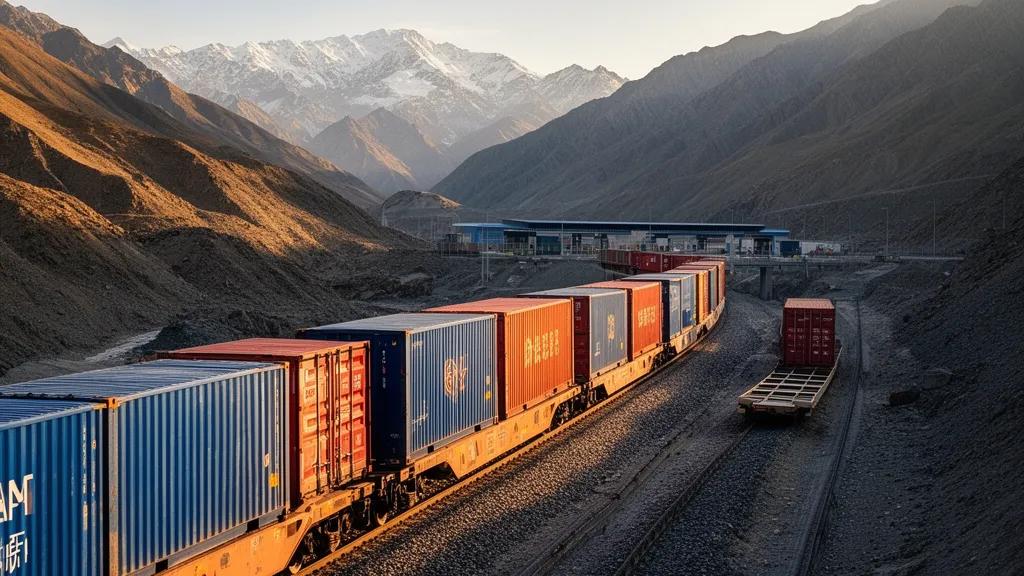
- Policy Duration: Kyrgyz Railways will apply substantial freight discounts from February 1 through December 31, 2026, under Order No. 38 of the Ministry of Transport and Communications.
- 29% Short-Haul Discount: All export, import, and domestic rail shipments over 1–30 km within Kyrgyzstan receive a 29% tariff reduction, regardless of rolling stock ownership or payment structure.
- 35% Transit Discount: Containerized cargo from China to Uzbekistan and Turkmenistan via the Osh exp. – Karasu-Uzbek exp. corridor benefits from a 35% discount, excluding bulk oil and hazardous materials.
- $75 Empty Return Rate: A special flat rate of $75 is set for empty container returns on the Karasu-Uzbek exp. – Osh exp. section, supporting repositioning of private universal containers from Uzbekistan and Afghanistan back to China.
- Impact on Grain Logistics: The measures are neutral to marginally positive for Black Sea grain logistics, primarily improving cost competitiveness for containerized agricultural flows rather than bulk grain shipments.
Kyrgyz Rail Freight Discount Framework
The Ministry of Transport and Communications of the Kyrgyz Republic (Order No. 38, dated February 10, 2026) has implemented a package of freight discounts effective February 1 through December 31, 2026. These measures are aimed at enhancing the competitiveness of both domestic and transit rail services across Kyrgyz territory.
For internal movements, a 29% discount applies to the transportation of all cargo types over distances of 1–30 km within Kyrgyzstan. This short-haul incentive covers export, import, and purely domestic shipments, and is agnostic to rolling stock ownership and payment arrangements, making it broadly accessible to shippers and logistics providers.
On the transit side, a 35% discount targets containerized freight originating in China and routed through the Osh exp. – Karasu-Uzbek exp. corridor toward Uzbekistan Temir Yollari stations and destinations in Turkmenistan. Eligible equipment includes 20-foot containers (with a minimum of two per platform), 40-foot containers, and oversized containers, while bulk oil and hazardous materials are explicitly excluded from these preferential tariffs.
To further support network balance, Kyrgyz Railways has set a special flat rate of $75 for empty container returns on the Karasu-Uzbek exp. – Osh exp. segment. This measure is designed to facilitate the westbound repositioning of private universal containers from Uzbekistan and Afghanistan back to China, improving the economics of two-way container flows along this corridor.
Discounts and Special Rates Overview
| Measure | Scope / Corridor | Cargo Type | Rate / Discount | Validity Period |
|---|---|---|---|---|
| Short-haul freight discount | Within Kyrgyzstan, 1–30 km | All goods (export, import, domestic) | 29% discount | Feb 1 – Dec 31, 2026 |
| Transit container discount | Osh exp. – Karasu-Uzbek exp. to Uzbekistan & Turkmenistan | Containerized cargo from China (excl. bulk oil & hazardous) | 35% discount | Feb 1 – Dec 31, 2026 |
| Empty container return rate | Karasu-Uzbek exp. – Osh exp. | Empty private universal containers | $75 flat rate | Feb 1 – Dec 31, 2026 |
Implications for Regional Grain and Container Flows
For global grain markets, the impact of these measures is assessed as neutral to marginally positive. Kyrgyzstan sits outside the core Black Sea export routes, and the new incentives primarily target containerized transit rather than bulk grain volumes that dominate Black Sea shipments.
Nonetheless, the 35% discount on Chinese containerized transit and the fixed $75 empty repositioning rate modestly enhance the cost competitiveness of alternative east–west corridors through Central Asia. Traders moving containerized agricultural products and value-added food items may see incremental logistics savings, offering limited relief amid broader freight cost pressures. The main beneficiaries are likely to be intermodal and container operators rather than traditional bulk grain exporters.
Source: Market Data
Leave a Reply