
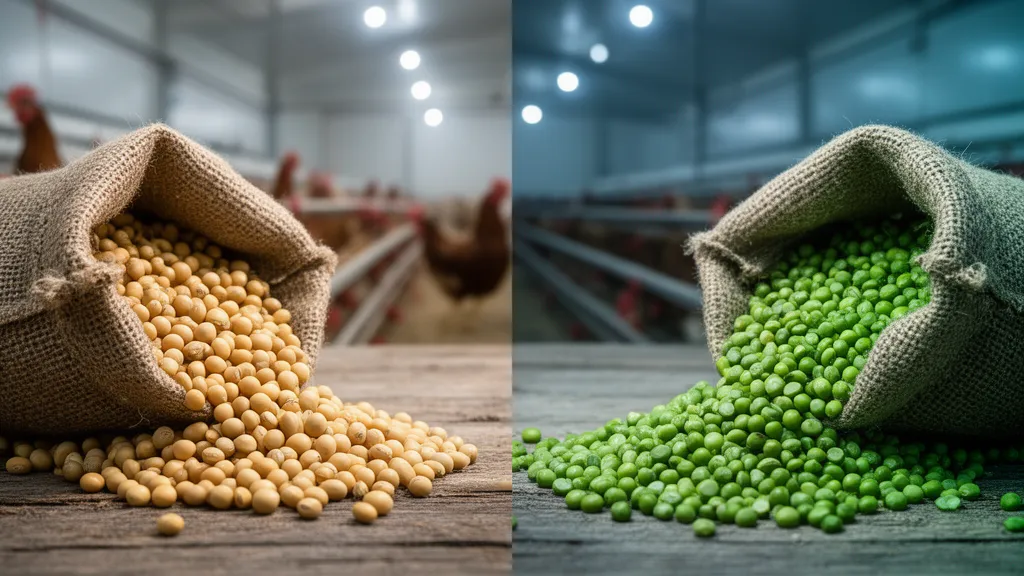
- Bearish Black Sea soybeans: Enzyme-based pea protein shows potential to displace soybean meal in Russian poultry feed, pressuring regional soybean demand and pricing.
- Efficiency gains: Pea protein concentrate delivered 12% higher chicken weight with 6% lower feed consumption versus soybean-based diets in field trials.
- Cost advantage: Ability to process lower-grade peas and lower raw material costs could reduce overall protein production expenses.
- Market signal: Russia’s shift to net soybean exporter status and record harvests have already driven a 17% decline in domestic soybean meal prices.
Russian Pea Protein Technology Challenges Soybean Meal
Russian scientists from Kazan State Agrarian University and Kazan National Research Technical University have developed an enzyme-based technology that dramatically increases protein yields from peas compared with conventional soybean processing. By breaking carbohydrate molecular bonds through targeted enzyme treatment, the process releases protein in a concentrated form and enables the use of substandard pea grain that was previously unsuitable for feed production.
In controlled field trials on 100 meat-and-egg breed chickens, birds fed pea protein concentrate achieved 12% higher body weight than soybean-fed counterparts by two months of age, while total feed consumption fell by 6%. Blood analysis confirmed the safety of the new feed and indicated improved metabolic performance, underlining its potential viability as a commercial alternative to soybean meal in poultry rations.
The economic benefits stem from lower pea raw material costs, the ability to monetize lower-grade grain, and overall reductions in protein production expenses. This innovation coincides with Russia’s transition to net soybean exporter status following record domestic harvests and reduced reliance on imports, a shift that has already contributed to a 17% decline in domestic soybean meal prices.
Market Impact: Neutral to Bearish for Black Sea Soybeans
The emergence of competitive pea-based protein concentrate introduces medium-term downside risk for Black Sea soybean demand and prices. If the Kazan technology scales successfully, Russian poultry producers could gradually substitute pea protein for soybean meal, reducing domestic soybean meal offtake and increasing the volume of soybeans and soy products available for export.
Current market signals already point to oversupply, with domestic soybean meal prices down 17% amid strong harvests and expanding export capacity. Further adoption of pea protein would likely pressure crushing margins, reshape meal procurement strategies, and influence Black Sea soymeal export flows. Traders should track commercialization timelines, adoption rates among major integrators, and any policy support for pea cultivation or processing that could accelerate the shift.
| Indicator | Value | Comment |
|---|---|---|
| Chicken weight gain vs. soybean diet | +12% | Higher body weight at 2 months on pea protein concentrate |
| Feed consumption vs. soybean diet | -6% | Lower total feed use for pea-fed birds |
| Domestic soybean meal price change (Russia) | -17% | Reflects oversupply and Russia’s shift to net exporter status |
Source: Market Data
Leave a Reply