
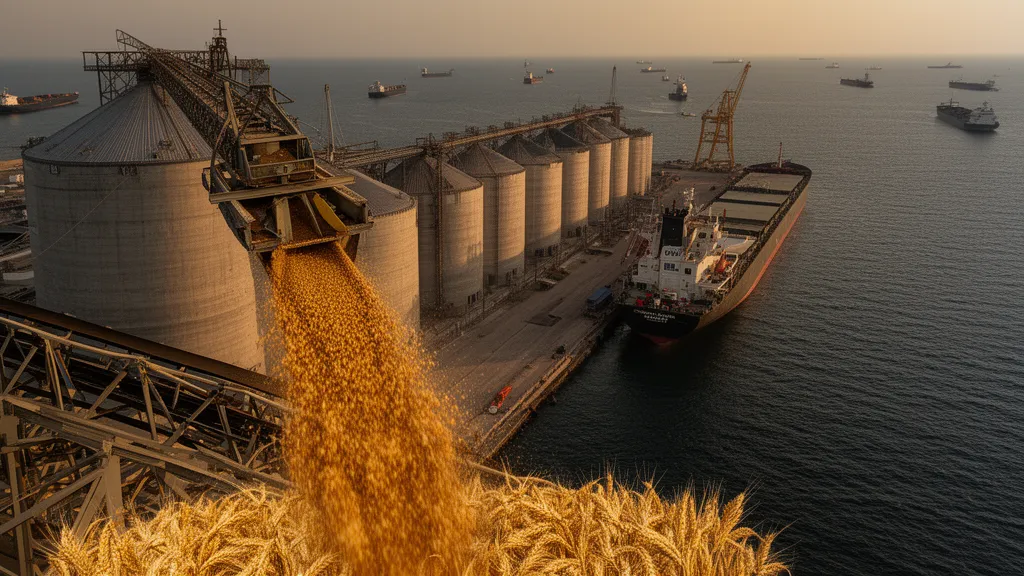
- Bearish freight outlook: Russian grain exports are running 13% behind last year, with the 20 million tonne export quota likely to be undershot by about 3 million tonnes, creating excess carryover stocks and softer demand for Black Sea freight.
- Rising domestic stocks: Grain inventories at agricultural enterprises rose 21.5% year-on-year to 28.26 million tonnes in January, signaling slower drawdown and additional pressure on export logistics and prices.
- Stronger competition: Australia and Argentina have entered key markets like Bangladesh with an additional 8 million tonnes of export potential and discounts of $7–8/tonne versus Russian wheat, eroding Russia’s price competitiveness.
- Muted internal demand: Declining flour production (‑5% in 2025), falling food grain consumption, and stagnant livestock demand limit domestic absorption, reinforcing the bearish tone for Russian wheat freight.
Russian Grain Export Outlook
Russian grain exports in the 2025–2026 season are projected at 52–55 million tonnes, modestly above the 50 million tonnes expected in 2024–2025 but potentially below the full 55 million tonne export potential. Despite a bumper harvest of about 140 million tonnes (excluding 4 million tonnes from new drought-affected regions), current shipment rates are 13% behind last year’s pace, pointing to weaker export momentum.
The Ministry of Agriculture has set a 20 million tonne export quota for the current period, up sharply from 8.8 million tonnes last year (83% fulfilled). However, market estimates suggest only around 17 million tonnes may actually be shipped under prevailing conditions, leaving roughly 3 million tonnes of excess carryover stocks. Last season’s quota structure mainly benefited large exporters, and a similar pattern may persist if smaller players struggle to place volumes in an increasingly competitive global market.
Domestic Stock and Consumption Trends
Rosstat data highlight a significant build-up in domestic grain inventories. Agricultural enterprises held 28.26 million tonnes of grain in January, a 21.5% year-on-year increase. Wheat stocks climbed 20.6% to 16.47 million tonnes, while corn inventories rose 15.9% to 3.46 million tonnes. Oilseed stocks also expanded by 21.9% to 5.76 million tonnes, including 2.14 million tonnes of sunflower (up 12.8%).
On the demand side, internal consumption remains soft. Flour production fell by about 5% in 2025, food grain usage is in decline, and livestock sector consumption is largely flat. This combination of rising stocks and tepid demand reduces the immediate need for aggressive export programs and adds to the bearish tone for logistics and freight demand from Russian ports.
Competitive Landscape and Pricing
Export competition has intensified as Australia and Argentina return to the global market with an additional combined export potential of roughly 8 million tonnes this season. In key destinations such as Bangladesh, these origins are reportedly offering wheat at discounts of $7–8 per tonne compared with Russian supplies. This price gap may force Russian exporters either to concede market share or to lower free-on-board (FOB) values, both of which would weigh on margins and shipping demand.
| Metric | Latest Value | Year-on-Year Change |
|---|---|---|
| Total grain stocks (agricultural enterprises) | 28.26 million tonnes | +21.5% |
| Wheat stocks | 16.47 million tonnes | +20.6% |
| Corn stocks | 3.46 million tonnes | +15.9% |
| Oilseed stocks (total) | 5.76 million tonnes | +21.9% |
| Sunflower stocks (within oilseeds) | 2.14 million tonnes | +12.8% |
| Export quota (current season) | 20 million tonnes | vs. 8.8 million tonnes last season |
| Expected exports under quota | 17 million tonnes | ~3 million tonne shortfall vs. quota |
| Southern Hemisphere price discount vs. Russian wheat | $7–8/tonne | More competitive offers from Australia & Argentina |
Regional Logistics and Freight Implications
The interplay of elevated inventories, quota underperformance, and discounted competition implies a weaker freight environment for Russian wheat. Shipment volumes from Black Sea ports are likely to soften through at least Q2 2025, pressuring spot and time-charter rates on traditional routes. Russian exporters are increasingly orienting flows toward the Middle East, Africa, and Southeast Asia, with key destinations including Turkey, Egypt, Iran, Saudi Arabia, Libya, Algeria, Kazakhstan, and emerging partners such as Madagascar for poultry, grain, and fertilizer exports.
Logistics coordinators and shipowners should factor in the risk of sub-quota exports, slower vessel turnaround, and potential rate renegotiations. Traders will be watching closely for any policy responses to rising carryover stocks—such as adjustments to export quotas or taxes—that could trigger a late-season acceleration in shipments and a temporary uptick in freight demand.
Source: Market Data
Leave a Reply