
- Neutral to Moderately Bullish: New winter rapeseed variety “Orlan” offers competitive yields of 61 c/ha and 95–100% winter hardiness, supporting long-term production growth.
- Structural Support: Belarus advances 145 winter and 68 spring hybrids, with seven under state testing, reducing reliance on imported genetics.
- Premium Segment Growth: High-oleic variety “Rodnik” targets value-added crushing demand, complementing high-yield “Cardinal” and strengthening the export profile.
- Pipeline Visibility: Additional hybrids “Zubr,” “Znachny,” “Komandor,” “Kornet,” “Lavr,” “Aist,” and “Almir” broaden the medium-term seed portfolio into 2025–2027.
Belarus Rapeseed Variety Development Overview
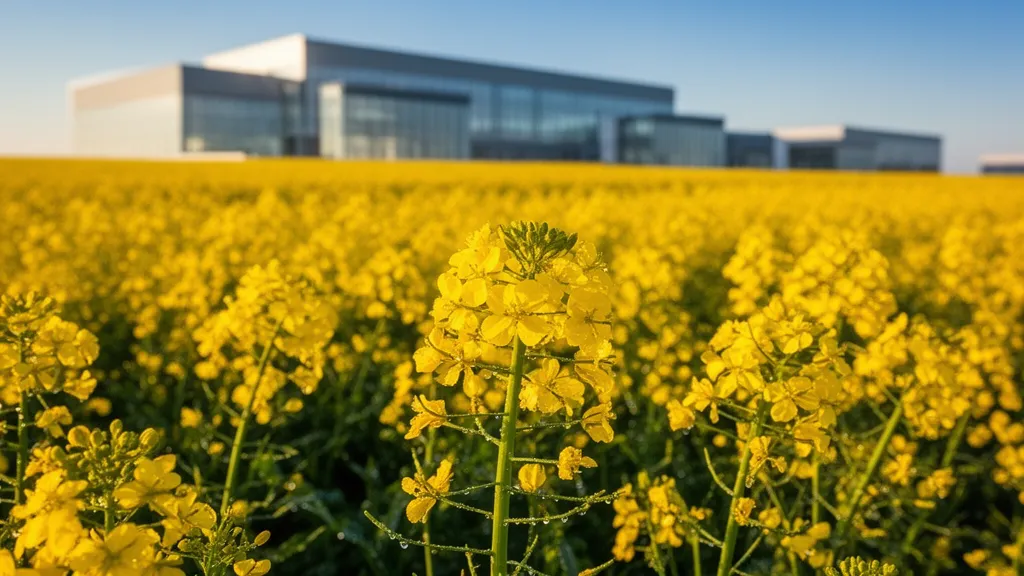
Belarus has registered a new winter rapeseed variety, “Orlan,” for commercial release in 2026. Developed by the Scientific and Practical Center for Agriculture of the National Academy of Sciences of Belarus, “Orlan” delivers average yields of 61 centners per hectare and features outstanding winter hardiness estimated at 95–100%. The variety is resistant to phoma and key leaf and stem diseases, and it also shows improved lodging and shattering resistance, enhancing its suitability for intensive production systems.
According to Yadviga Pilyuk, head of the oilseed crops department, “Orlan” has already entered seed production and will serve as a basis for further hybrid development. The center is currently evaluating 145 winter and 68 spring rapeseed hybrids, with seven candidates already submitted for state testing. This pipeline underscores Belarus’s strategic push to build a competitive domestic breeding platform capable of challenging foreign genetics.
Performance of Existing Rapeseed Varieties
Previously released winter varieties “Cardinal” and “Rodnik” have substantially outperformed expectations, jointly reaching 395% of their planned two-year introduction targets. “Cardinal” delivers yields around 60 centners per hectare, while “Rodnik” combines solid agronomic performance with elevated oleic acid content, positioning it for premium edible oil markets comparable in quality to olive oil. Spring varieties “Jaguar” and “Gelius” are also moving into active commercial use, expanding the range of options for producers across different climatic and planting windows.
| Variety / Hybrid | Type | Key Attribute | Reported Yield (c/ha) | Status / Timing |
|---|---|---|---|---|
| Orlan | Winter | 95–100% winter hardiness; disease, lodging, and shattering resistance | 61 | Registered; commercial release from 2026 |
| Cardinal | Winter | High productivity; strong adoption | 60 | Exceeded 395% of 2-year introduction target |
| Rodnik | Winter | High oleic acid content (olive oil–like quality) | n/a | Exceeded 395% of 2-year introduction target |
| Jaguar | Spring | New spring variety entering production | n/a | Active commercial introduction |
| Gelius | Spring | New spring variety entering production | n/a | Active commercial introduction |
| Zubr, Znachny, Komandor, Kornet | Winter hybrids | Next-generation winter hybrid pipeline | n/a | Planned for testing in 2025 |
| Lavr, Aist, Almir | Spring | Spring varieties expanding portfolio | n/a | Planned for testing in 2025 |
Market Impact and Trading Implications
The overall market impact of these developments is assessed as neutral to moderately bullish over the long term. The 10-year development cycle for winter varieties signals sustained public investment in oilseed genetics and a clear policy objective to reduce reliance on imported seed. With yields around 60–61 centners per hectare, Belarusian rapeseed is becoming more competitive with Western European benchmarks, potentially justifying a gradual expansion of planted area from the 2025/26 marketing year onward.
High-oleic varieties such as “Rodnik” are particularly relevant for crushers targeting premium edible oil segments, including blends that compete with or complement olive oil. However, the immediate impact on regional pricing and trade flows is likely to be limited until seed multiplication scales and acreage expands. Traders and crushers should closely monitor official data on seed production volumes, state testing results for the seven submitted hybrids, and the rollout of the 2025 testing cohort, as these will determine how quickly Belarusian rapeseed can gain share in the Black Sea oilseeds complex.
Source: Market Data
Leave a Reply