
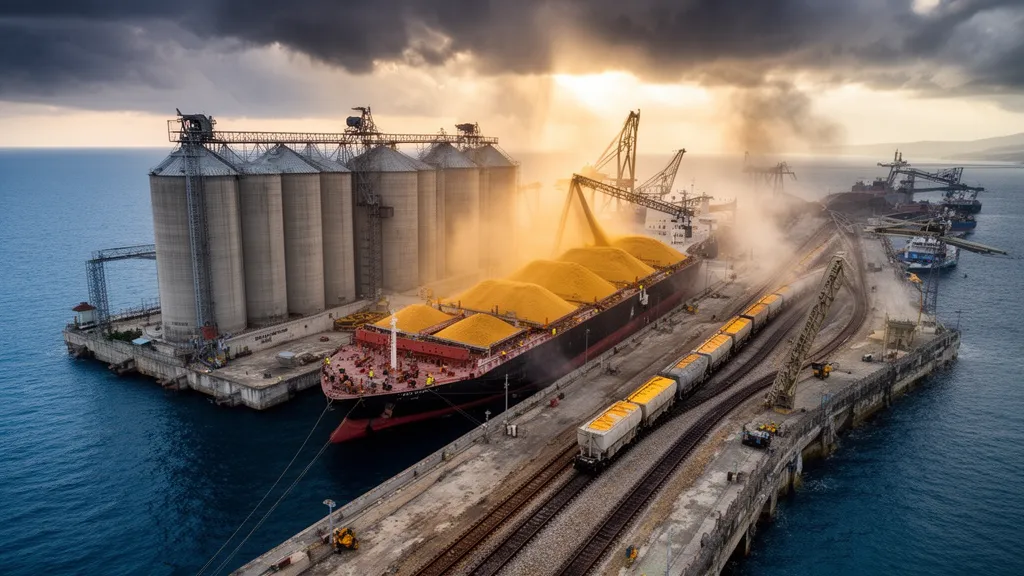
- Operational Resilience: Despite heavy damage to 686 port facilities and 150 civilian vessels, Ukraine maintains six operational seaports and a functioning maritime export corridor.
- Sustained Grain Flows: The Ukrainian Maritime Corridor has moved 173 million tons of cargo, including over 103 million tons of grain, supporting continued export availability.
- Logistical Risk Premium: Extensive damage to rail and port infrastructure, plus ongoing attacks, is likely to keep Black Sea freight rates and insurance costs elevated.
- Freight Market Tone: Overall impact is neutral to moderately bullish for freight rates as constrained capacity offsets continued export flows.
Ukrainian Infrastructure & Export Update
Ukrainian Deputy Prime Minister Oleksiy Kuleba reported extensive infrastructure losses since the start of the full-scale invasion. Russian attacks have damaged or destroyed 686 port infrastructure facilities and 150 civilian vessels, resulting in 224 civilian casualties, including foreign nationals. Rail infrastructure has also been a primary target, with over 4,700 attacks damaging nearly 24,000 facilities; in 2024 alone, there have been 266 recorded attacks on rolling stock and railway assets.
Despite this scale of destruction, Ukraine continues to operate six functional seaports. The Ukrainian Maritime Corridor has enabled the export of 173 million tons of cargo since its launch, of which grain shipments account for more than 103 million tons. This underscores the resilience of Ukraine’s export infrastructure and its capacity to sustain meaningful volumes of agricultural and other cargoes to global markets.
Freight Market Impact
The net effect on freight markets is neutral to moderately bullish. On one hand, the proven ability to move over 103 million tons of grain through the corridor tempers concerns of a complete supply shock from the Black Sea region. On the other, continued attacks on port and rail infrastructure, constrained capacity, and elevated security and insurance costs all contribute to a structural risk premium in freight rates.
With six operational seaports still supporting exports, a full breakdown of supply chains has been avoided. However, traders and charterers should continue to price in higher freight and insurance costs, potential route disruptions, and delays for Black Sea origin cargoes. Forward positioning should account for the likelihood of intermittent infrastructure outages and scheduling volatility.
| Indicator | Value |
|---|---|
| Damaged/Destroyed Port Facilities | 686 |
| Damaged/Destroyed Civilian Vessels | 150 |
| Civilian Casualties in Port Attacks | 224 |
| Railway Attacks (Total Since Invasion) | >4,700 |
| Damaged Railway Facilities | ~24,000 |
| Railway Attacks in 2024 | 266 |
| Operational Seaports | 6 |
| Total Cargo via Maritime Corridor | 173 million tons |
| Grain via Maritime Corridor | >103 million tons |
Source: Market Data
Leave a Reply