
- Policy shift likely: Kazakhstan’s APDC has recommended a gradual reduction of sunflower export duties after finding the current structure inappropriate and harmful to producers.
- Export decline risk: Sunflower seed exports from Kazakhstan are projected to fall by about 20% by the end of 2025 under existing restrictive measures.
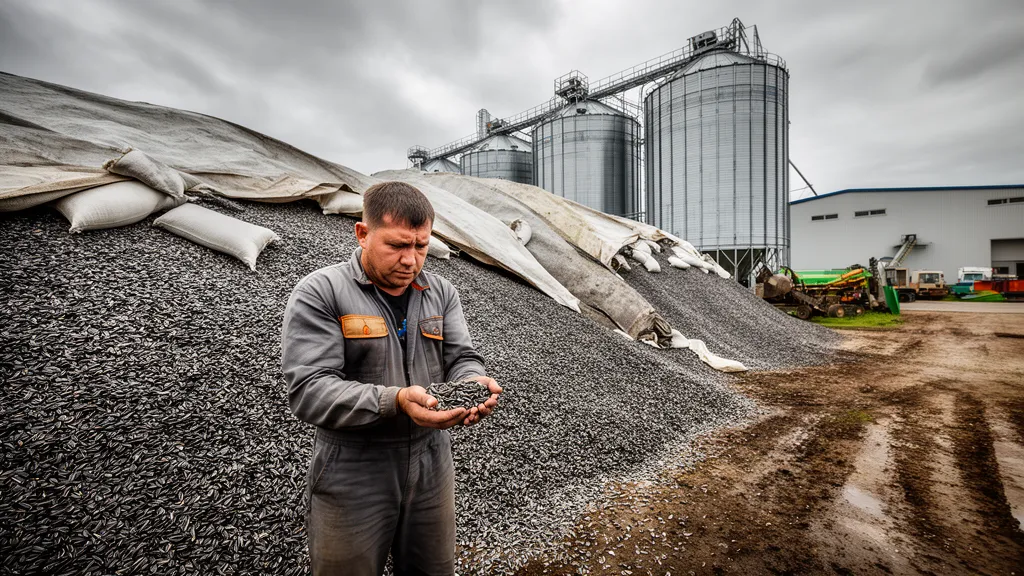
- Farmer margin squeeze: Pavlodar region growers are operating at a loss, with overflowing warehouses forcing outdoor storage of sunflower seeds.
- Processing vs. raw exports: Around 70% of sunflower exports are cold-pressed (unrefined) oil, indicating a focus on primary processing rather than higher-value refined products.
- Russian duty benchmark: Preliminary Russian sunflower oil export duties are estimated at 7,414–11,817 RUB/ton, with a 881 RUB/ton adjustment per 1 RUB exchange-rate move; meal duty remains at zero.
Kazakhstan Sunflower Market Update
The Agency for the Protection and Development of Competition (APDC) of Kazakhstan has completed an audit of the current sunflower export duty regime, concluding that the existing structure is inappropriate and significantly damaging to agricultural producers. As a result, the APDC has recommended that the government implement a gradual reduction in the export duty rate.
At a Majilis Committee on Agrarian Issues meeting, deputies highlighted the ineffectiveness of current restrictive measures, citing growing financial pressure on farmers. The APDC noted that producers in the Pavlodar region, which holds the bulk of Kazakhstan’s sunflower acreage, are operating at a loss. Export restrictions have filled storage capacity, leaving some farms no choice but to store sunflower seeds outdoors because they cannot ship raw material to neighboring markets.
Despite an increase in domestic oil production, the committee observed that about 70% of sunflower-related exports are still in the form of cold-pressed (unrefined) oil. This indicates that most output remains at the primary processing stage rather than moving into deeper, higher-value processing. Under the current policy framework, sunflower seed exports are forecast to decline by around 20% by the end of 2025.
Lawmakers stressed that while encouraging processing is a valid objective, it cannot come at the expense of farmer profitability. One deputy underscored that processing “needs to be developed,” but warned it is unacceptable to “penalize farmers by depriving them of the profit margins of export crops.”
Russian Sunflower Export Duty Parameters
In parallel, OleoScope analysts have published preliminary calculations for Russian sunflower export duties. These duties serve as a key reference point for regional trade dynamics and competitiveness versus Kazakhstan-origin seed and oil.
| Product | Preliminary Duty Range | Adjustment Mechanism | Meal Duty |
|---|---|---|---|
| Russian Sunflower Oil Exports | 7,414–11,817 RUB/ton | +881 RUB/ton per 1 RUB exchange-rate move | N/A |
| Russian Sunflower Meal Exports | 0 RUB/ton | No adjustment | Zero duty maintained |
Market Analysis and Trading Implications
Bearish for Kazakhstan Sunflower Seeds: The APDC audit confirms that current export restrictions are distorting the market and eroding farm margins, especially in Pavlodar. The projected 20% decline in seed exports and evidence of overfilled warehouses point to ongoing supply chain stress. If the government follows the APDC’s recommendation to reduce export duties, regional availability of Kazakhstan sunflower seed could rise, exerting downward pressure on prices.
However, the policy drive toward more domestic processing—even if focused mainly on unrefined oil—may continue to cap raw seed exports in the near term. Traders should closely track forthcoming government announcements on duty changes in both Kazakhstan and Russia, as adjustments will directly influence cross-border flows, crush margins, and price spreads between seed, oil, and meal.
Source: Market Data
Leave a Reply