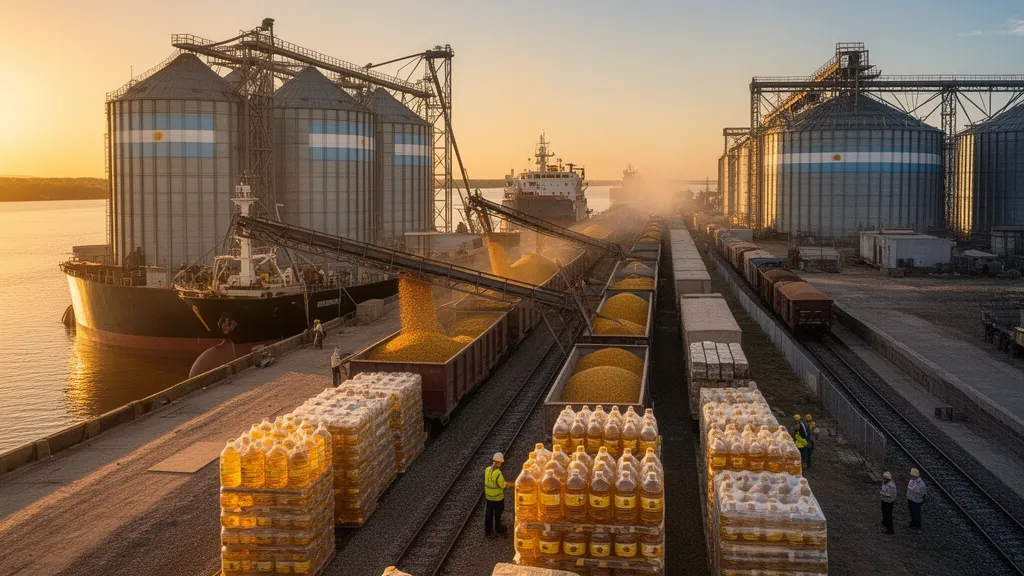
- Sunflower oil exports surge: Argentina doubled sunflower oil exports to around 100,000 tonnes in January year-on-year, supported by rising processing capacity.
- Soybean products weaken: Soybean oil exports declined to 460,000-480,000 tonnes, down from 562,000 tonnes in December and 502,000 tonnes a year earlier.
- Meal and seed exports grow: Sunflower meal shipments increased to 150,000-160,000 tonnes, while sunflower seed exports neared 100,000 tonnes, mainly to South Africa and the Black Sea region.
- Capacity expansion ahead: New sunflower crushing facilities expected to start in April should further boost oil and meal export volumes in the coming months.
- Market impact: Neutral to slightly bearish for Black Sea sunflower oil producers as Argentine supply growth adds competition but remains modest in scale for now.
Argentina Sunflower and Soybean Export Overview
Argentina’s sunflower complex posted strong growth at the start of the year, contrasting with a slowdown in soybean products. According to Oil World, sunflower oil exports reached about 100,000 tonnes in January, roughly double the level recorded in January 2024. This expansion reflects both robust international demand and increasing domestic crushing activity.
By comparison, soybean oil exports fell to an estimated 460,000-480,000 tonnes in January, down from 562,000 tonnes in December and 502,000 tonnes in the same month last year. The divergence between sunflower and soybean performance highlights a shift in Argentina’s export profile, with sunflower products increasingly taking a larger share of the oilseed export mix.
Export Volumes and Product Mix
| Product | Period | Export Volume (tonnes) | Comparison |
|---|---|---|---|
| Sunflower oil | Jan 2025 | ≈100,000 | Double Jan 2024 |
| Soybean oil | Jan 2025 | 460,000–480,000 | Dec 2024: 562,000; Jan 2024: 502,000 |
| Sunflower meal | Jan 2025 | 150,000–160,000 | Jan 2024: 105,000 |
| Sunflower seed | Jan 2025 | ≈100,000 | Exports mainly to South Africa & Black Sea region |
Sunflower meal exports mirrored the strength seen in oil, rising to 150,000-160,000 tonnes versus 105,000 tonnes in January 2024. Sunflower seed exports also approached 100,000 tonnes, with volumes directed to South Africa and the Black Sea region. Market participants expect seed exports to continue growing through February as buyers secure feedstock for their own processing industries.
Processing Capacity and Seasonal Trends
Argentina typically sees sunflower processing volumes rise seasonally during February and March. This year, the peak is anticipated in April, coinciding with the start-up of new crushing facilities. The resulting expansion in processing capacity is likely to underpin further increases in sunflower oil and meal exports over the coming months, reinforcing Argentina’s role in the global sunflower market.
As additional capacity comes online, exporters may seek to lock in forward sales, while buyers monitor basis levels and freight spreads versus Black Sea origins. The balance between domestic seed availability, processing margins, and export demand will be key drivers for pricing and flows into mid-year.
Market Impact and Competitive Landscape
The current outlook is neutral to slightly bearish for Black Sea sunflower oil producers. Argentina’s growing sunflower oil export capacity introduces incremental competition on the global market, especially as new crushing plants ramp up production from April onward. While Argentina’s volumes remain modest compared with total Black Sea output, the additional supply contributes to a more comfortable global balance sheet.
At the same time, stronger Argentine sunflower seed exports into the Black Sea region suggest firm demand for processing feedstock there. This dynamic can lend support to seed prices even as finished product margins potentially come under pressure if global oil and meal supplies continue to expand. Traders will be closely watching spreads between seed and oil, as well as differential movements between Argentine and Black Sea origins.
Source: Market Data
Leave a Reply