
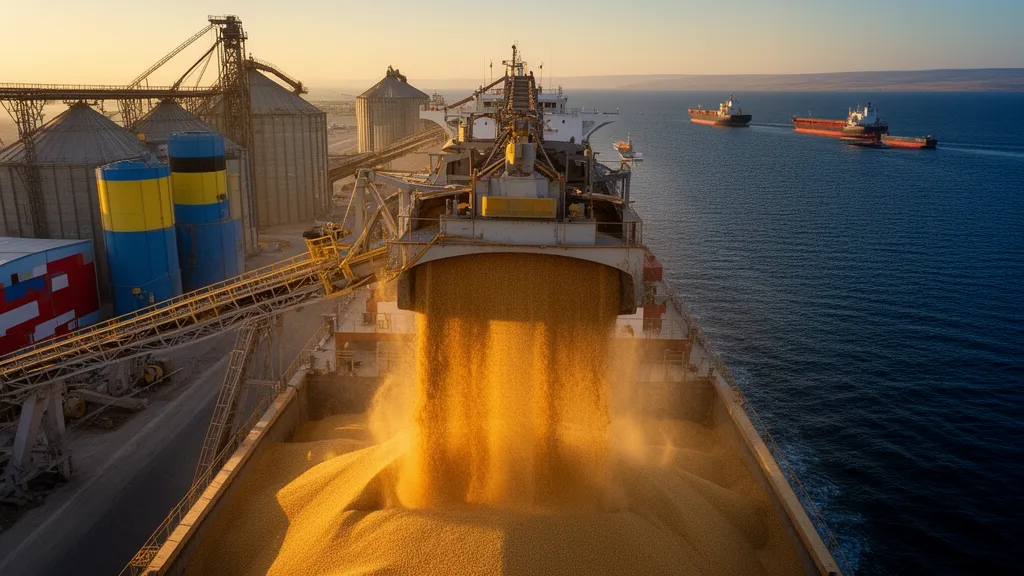
- Neutral to Bearish Ukraine: Wheat flour exports projected down 2.6% in 2025/26 MY amid a 10% drop in domestic production, limiting export growth.
- Bullish Russia: Kaluga Region agricultural exports up 10.5% to over $130 million with a target of 50% further growth by 2030.
- Structural Risk for EU: Russian fertilizers supply 23% of EU imports; potential sanctions could lift EU production costs and shift global trade flows.
Ukrainian Wheat Flour Export Outlook
Ukraine’s wheat flour exports are forecast at 65,000 tons for the 2025/26 marketing year, down 2.6% from 67,000 tons in 2024/25, according to APK-Inform. The decline reflects constrained domestic output rather than demand weakness, suggesting limited ability for Ukraine to expand share in processed wheat products.
| Marketing Year | Wheat Flour Exports (tons) | Y/Y Change |
|---|---|---|
| 2024/25 (forecast) | 67,000 | ‑ |
| 2025/26 (forecast) | 65,000 | -2.6% |
Current Export Performance and Destinations
From July to January, Ukraine shipped 37,500 tons of wheat flour, down 7% year-on-year. January 2025 exports were particularly weak at 4,300 tons, a 23% decline versus the same month a year earlier, underscoring ongoing pressure on export volumes.
| Period | Export Volume (tons) | Y/Y Change |
|---|---|---|
| July–January (2024/25) | 37,500 | -7% |
| January 2025 | 4,300 | -23% |
Moldova remains the leading buyer, taking 30% of Ukrainian flour exports, followed by Palestine and the Czech Republic. However, volumes to these core outlets have slipped, while Israel and Spain modestly increased purchases, partially offsetting weakness elsewhere.
| Destination | Share of Exports | Volume (tons) | Y/Y Change |
|---|---|---|---|
| Moldova | 30% | 11,400 | -8% |
| Palestine | 20% | 7,300 | -10% |
| Czech Republic | 16% | 5,900 | -32% |
| Israel | n/a | 3,000 | Increase |
| Spain | n/a | 2,700 | Increase |
Domestic flour production fell 10% to 510,500 tons in the July–January period, reinforcing the supply-side constraint. Market participants should watch whether weaker flour output and exports translate into higher raw wheat availability for grain export programs.
Russian Agricultural Export Momentum
The Kaluga Region in Russia reported record agricultural exports exceeding $130 million, a 10.5% year-on-year increase driven by meat, oil and fat, and food processing segments. Regional authorities aim for a 50% expansion in agricultural exports by 2030, signaling long-term investment and capacity-building in value-added agrifood products.
| Region | Agricultural Exports | Y/Y Change | Target Growth by 2030 |
|---|---|---|---|
| Kaluga (Russia) | >$130 million | +10.5% | +50% |
This performance underlines Russia’s strengthening footprint in Black Sea agrifood trade. Continued growth in regional hubs like Kaluga supports a more diversified export mix beyond bulk grains, although geopolitical and sanctions-related risks remain a key overhang.
Fertilizer Trade and EU Market Risk
Russian officials highlight that Russian fertilizers account for 23% of EU mineral fertilizer imports. Proposed EU sanctions on Russian fertilizer could disrupt established supply chains, tighten regional availability, and raise input costs for European farmers, with knock-on effects for grain production and pricing.
| Market | Russian Share of Fertilizer Imports | Potential Impact of Sanctions |
|---|---|---|
| European Union | 23% | Higher production costs; supply re-routing; competitiveness shift toward MERCOSUR |
Any curbs on Russian fertilizer flows are likely to benefit alternative suppliers, particularly in MERCOSUR, and may alter global fertilizer trade routes. For Black Sea grain exporters, higher EU input costs could reduce European output over time, but sanctions-related frictions may also complicate Black Sea access to EU grain and input markets.
Market Implications
For Ukrainian wheat flour, the outlook is neutral to bearish as supply-driven constraints cap export potential despite competitive pricing. In contrast, Russian agricultural exports, supported by regional growth centers and a strong position in fertilizers, remain fundamentally bullish but subject to policy risk. Potential EU sanctions on fertilizers introduce a new layer of market uncertainty that could reshape cost structures and trade patterns across the grain and input complex.
Source: Market Data
Leave a Reply