
- Neutral: Russian wheat, barley, and corn export duties remain at zero for February 11–17, 2026, sustaining Russia’s competitive export position without altering current trade incentives.
- Mixed price action: Indicative wheat prices are broadly steady, while barley shows a sharp increase and corn eases, hinting at shifting domestic supply-demand balances across feed grains.
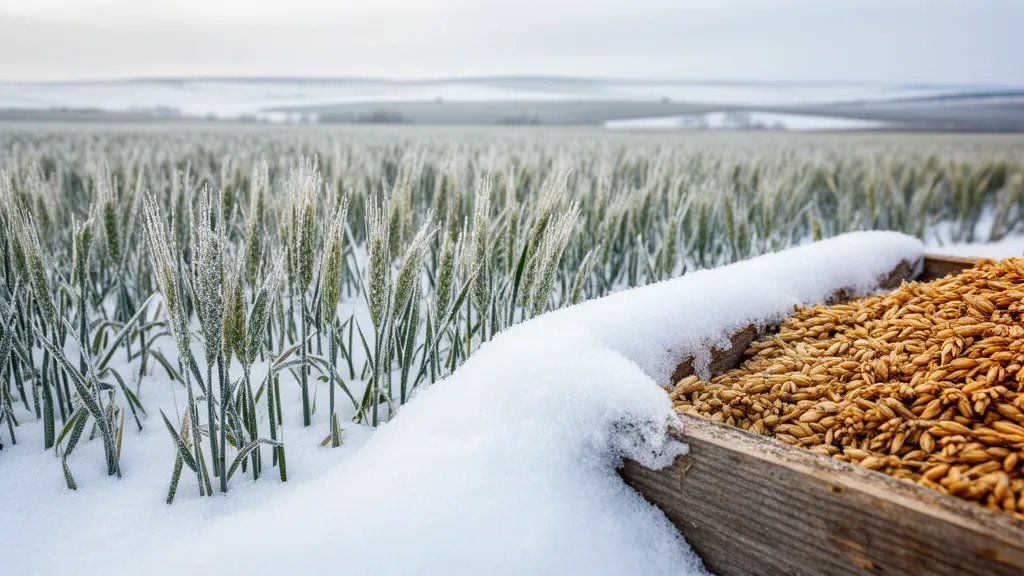
- Stable crop outlook: Bashkortostan’s winter wheat shows around 95% plant viability with adequate snow and ice protection, supporting expectations for solid 2026 production.
- Risk factor: Detected French and Hessian fly larvae raise pest-pressure concerns, making timely spring insecticide treatments critical to safeguarding yield potential.
Export Duty and Price Update
The Russian Ministry of Agriculture will keep export duties for wheat, barley, and corn at zero for the week of February 11–17, 2026. This continues the operation of Russia’s grain damper mechanism, which applies floating duties while channeling revenues into agricultural subsidies, without changing the current export cost structure for these key grains.
| Commodity | Indicative price (US$/ton) | Previous (US$/ton) | Change (US$/ton) |
|---|---|---|---|
| Wheat | $227.4 | $227.3 | +0.1 |
| Barley | $231.1 | $202.0 | +29.1 |
| Corn | $197.9 | $203.7 | -5.8 |
The marginal uptick in wheat’s indicative price signals broadly stable fundamentals, while the sharp $29.1/ton rise in barley suggests tighter availability or firmer domestic demand. Corn’s softer indicative price points to comparatively weaker conditions in that segment.
Bashkortostan Winter Wheat Field Conditions
Monitoring in Bashkortostan’s Kuyurgazinsky District at NPO Meleuz LLC and the Kirov Agricultural Production Cooperative shows satisfactory winter wheat conditions. Snow depth ranges from 20 to 35 cm and the ice crust is 7–8 cm above the tillering node, a safe level that protects crops from severe frost, according to district head Bulat Gafarov.
Monolith-method assessments indicate up to 5% plant mortality, implying around 95% viability with uniform regrowth, which underpins expectations for stable 2026 production out of the region.
Pest surveys identified French fly and Hessian fly larvae at roughly 15–20 specimens per square meter. Specialists recommend early spring insecticide applications to prevent these pests from eroding yield potential as temperatures rise.
Market Implications
Zero export duties leave Russia’s near-term wheat trade flows largely unchanged and maintain its competitive stance in global markets. The stronger barley price may reflect tightening supply or firmer domestic consumption, while corn’s softer pricing highlights comparatively weaker demand or more comfortable stocks.
On balance, the update is neutral for near-term wheat market sentiment: production prospects remain solid, but pest pressure in Bashkortostan and other regions will need close monitoring as a potential downside risk to yield if not properly managed.
Source: Market Data
Leave a Reply