
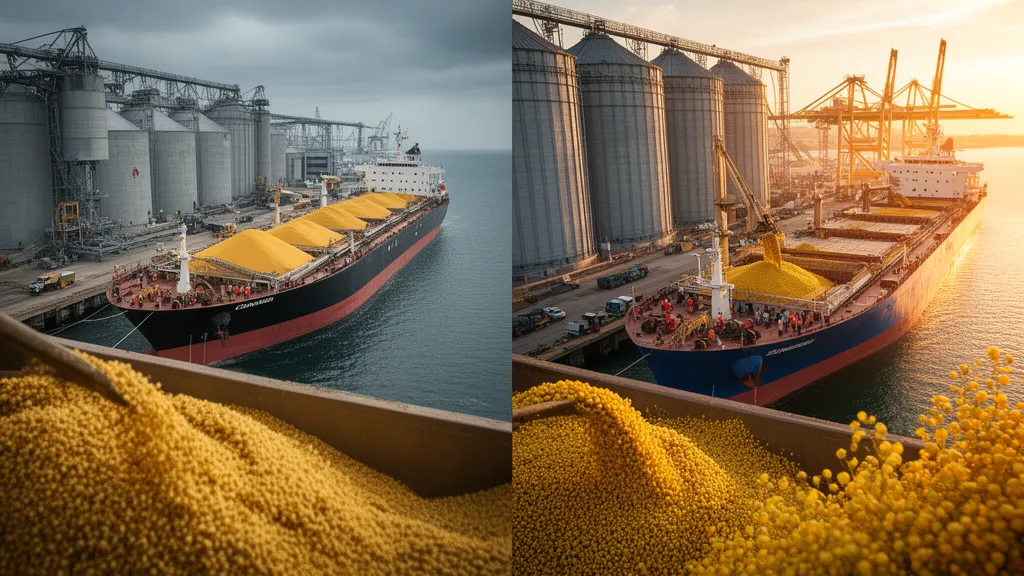
- Canadian canola exports to China plunged 92% in Aug–Nov 2025 to 0.2 million tonnes, hit by elevated Chinese import duties.
- Russia captured dominant share of China’s rapeseed oil imports, rising from 2% in 2017 to 59% in 2025, while Canada’s share fell from 94% to 6%.
- Canadian canola meal flows were successfully redirected, with U.S. imports hitting a record 1.42 million tonnes and additional gains in the EU, UK, Vietnam, Thailand, and South Korea.
- Black Sea exporters benefit in the near term, but March 2026 tariff relief for Canadian rapeseed could re‑tighten competition in China and Europe.
Market Update: Canadian–Chinese Rapeseed Trade Disruption
Oil World reports a dramatic realignment in rapeseed trade flows early in the 2025/26 season. Canadian canola shipments to China collapsed to 0.2 million tonnes in August–November 2025, a 92% drop from 2.6 million tonnes in the same period a year earlier. The contraction is directly linked to elevated Chinese import duties on Canadian rapeseed, which sharply curtailed Canada’s competitiveness in this key destination.
Trade normalization is expected to begin after March 1, 2026, when a bilateral agreement to reduce and partially eliminate these tariffs comes into force. Until then, China is relying more heavily on alternative origins for rapeseed and rapeseed oil, notably the Black Sea region. In contrast to rapeseed, Canadian soybean exports to China strengthened, reaching 1 million tonnes in the period, up 48% year-on-year and partially compensating exporters for lost rapeseed volumes.
Shift in Global Rapeseed and Meal Flows
Canadian exporters have redirected significant canola meal volumes from China to alternative markets. U.S. imports of Canadian canola meal surged to a record 1.42 million tonnes in August–November 2025, supported by aggressive pricing from Canadian processors. Additional demand from the European Union, United Kingdom, Vietnam, Thailand, and South Korea has collectively offset a 0.7 million tonne reduction in Chinese meal purchases, limiting downstream pressure on Canadian crush margins.
Russia has emerged as the key winner in China’s rapeseed oil market. Russian rapeseed oil exports to China reached 1.34 million tonnes in 2025, enabling Russia’s share of Chinese rapeseed oil imports to jump from just 2% in 2017 to 59% in 2025. Over the same period, Canada’s share collapsed from 94% to 6%, underlining a structural shift in China’s sourcing preferences away from Canadian supply and toward geographically closer, competitively priced Black Sea origins.
| Flow / Market | Period / Year | Volume / Share | Year-on-Year Change |
|---|---|---|---|
| Canadian canola exports to China | Aug–Nov 2025 | 0.2 million tonnes | -92% (from 2.6 million tonnes) |
| Canadian soybean exports to China | Aug–Nov 2025 | 1.0 million tonnes | +48% YoY |
| Canadian canola meal exports to U.S. | Aug–Nov 2025 | 1.42 million tonnes | Record high |
| Reduction in Canadian meal exports to China | Aug–Nov 2025 | -0.7 million tonnes | Partly offset by other markets |
| Russian rapeseed oil exports to China | 2025 | 1.34 million tonnes | Strong increase vs. prior years |
| Russia share of China rapeseed oil imports | 2017 → 2025 | 2% → 59% | +57 percentage points |
| Canada share of China rapeseed oil imports | 2017 → 2025 | 94% → 6% | -88 percentage points |
Black Sea Market Impact: Neutral to Slightly Bullish
The reorientation of Chinese rapeseed and rapeseed oil demand toward Russian and broader Black Sea suppliers enhances the region’s strategic position in Asian oilseed trade. With Canadian volumes constrained by tariffs, Black Sea exporters face reduced competition in the Chinese rapeseed complex, supporting crush margins and export basis levels in the near term.
However, the anticipated tariff reduction from March 1, 2026, could allow Canadian rapeseed flows to recover, tightening competition for both seed and oil sales into China. Traders should watch whether sustained Canadian redirection to Europe and other destinations intensifies competition with Black Sea origins in the EU market, potentially pressuring premiums there even as Asian demand remains robust.
Source: Market Data
Leave a Reply