
- Bearish for Ukrainian ag exports: Poland is pushing for automatic duties once Ukrainian imports exceed historical averages and demanding stricter quality and safety checks.
- Supportive for EU farmers: Proposal for a compensation fund and tighter monitoring aims to shield EU producers from competitive pressure in grain, sugar, and poultry.
- Policy risk for trade flows: Monthly, member state-level monitoring could trigger faster, more frequent policy responses, raising uncertainty for forward contracts and logistics via Poland.
- Logistics downside for Black Sea corridor: Potential tightening at the Polish-Ukrainian border may redirect volumes toward alternative routes, including Romanian ports.
Poland Seeks Stronger Controls on Ukrainian Agricultural Imports
Polish Agriculture Minister Stefan Krajewski announced in Brussels on January 27 that current EU measures on Ukrainian agricultural imports are insufficient and must be reinforced. In remarks to Interfax-Ukraine, he outlined a three-pillar proposal aimed at tightening oversight and mitigating pressure on EU farmers.
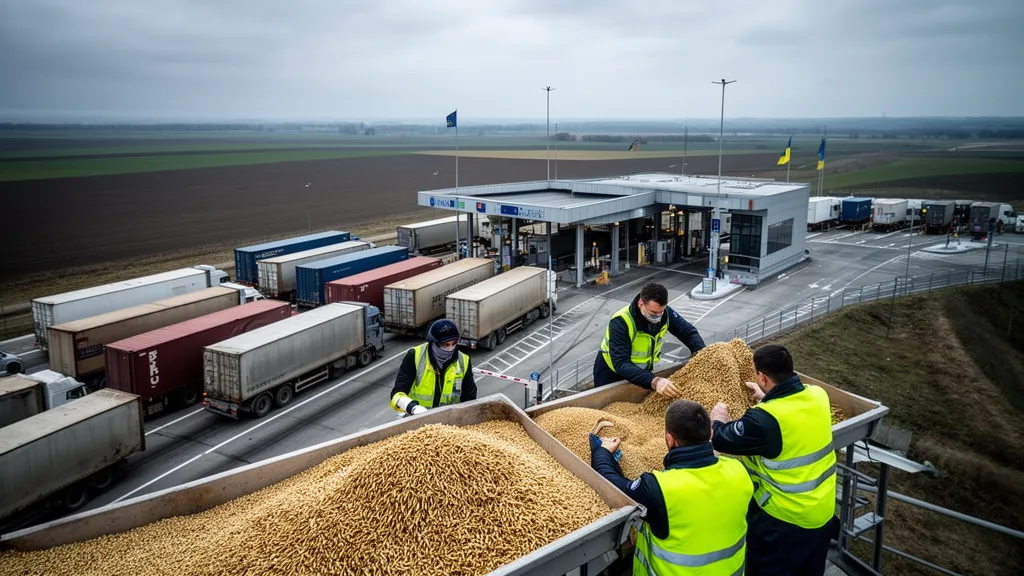
First, Poland is calling for enhanced border inspections with a stronger focus on product quality, safety, and compliance with EU standards. Second, Warsaw is proposing monthly monitoring of import volumes and their market impact on a member state basis, rejecting the current approach of relying primarily on EU-wide aggregate data. Third, the government wants to establish a dedicated compensation fund to support farmers facing losses from increased import flows under free trade agreements.
Krajewski stressed that these measures should apply not only to Ukraine but also to future free trade agreements, including potential deals with Mercosur countries. He noted that multiple EU members, particularly those exposed to competition in grain, sugar, and poultry, support stricter safeguards. The minister underscored that without reciprocal environmental and quality standards for exporters, European farmers will struggle to compete.
Market Impact and Trade Flow Implications
Neutral to Bearish for Ukrainian Origins. The Polish initiative highlights mounting political resistance to Ukrainian agricultural flows into the EU, especially via Poland’s transit corridor. While no new restrictions are yet in force, the concept of automatic duties triggered by import thresholds would, if enacted, materially affect Ukrainian grain and oilseed export routes into and through Poland.
Traders should closely track potential supply chain disruptions at Polish-Ukrainian border crossings and evaluate contingency plans, including diversifying logistics via Romanian ports and other EU entry points. The proposed monthly, member state-level monitoring could make policy more reactive to local market stress, raising uncertainty around forward sales, long-term contracts, and transit commitments routed through Poland.
Logistics and Risk Management Considerations
For market participants exposed to Ukrainian grain, oilseeds, sugar, and poultry, this policy trajectory warrants reassessment of route risk and basis assumptions. Increased scrutiny at the border may slow clearance times, elevate compliance costs, and introduce more volatility into cross-border arbitrage between Ukrainian origins and EU inland destinations.
In the near term, positioning and hedging strategies should account for potential bottlenecks in Poland, with closer monitoring of political signals from Brussels and EU capitals aligned with Warsaw’s stance.
Source: Market Data
Leave a Reply