
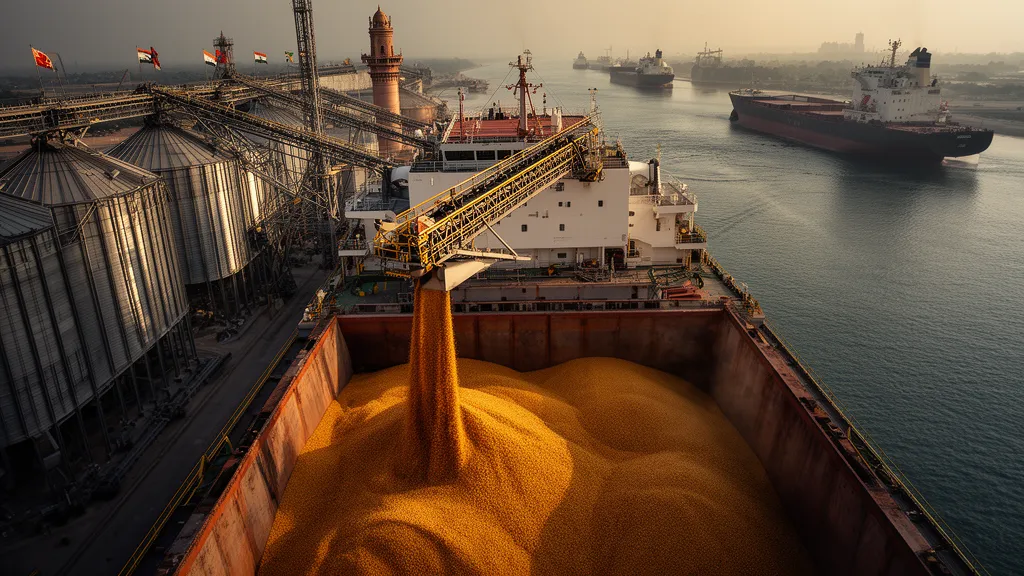
- Bearish exports: Indian soybean meal shipments fell 37.5% y/y in December 2025 to 173,000 tonnes amid weaker demand from key buyers.
- Uncompetitive pricing: Higher Indian prices versus US, Brazilian, and Argentine meal reduced price competitiveness in global markets.
- Regional shifts: UAE, Iran, Nepal, and Bangladesh remain core buyers but are trimming volumes and potentially diversifying origins.
- Black Sea neutral: Limited direct impact on Black Sea flows, but Indian price pressures highlight broader competitiveness across protein meals in 2025.
Indian Soybean Meal Exports Plunge 37.5% in December 2025
Indian soybean meal exports dropped sharply in December 2025, with shipments falling to 173,000 tonnes from 277,000 tonnes a year earlier. Data from the Soybean Processors Association of India (SOPA) show a 37.5% year-on-year contraction, underscoring India’s loss of competitiveness in the global meal market.
| Period | Exports (tonnes) | Year-on-Year Change |
|---|---|---|
| December 2024 | 277,000 | – |
| December 2025 | 173,000 | -37.5% |
Price Competitiveness and Demand from Key Buyers
SOPA links the export decline directly to pricing disadvantages. Indian soybean meal has been consistently more expensive than supplies from the United States, Brazil, and Argentina, all of which have expanded production and are positioned as dominant exporters. This price gap has eroded India’s share in traditional markets even as the UAE, Iran, Nepal, and Bangladesh remain the core buyers of Indian meal.
Demand from these long-standing customers has nonetheless weakened as buyers increasingly turn to cheaper South American and US cargoes. With US, Argentine, and Brazilian exporters expected to maintain strong shipment volumes through 2025, Indian processors face intense pressure to adjust pricing or risk further volume losses.
Implications for Black Sea Meal and Sunseed Markets
The downturn in Indian soybean meal exports is broadly neutral for Black Sea soybean meal flows, given the region’s heavier focus on sunflower meal. However, shifts in global protein meal demand toward South American and US origins could free up import capacity in some key regions. This may open incremental opportunities for Black Sea sunseed meal exporters, particularly Ukraine, if traditional Indian buyers diversify their protein meal sourcing. The pricing pressure faced by Indian suppliers highlights the central role of cost competitiveness for all origins in 2025.
Source: Market Data
Leave a Reply