
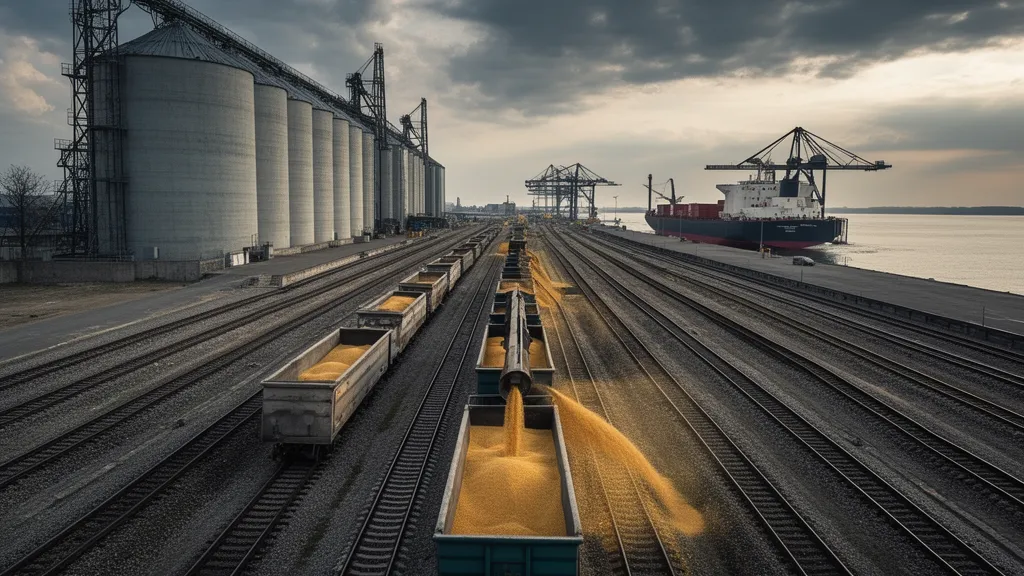
Ukrainian Port Logistics Weaken as Grain Railcar Unloading Declines
- Average daily grain railcar unloading at Greater Odesa ports fell to 1,175 units on January 22, down 33 railcars week-on-week.
- Railcars en route to Greater Odesa ports decreased to 8,337 units, indicating reduced freight flow into Ukraine’s main grain corridor.
- Danube ports saw a marginal pickup, with 55 railcars in transit versus zero the previous week, but activity remains too low to offset Odesa weakness.
- Overall logistics picture is neutral to slightly bearish for near-term Ukrainian grain freight flows and export pace.
Market Update
Daily grain railcar unloading at Greater Odesa ports continued to decline during the week ending January 22, according to Valeriy Tkachev, Deputy Director of the Department of Transportation Technology and Commercial Operations at JSC Ukrzaliznytsia.
The average daily unloading rate reached 1,175 railcars on January 22, a decrease of 33 units compared to January 15. At the same time, the number of grain railcars moving toward these ports dropped more sharply, falling by 47 units week-on-week to 8,337 units, underscoring a slowdown in incoming freight volumes.
Average daily railcar loading on the network toward Greater Odesa ports rose slightly, gaining 31 railcars to 1,109 units per day over the same period. This modest increase in loading contrasts with weakening unloading figures, hinting at growing logistical imbalances.
Freight activity at Danube ports showed slight improvement. The number of grain railcars moving toward these facilities increased to 55 units from zero a week earlier. However, the average daily grain unloading rate at Danube ports slipped to nine railcars as of January 22, down one unit from the previous week, leaving the Danube corridor unable to compensate for softer flows through Greater Odesa.
Rail Logistics Data Snapshot
| Metric | Location | January 22 | Weekly Change |
|---|---|---|---|
| Average daily grain railcar unloading | Greater Odesa ports | 1,175 railcars/day | -33 railcars |
| Railcars en route (grain) | Greater Odesa ports | 8,337 railcars | -47 railcars |
| Average daily grain railcar loading toward ports | Greater Odesa ports | 1,109 railcars/day | +31 railcars |
| Railcars en route (grain) | Danube ports | 55 railcars | +55 railcars |
| Average daily grain railcar unloading | Danube ports | 9 railcars/day | -1 railcar |
Analysis
The weakening unloading rates at Greater Odesa ports point to emerging bottlenecks or softening demand along Ukraine’s primary grain export corridor. Despite a slight improvement in daily loading toward these ports, the divergence between loaded railcars (1,109 per day) and actual unloading (1,175 per day) highlights potential operational friction and a slower export rhythm.
Danube ports show early signs of recovery, with 55 grain railcars now in transit versus none a week earlier, but the low daily unloading rate of nine railcars underscores that this corridor remains a secondary outlet. The marginal uptick in Danube activity is not yet sufficient to counterbalance the broader slowdown at Greater Odesa.
For traders, the current configuration of rail flows and port performance is neutral to slightly bearish for near-term Ukrainian grain freight. The key watchpoints are whether these trends reflect normal seasonal patterns, temporary logistical disruptions, or a more sustained weakening in Black Sea export demand.
Source: Market Data
Leave a Reply