
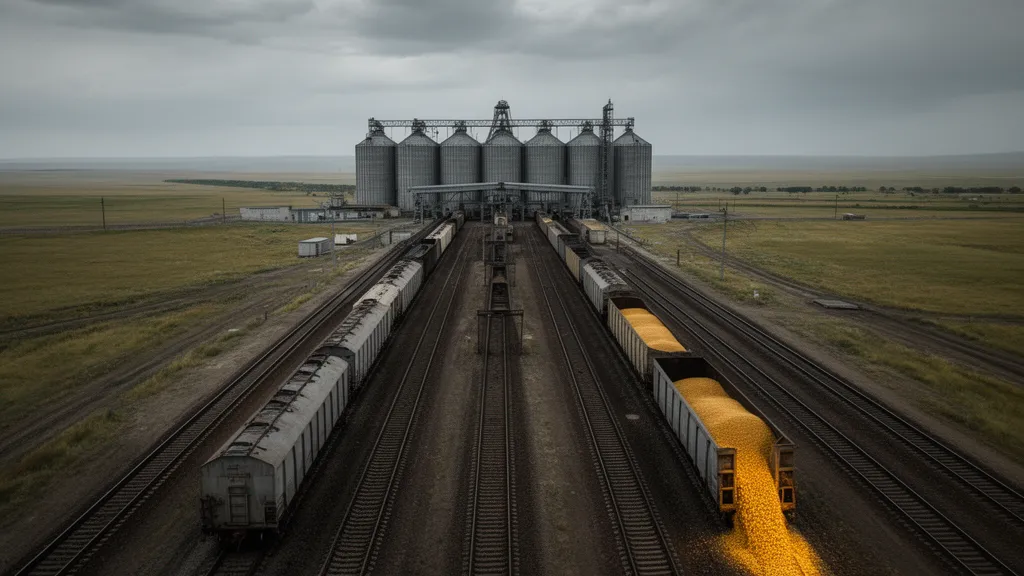
- Russian grain exports to Kazakhstan plunged 67% year-on-year to $109 million in January–November, signaling weaker regional demand.
- Wheat remains the core trade flow at 78.4% of export value, with barley, corn, and rice making up most of the remainder.
- Despite the drop in volumes, Russia still commands 83% of Kazakhstan’s grain import market, underscoring its entrenched supply position.
- Freed-up regional freight capacity is neutral to slightly bearish for Black Sea grain freight as short-haul demand into Kazakhstan softens.
Russia–Kazakhstan Grain Trade Overview
Russia sharply reduced its grain exports to Kazakhstan over January–November, with shipment values falling threefold to $109 million, a 67% decline versus the same period a year earlier. The figures are based on Kazakhstan’s customs statistics, as reported by RIA Novosti.
Wheat continued to dominate the export basket, accounting for 78.4% of total Russian grain shipments to Kazakhstan by value. Barley represented 13.2% of exports, while corn and rice contributed 3.4% and 3.2% respectively.
Despite the pronounced contraction in volumes, Russia has maintained its dominant role in Kazakhstan’s grain import structure, supplying 83% of total inbound grain. This suggests that the pullback reflects softer Kazakh demand rather than a loss of market share to competing origins.
Grain Export Composition (January–November)
| Export Metric | Value / Share |
|---|---|
| Total Russian grain exports to Kazakhstan | $109 million |
| Year-on-year change in export value | -67% |
| Wheat share of exports (by value) | 78.4% |
| Barley share of exports (by value) | 13.2% |
| Corn share of exports (by value) | 3.4% |
| Rice share of exports (by value) | 3.2% |
| Russia’s share of Kazakhstan’s total grain imports | 83% |
Freight and Market Implications
The threefold reduction in Russian grain exports to Kazakhstan is neutral to slightly bearish for Black Sea grain freight. Softer short-haul demand into Kazakhstan may free up trucks, railcars, and potentially river and coastal tonnage for alternative routes and destinations.
Because Russia still accounts for 83% of Kazakhstan’s grain imports, the decline appears driven by reduced import needs or stronger domestic production in Kazakhstan, rather than by Russian supply issues or competitor displacement. Market participants should watch for whether this demand slowdown persists, as it could reshape regional routing patterns and compress freight rates on traditional Russia–Kazakhstan corridors.
Source: Market Data
Leave a Reply