- Expanded inspections: Rosselkhozcenter plans to survey over 20.2 million hectares in 2026 across 58 regions for pests, diseases, and weeds to meet strict importer standards.
- Export growth: Flaxseed exports from Bashkortostan reached 47,000 tons in early 2025, a 46% year-on-year increase, with China as the main destination.
- Stricter compliance: Key buyers Egypt, Iran, and China enforce tight rules on weed seeds and specific pests, prompting Russia to tighten domestic controls.
- Trade implications: Enhanced phytosanitary compliance reduces the risk of shipment rejections and supports stable or mildly bullish sentiment for Russian grain and oilseed exports.
Russia Intensifies Phytosanitary Oversight
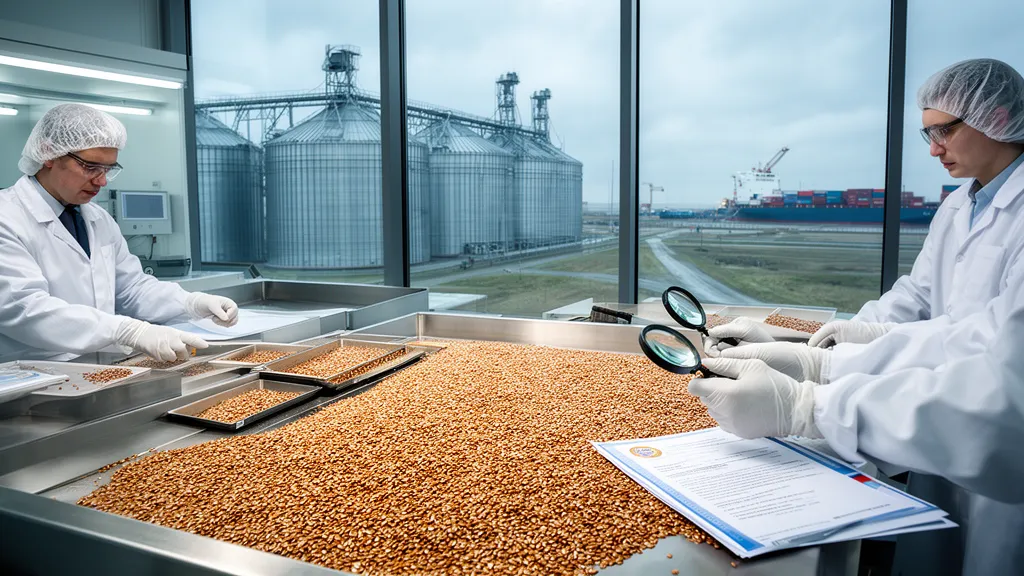
Rosselkhozcenter has unveiled an expanded phytosanitary inspection program for 2026, focusing on grain-exporting regions across Russia. The plan covers more than 20.2 million hectares, including 3.5 million hectares for pest monitoring, 6.2 million hectares for disease surveillance, and 10.5 million hectares for weed assessments. Regional agricultural authorities in 58 regions have already approved detailed action plans to implement these measures.
The initiative is designed to align Russian export controls with the increasingly strict requirements of major importers. By tightening field-level monitoring and documentation, authorities aim to reduce the risk of quarantine organisms appearing in export shipments, thereby protecting Russia’s access to premium markets.
Importer Requirements and Market Access
The Union of Grain Exporters and Producers highlights Egypt, Turkey, Iran, Bangladesh, and Libya as Russia’s primary grain buyers for the 2025/26 season. Within this group, Egypt, Iran, and China maintain especially stringent limits on weed seed content in imported cargoes. These conditions require exporters to maintain robust pre-shipment cleaning and certification protocols.
Some markets set absolute bans on specific weeds. Mexico, Israel, Malawi, and Sri Lanka require the complete absence of Cirsium seeds, while China, Kazakhstan, Belarus, Azerbaijan, and Israel enforce targeted standards for creeping bitterling and ragweed. Meeting these conditions necessitates closer coordination between farmers, grain elevators, and inspection services.
Bashkortostan Flaxseed Export Performance
In parallel with broader grain controls, Rosselkhoznadzor reports a sharp increase in flaxseed exports from Bashkortostan. Since January 2025, more than 47,000 tons of flaxseed have been inspected for shipment to neighboring and non-CIS countries, representing a 46% increase compared to the same period in 2024. China stands out as the primary destination for this flow.
Between December 24–26, 2025 alone, authorities inspected around 4,400 tons of food-grade flaxseed from the Abzelilovsky and Dyurtyulinsky districts headed to China. All 168 batches successfully passed quarantine screening, with no harmful agents detected, and received phytosanitary certificates authorizing export.
| Indicator | Period | Volume / Area | Notes |
|---|---|---|---|
| Total planned inspections (all categories) | 2026 (planned) | 20.2 million ha+ | Across 58 Russian regions |
| Area inspected for pests | 2026 (planned) | 3.5 million ha | Targeted at key grain-producing zones |
| Area inspected for diseases | 2026 (planned) | 6.2 million ha | Focus on major export crops |
| Area inspected for weeds | 2026 (planned) | 10.5 million ha | Supports compliance with weed seed limits |
| Bashkortostan flaxseed exports | Jan 2025 onward | 47,000 tons | Up 46% vs. 2024 |
| Flaxseed inspected for China | Dec 24–26, 2025 | 4,400 tons | 168 batches; all passed quarantine |
Market Impact and Trading Outlook
From a trading perspective, Russia’s intensified phytosanitary compliance is neutral to mildly bullish for grain and oilseed flows. Stricter domestic controls can lower the probability of shipment rejections or delays at destination ports, particularly in highly regulated markets such as Egypt and China. This stability supports confidence among buyers and may help sustain Russia’s competitive position against other exporters.
At the same time, Rosselkhoznadzor’s ongoing dialogue with importing countries to refine or relax certain requirements could gradually open additional lanes to emerging markets. However, the timeline for any regulatory changes remains uncertain, so traders should continue to price in current phytosanitary risks and maintain strict quality control across the supply chain.
Source: Market Data
Leave a Reply