
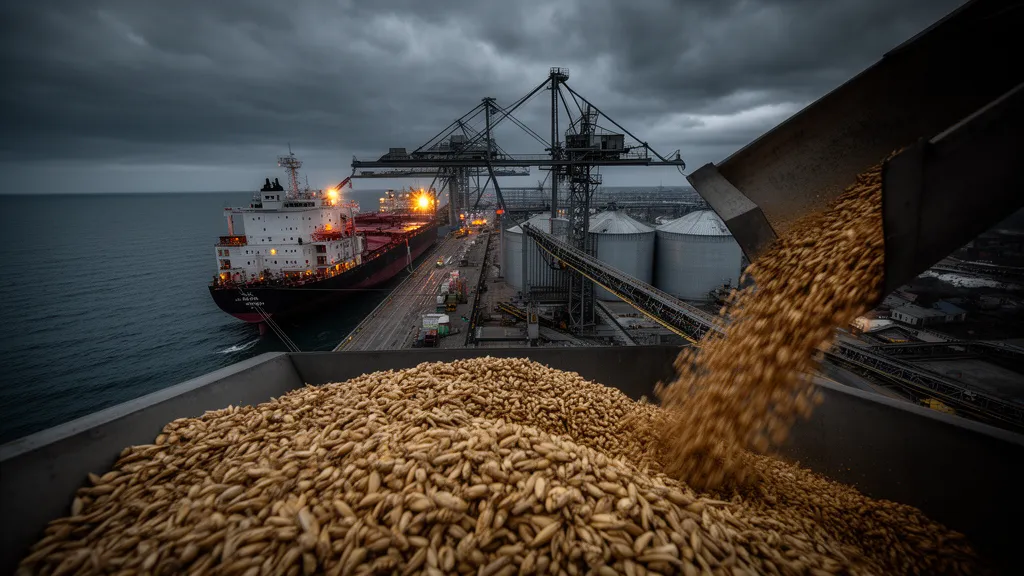
- Bearish pricing: Ukrainian milling wheat prices in Greater Odessa ports fell USD 6-9/ton in December, ending at USD 208-216/ton CPT (Class 2) and USD 206-214/ton CPT (Class 3).
- Feed wheat weakness: Feed wheat prices declined by an average USD 9/ton to USD 197-207/ton CPT (port) as buying interest eased toward month-end.
- Logistics-driven pressure: Military threats, energy infrastructure disruptions, and adverse weather conditions severely hindered port operations and land logistics, weighing on export prices.
- Seasonal and competitive headwinds: Year-end trade slowdowns and strong global competition maintained downward pressure on Ukrainian exporters’ purchase prices.
- Spread compression: Narrowing price differentials between milling and feed wheat indicate limited demand differentiation under current logistical constraints.
Market Overview
The Ukrainian wheat export market moved lower across both milling and feed wheat segments throughout December. Milling wheat demand remained consistently weak, while feed wheat initially enjoyed firm buying in the first half of the month before interest receded toward the end of December.
Price pressure was largely logistics-driven. Ongoing military risks around key export corridors, reduced port calls, and systematic disruptions to Ukraine’s energy infrastructure led to emergency and rolling blackouts. These challenges complicated port operations and land transport, forcing constant adjustments to supply chains and undermining export competitiveness.
Price Developments
In the ports of Greater Odessa, purchasing prices for milling and feed wheat declined in parallel as exporters adjusted bids to reflect heightened logistics risk and slower global demand into year-end.
| Commodity | Quality / Class | Price Range (USD/ton, CPT port) | Monthly Change (USD/ton) |
|---|---|---|---|
| Milling wheat | Class 2 | 208–216 | -6 to -9 |
| Milling wheat | Class 3 | 206–214 | -6 to -9 |
| Feed wheat | Standard | 197–207 | ≈ -9 (average) |
By December 29, Class 2 milling wheat prices in Greater Odessa ports had slipped to USD 208-216/ton CPT, while Class 3 milling wheat was assessed at USD 206-214/ton CPT. Feed wheat bids averaged a USD 9/ton decline during the month, closing at USD 197-207/ton CPT (port).
Logistics and Operational Factors
Export logistics remained the dominant driver of pricing. Military threats constrained shipping activity and pressured freight and insurance costs. At the same time, damage and disruptions to energy infrastructure triggered emergency and rolling blackouts across Ukraine, complicating elevator operations, rail movements, and port loading schedules.
Adverse weather late in December further disrupted port loadings and shipments. Combined with typical year-end slowdowns in trade activity and strong competition from other origins in international markets, these factors kept exporters’ purchase prices under sustained downward pressure.
Market Sentiment and Analysis
Bearish. The USD 6-9/ton decline in Ukrainian wheat prices primarily reflects operational and logistics constraints rather than a pronounced shift in underlying supply-demand fundamentals. Infrastructure vulnerabilities and weather-related disruptions continue to cap Ukraine’s export potential, especially as seasonal factors and global competition intensify.
Traders should closely monitor port operating capacity, shipping flows, and weather conditions, as logistics reliability remains the key variable for Ukrainian wheat price formation. The narrowing price spread between milling and feed wheat signals limited differentiation in buyer demand under current constraints, with logistics risk overshadowing quality and grade distinctions in near-term pricing.
Source: Market Data
Leave a Reply