
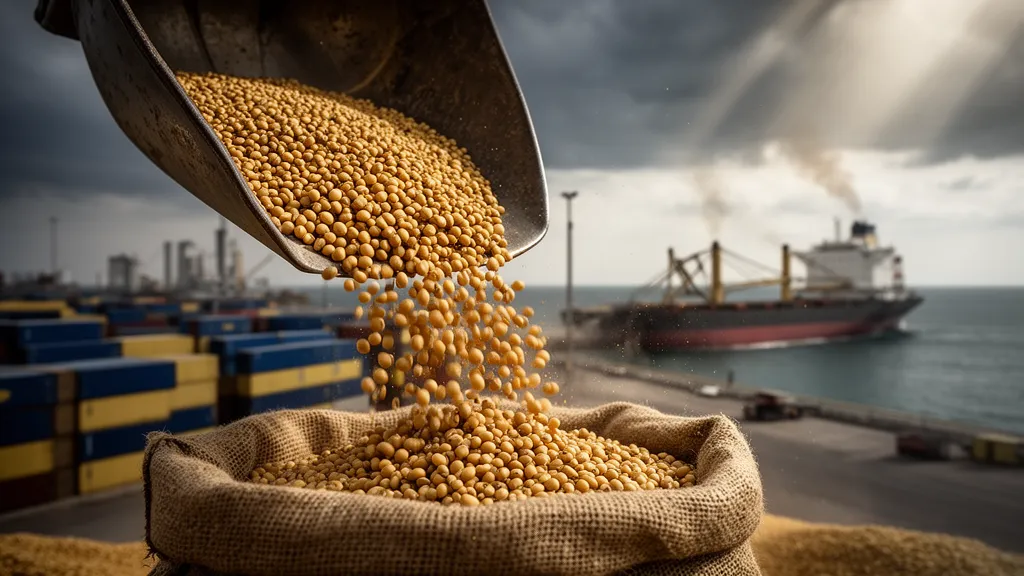
- Improving outlook: Ukraine’s soybean production is showing signs of recovery after a contraction in 2025.
- Policy headwind: A new 10% export duty on soybeans is weighing on planting decisions and export competitiveness.
- 2026 uncertainty: Pessimistic acreage projections for the 2026 harvest introduce medium-term supply and pricing risk.
- Flow impact: Neutral to bearish implications for Ukrainian soybean export flows as crush may shift toward domestic processing.
Ukraine Soybean Market Update
Ukraine’s soybean sector is sending mixed signals as production prospects begin to recover following a contraction in 2025. While the improving outlook points to a potential rebound in supply, market participants remain cautious about the 2026 harvest, with acreage expectations tempered by mounting policy and cost pressures.
The newly implemented 10% export duty on soybean shipments marks a significant policy shift and is already influencing farmer planting intentions for the upcoming season. By raising the cost base for exporters, this measure threatens to erode Ukraine’s competitiveness in both regional and global soybean markets, particularly within the Black Sea corridor.
Policy Impact and Competitiveness
The export duty adds a direct fiscal burden to Ukrainian soybean exports, potentially narrowing margins for traders and crushers that are export-oriented. This could redirect more beans toward domestic processing, limiting the volumes available for shipment and reshaping trade flows within the Black Sea region.
As exporters recalibrate, regional buyers may increasingly assess alternative Black Sea suppliers or expand sourcing from South American origins. This shift could recalibrate basis levels, freight spreads, and forward pricing structures for Ukrainian soybeans relative to competing suppliers.
Market Analysis and Risk Outlook
The overall outlook is neutral to bearish for Ukrainian soybean export flows. On one hand, the recovering production outlook suggests that physical supply may stabilize after 2025’s contraction. On the other, the export duty creates a persistent bearish overhang for Ukraine’s export position in the Black Sea soybean market.
Traders should closely monitor how policy-driven acreage uncertainty for 2026 feeds into medium-term supply risk and price formation. A sustained drag on planted area could tighten exportable surpluses despite near-term production recovery, while shifts in regional demand patterns may amplify volatility in spreads versus South American and alternative Black Sea origins.
Source: Market Data
Leave a Reply