
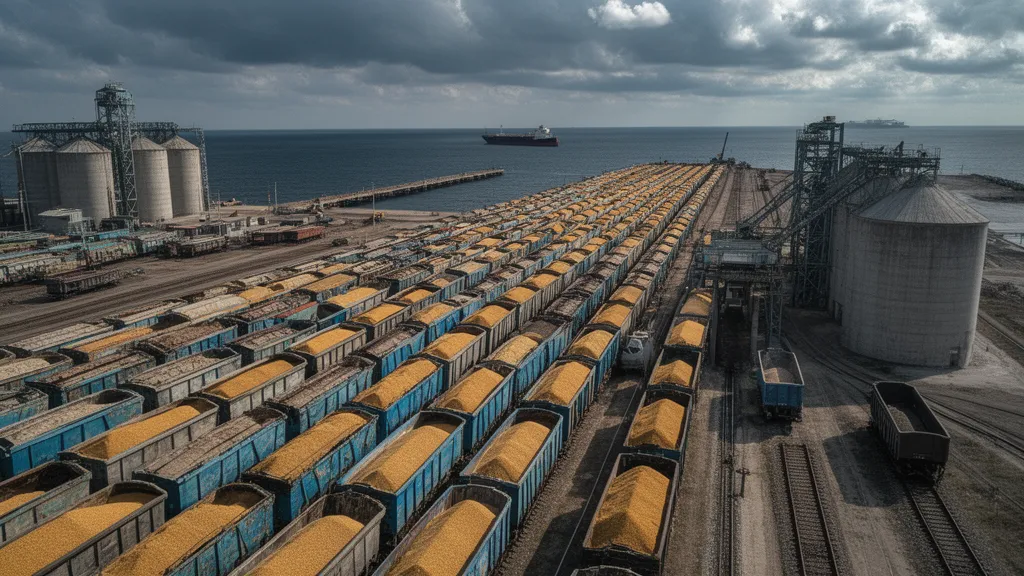
- Bearish exports: Grain railcar unloading at Greater Odesa ports slipped to 1,240 units per day, while inbound loading rose to 1,250, widening the imbalance.
- Rising congestion: Railcar backlog to Greater Odesa grew by 1,109 units to 9,566, signaling mounting delays and higher demurrage risks.
- Limited relief: Danube ports saw a minor efficiency gain, with unloading improving to 10 railcars per day, but volumes remain comparatively small.
Ukrainian Rail Freight Bottleneck at Greater Odesa Ports
Ukrainian rail freight logistics at Greater Odesa ports are showing clear signs of strain, with grain exporters facing a widening bottleneck on the country’s key Black Sea export corridor. Operational data from JSC Ukrzaliznytsia indicate a growing disconnect between inbound grain railcar flows and the ports’ unloading capacity.
As of April 2, the average daily unloading rate at Greater Odesa ports slipped to 1,240 grain railcars, a week-on-week decline of 34 units. This slowdown comes despite a modest increase in average daily loading on the rail network toward these ports, which rose by 17 railcars to 1,250 per day. The result is a persistent throughput deficit that is feeding into a rapidly expanding queue of railcars awaiting discharge.
The railcar backlog destined for Greater Odesa ports climbed by 1,109 cars over the week, reaching 9,566 units. This sharp build-up underscores intensifying congestion risks, with more grain arriving by rail than can be processed at the terminals. Extended dwell times and higher demurrage costs are an increasingly likely outcome if the imbalance is not addressed through improved port performance or a redistribution of flows to alternative routes.
Danube Ports Show Modest Efficiency Gains
While Greater Odesa struggles with mounting congestion, Danube ports have seen a modest improvement in operational efficiency. Inbound grain railcar volumes to Danube facilities edged lower, falling by 41 units over the week to 76 railcars. At the same time, the average daily unloading rate at these ports improved slightly, increasing by 4 units to 10 railcars per day as of April 2.
Although current Danube throughput remains small relative to Greater Odesa, the combination of reduced inflows and better unloading performance suggests some incremental capacity to absorb diverted grain flows. However, the scale of the Odesa backlog means any rerouting to the Danube corridor would only partially offset the mounting pressure on Ukraine’s main export gateway.
Rail Freight Metrics Overview
| Metric | Location | Latest Value | WoW Change |
|---|---|---|---|
| Average daily grain railcar unloading | Greater Odesa ports | 1,240 railcars/day | -34 |
| Average daily grain railcar loading toward ports | Greater Odesa ports | 1,250 railcars/day | +17 |
| Grain railcar backlog en route | Greater Odesa ports | 9,566 railcars | +1,109 |
| Grain railcars heading to ports | Danube ports | 76 railcars | -41 |
| Average daily grain railcar unloading | Danube ports | 10 railcars/day | +4 |
Market Impact: Bearish for Ukrainian Grain Exports
The widening gap between inbound rail flows and unloading capacity at Greater Odesa ports is fundamentally bearish for Ukrainian export execution. With nearly 9,600 grain railcars in queue and daily unloading slipping, exporters face elevated risks of prolonged turnaround times and higher logistics costs. This environment may compel some shippers to redirect volumes toward the Danube corridor or other alternative routes, despite their more limited capacity.
For traders, the congestion at Greater Odesa raises the probability of schedule disruptions, pushing back shipment windows and potentially applying downward pressure on Ukrainian basis levels as sellers contend with slower pipeline movement. Until port performance improves or flows are more effectively redistributed, market participants should assume continued logistical headwinds for Ukrainian grain exports through Greater Odesa terminals in the near term.
Source: Market Data
Leave a Reply