
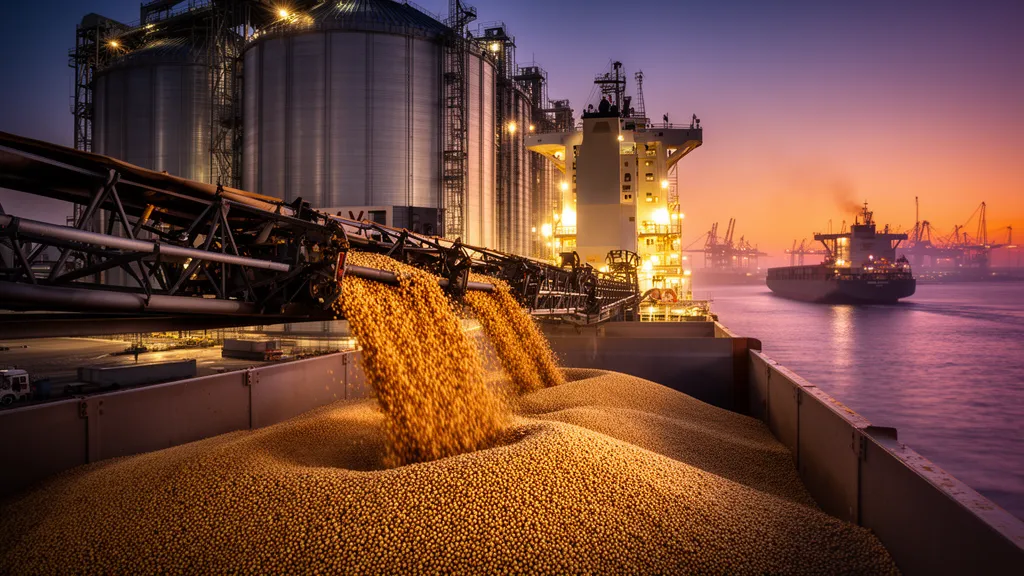
- Soybeans – Slightly Bearish: US weekly export sales of 353,300 tonnes missed forecasts of 400,000–700,000 tonnes, signaling softer demand and potential downward price pressure.
- Corn – Neutral: Export sales of 1.25 million tonnes were in line with expectations, suggesting stable demand.
- Wheat – Mildly Bearish: Weekly export sales of 296,300 tonnes came in below market forecasts, pointing to weaker demand.
- China Demand Supportive: China remained the largest buyer of US soybeans, underlining resilient Asian demand that may help limit global price downside.
US Export Sales Summary
| Commodity | Week Ending | Export Sales (tonnes) | Market Expectation Range (tonnes) | Sentiment |
|---|---|---|---|---|
| Soybeans | 26 March | 353,300 | 400,000 – 700,000 | Slightly Bearish |
| Corn | 26 March | 1,250,000 | In line with forecasts | Neutral |
| Wheat | 26 March | 296,300 | Modestly higher expected | Mildly Bearish |
Market Update
The US Department of Agriculture reported weekly soybean export sales of 353,300 tonnes for the week ending 26 March, significantly below analyst expectations of 400,000–700,000 tonnes compiled by The Wall Street Journal. The miss highlights softer-than-anticipated demand for US soybeans on the export market.
China was the leading buyer of US soybeans during the reporting period, underscoring its ongoing importance as a core demand center for oilseeds. For grains, Mexico was the primary destination for both US corn and wheat shipments.
US wheat export sales reached 296,300 tonnes, coming in marginally below market expectations and reinforcing a softer tone for wheat demand. By contrast, corn sales totaled 1.25 million tonnes, broadly in line with forecasts, indicating steady underlying demand for US corn exports.
Analysis and Impact on Black Sea Oilseeds
For the global soybean complex, the weaker-than-expected US export performance is neutral to slightly bearish, suggesting either some softening in near-term demand or stronger competition from alternative origins, especially South America. This dynamic could pressure US export pricing and open opportunities for more competitively priced Black Sea oilseed exporters.
However, China’s continued role as the largest buyer of US soybeans signals resilient Asian demand, which may help support global price levels and limit downside risk for competing origins, including Black Sea suppliers. Overall, pricing pressure is most evident on US-origin soybeans, while alternative exporters may benefit from any buyer diversification.
Source: Market Data
Leave a Reply