
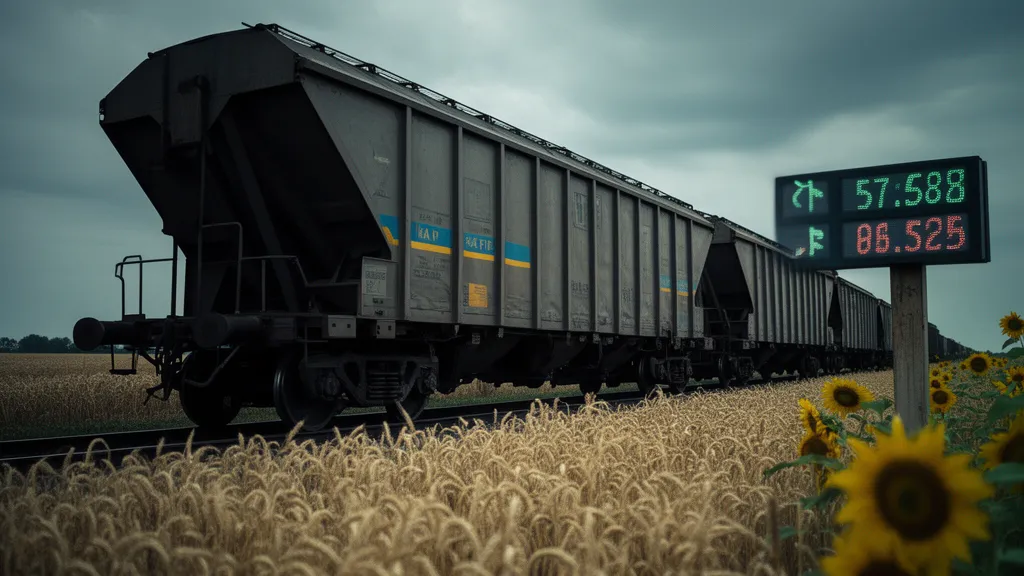
- Bearish for exporters: Ukrzaliznytsia’s starting railcar tariffs more than doubled in Q1 2026 versus Q1 2025 despite lower agricultural export volumes, sharply raising inland logistics costs.
- Cost pressure intensifying: A 60% increase in railcar accumulation fees from April 1 further erodes grain and oilseed exporter margins and may force higher FOB offer levels.
- Competitiveness at risk: Elevated rail freight costs could price Ukrainian grain and oilseeds out of key markets, encouraging a shift to alternative logistics routes.
- Policy response needed: Industry groups are calling for restoration of the demand-driven “Dutch” auction mechanism and regular publication of railcar fleet data to realign tariffs with market conditions.
Ukrainian Rail Freight Costs Surge Amid Weak Export Volumes
The Ukrainian Agrarian Business Club (UCAB) reports a sharp disconnect between Ukrzaliznytsia’s freight tariff policy and actual market conditions. Analysis of Transport Logistics Center auctions shows that starting rates for railcar usage in Q1 2026 have more than doubled versus Q1 2025, even as agricultural export volumes decline.
In Q1 2025, Ukrzaliznytsia applied a flexible “Dutch” auction model, where prices adjusted downward according to real-time demand, resulting in daily rates ranging roughly between UAH 650 and UAH 1,450 depending on the month. This structure helped balance the interests of shippers and carriers by allowing tariffs to reflect fluctuations in export activity.
By contrast, Q1 2026 auctions began with elevated starting prices, reflecting an increase of more than 100%. This runs counter to typical market dynamics, where weaker transportation demand would normally create incentives for tariff reductions or at least more moderate pricing. The situation is further exacerbated by a 60% hike in railcar accumulation fees effective April 1, which increases penalties linked to delays in railcar turnaround.
Impact on Margins and Export Competitiveness
Higher inland rail costs compress margins for Ukrainian grain and oilseed exporters, limiting their ability to compete on FOB pricing against alternative origins. If exporters pass these higher logistics costs into their offers, Ukrainian supplies may become less attractive in price-sensitive destinations, particularly where Black Sea, Russian, or other regional origins can undercut delivered values.
As rail tariffs decouple from underlying demand, shippers are likely to reassess their logistics mix. Some volumes may shift toward road, river, or cross-border alternatives where feasible, potentially reducing rail utilization further and deepening the imbalance between capacity and actual shipped volumes.
Industry Requests and Policy Signals
UCAB has outlined two key measures to improve transparency and restore market-based pricing. First, the publication of railcar fleet dynamics data at least 10 days before each month would give shippers better visibility into available capacity and help anchor expectations for tariff levels. Second, restoring the demand-sensitive “Dutch” auction system would allow prices to move lower when export flows are weak, supporting a healthier balance between carrier revenues and exporter viability.
Without a realignment of tariffs to reflect lower export volumes, the risk is a negative feedback loop: higher rail costs push volumes to alternative routes, utilization falls, and pressure mounts for further upward tariff revisions to sustain carrier revenues. UCAB’s call for constructive dialogue underscores the urgency of addressing this cost-volume mismatch before it leads to lasting losses in Ukraine’s market share in global grain and oilseed trade.
| Period | Railcar Daily Rate Range (UAH) | Change vs. Prior Year | Railcar Accumulation Fees |
|---|---|---|---|
| Q1 2025 | 650 – 1,450 | Baseline | 100% (pre-increase level) |
| Q1 2026 | > 100% above Q1 2025 starting levels | More than doubled | +60% effective April 1 |
Outlook for Ukrainian Grain and Oilseed Logistics
In the near term, elevated rail costs are a clear bearish factor for Ukraine’s export competitiveness, particularly for bulk grains and oilseeds with thin margins. The sector’s ability to maintain market share will depend on whether tariff policies adjust back toward demand-driven mechanisms and whether alternative corridors can absorb any displaced rail volumes efficiently.
Source: Market Data
Leave a Reply