
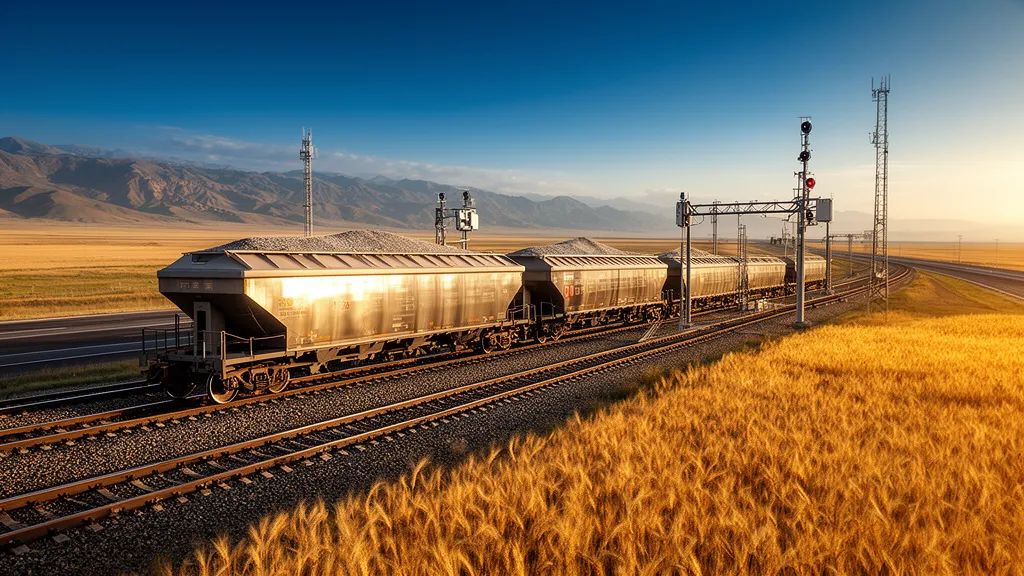
- Coordinated rail expansion: Kazakhstan and Uzbekistan are jointly developing the Darbaza-Maktaaral railway corridor to increase cross-border freight capacity.
- Infrastructure modernization: New connections to the Maktaaral-Syrdarya interstate highway and upgraded signaling and communications systems aim to support higher transit volumes.
- Support for Middle Corridor: Enhanced throughput strengthens Central Asia’s role as an alternative grain export route, with a neutral short-term but potentially bullish long-term impact on regional logistics pricing.
Regional Logistics Update
Kazakhstan and Uzbekistan are intensifying coordination on the Darbaza-Maktaaral railway route to expand cross-border freight capacity, according to the Association of Kazakhstan Rail Freight Carriers. The project targets increased throughput to manage rising cargo flows across Central Asia.
Construction is actively progressing on the Darbaza-Maktaaral line, which will link directly to the Maktaaral-Syrdarya interstate highway. Both countries are synchronizing development timelines and upgrading critical infrastructure, including automatic block signaling systems and modern communications networks, to prepare for higher transit traffic.
Market Impact and Strategic Context
Market Impact: Neutral to Bullish (Long-term)
The railway expansion and modernization represent a strategic upgrade of Central Asian freight corridors that can function as alternative outlets for Black Sea grain exports during geopolitical or logistical disruptions. Stronger rail connectivity between Kazakhstan and Uzbekistan reinforces the Middle Corridor, giving grain traders additional options for moving Kazakh wheat and other agricultural commodities to both regional and global markets.
In the near term, the impact on Black Sea freight rates is expected to be neutral, as capacity additions will materialize progressively. Over the longer term, however, improved reliability and throughput on these alternative routes could exert competitive pressure on traditional logistics chains, potentially influencing freight pricing dynamics and routing decisions for exporters.
Source: Market Data
Leave a Reply