
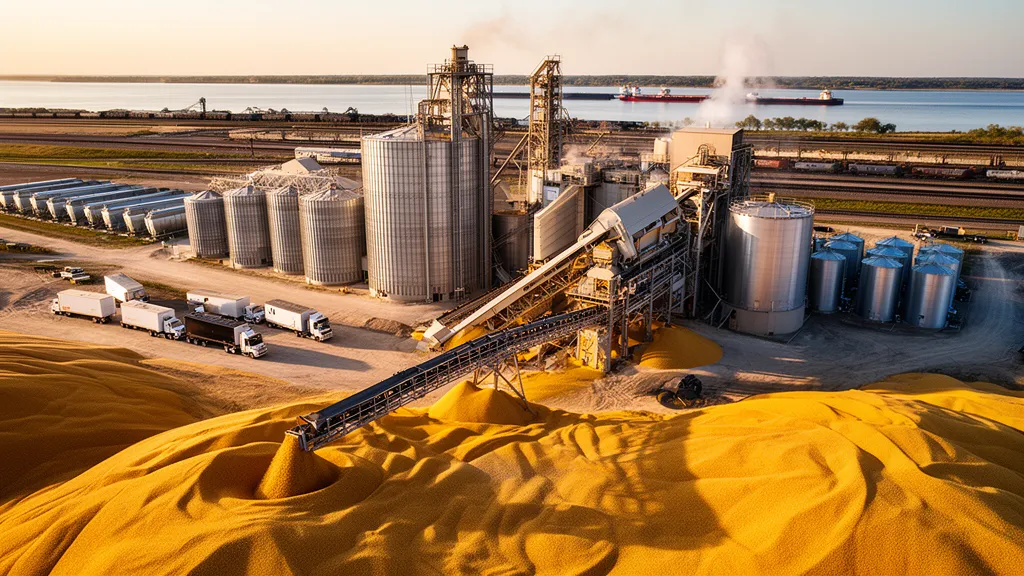
US Soybean Crushing Hits Record Pace; Export Decline Builds Domestic Inventories
- Record US crush: Soybean crushing volumes are projected to reach a record 71 million tonnes in 2025/26, up from 66.5 million tonnes in 2024/25, with daily crush rates hitting an all-time high.
- Weak export performance: US soybean exports have fallen 11.4 million tonnes year-on-year in the first half of 2025/26, boosting domestic oilseed inventories.
- Rising oil inventories: Soybean oil stocks have surged 39% year-on-year to 1.2 million tonnes amid subdued biofuel demand, pressuring crush margins.
- Neutral to bearish for Black Sea: Strong US processing and high inventories reduce US import needs but may cap global soybean complex prices, limiting upside for Black Sea origins.
Market Update
Oil World projects that US soybean crushing volumes will exceed 71 million tonnes in the 2025/26 marketing year, up from 66.5 million tonnes in 2024/25. The increase reflects continued expansion of US processing capacity and sustained demand from domestic feed and food sectors.
According to NOPA, February crushing totaled 208.8 million bushels, a new monthly record. While total volume was 6% lower than January, the decline was driven entirely by the shorter calendar month, rather than any fundamental slowdown in crushing activity.
The daily crush rate reached an unprecedented 7.45 million bushels per day in February, up from 7.15 million bpd in January and well above February 2024’s 6.35 million bpd. Cumulative crushings for September–February 2025/26 are estimated at 36.3 million tonnes, compared with 33.5 million tonnes a year earlier and a five-year average of 31.2 million tonnes.
Record crushing has lifted domestic soybean oil output, but weak demand from the biofuel sector has pushed soybean oil inventories to 1.2 million tonnes by end-February, the highest since May 2018 and 39% above year-ago levels. At the same time, US soybean exports fell by 11.4 million tonnes year-on-year in the first half of 2025/26, contributing to total oilseed inventories that exceeded prior-year levels by an estimated 5–6 million tonnes at end-February.
| Indicator | Period | 2025/26 | Previous Level / Comparison |
|---|---|---|---|
| US soybean crush (projection) | Marketing year | 71.0 million tonnes | 66.5 million tonnes in 2024/25 |
| Monthly crush volume | Feb 2025 | 208.8 million bushels | Record high; 6% below Jan 2025 on fewer days |
| Daily crush rate | Feb 2025 | 7.45 million bushels/day | 7.15 million bpd in Jan 2025; 6.35 million bpd in Feb 2024 |
| Cumulative crushings | Sep–Feb 2025/26 | 36.3 million tonnes | 33.5 million tonnes in prior year; 31.2 million tonnes 5-year avg |
| Soybean oil inventories | End-Feb 2025 | 1.2 million tonnes | +39% y/y; highest since May 2018 |
| US soybean exports change | H1 2025/26 | -11.4 million tonnes y/y | Contributing to oilseed stocks +5–6 million tonnes y/y |
Impact on Black Sea Soybean Market
The surge in US crushing capacity and elevated domestic inventories suggest a reduced need for soybean imports into the United States, limiting additional demand for external origins, including the Black Sea region. At the same time, the sharp drop in US exports underscores stiff competition in global trade flows, creating potential openings for competitively priced Black Sea soybeans to capture market share in destination markets traditionally served by US suppliers.
However, the build-up in US soybean oil inventories, driven by subdued biofuel demand, is likely to weigh on global crush margins and soybean oil prices. This dynamic could cap the upside for the broader soybean complex, exerting a neutral to mildly bearish influence on Black Sea soybean values despite potential volume opportunities in export channels.
Source: Market Data
Leave a Reply