
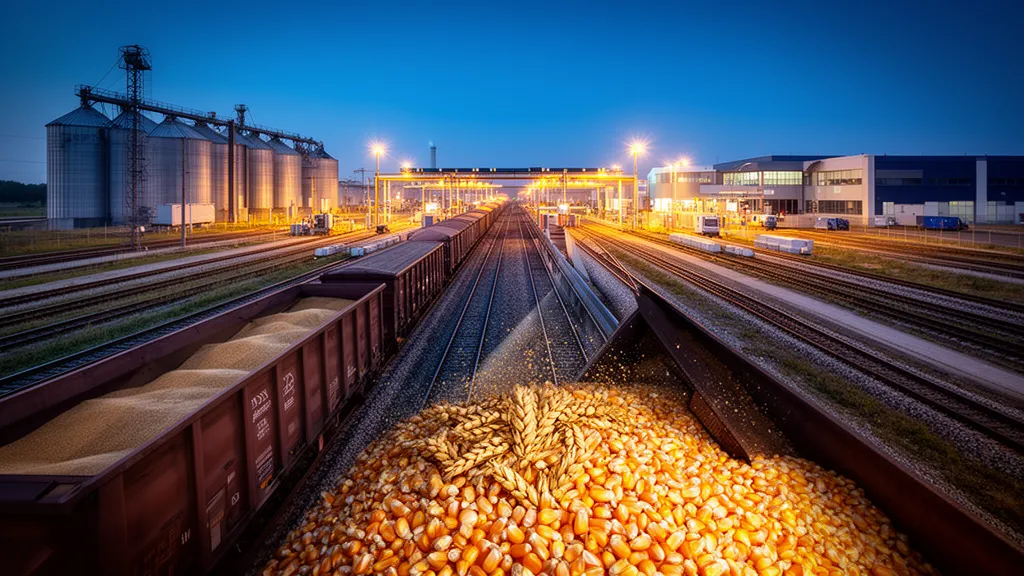
- Rail grain exports up 11% MoM: Ukrzaliznytsia moved 37,400 tons of grain in the first 10 days of March, indicating a short-term recovery in rail-based export flows.
- Year-on-year volumes still weak: Grain exports remain 34% below early March 2024 levels, underscoring persistent structural and logistical constraints.
- Border crossings dominate logistics: Around 77–78% of grain and oilcake/meal exports move via land border crossings, signaling sustained reliance on overland EU routes.
- Oilcake and meal show resilience: Exports reached 83,100 tons, up 7.5% year-on-year despite a 2% decline versus February, highlighting relatively stronger demand for processed products.
Ukraine Rail Export Volumes: Early March Snapshot
Ukrainian state railway operator Ukrzaliznytsia recorded an 11% month-on-month increase in grain exports during the first 10 days of March, transporting 37,400 tons. Despite this improvement over February, volumes remain 34% lower than in the same period of March 2024, reflecting ongoing pressure on Ukraine’s export capacity.
Oilcake and meal exports followed a similar pattern. Ukrzaliznytsia moved 83,100 tons in early March, a modest 2% decline compared with February but a 7.5% increase year-on-year versus early March 2024, signaling comparatively more resilient trade in processed oilseed products.
Border Crossings vs. Ports
Rail-based border crossings remain the primary channel for Ukrainian agricultural exports. In the grain segment, 77% of export volumes moved via border crossings and 23% through port facilities. For oilcake and meal, 78% of shipments transited land borders and 22% used ports, underscoring the continued reorientation of logistics away from traditional Black Sea routes.
| Commodity | Period | Volume (tons) | MoM Change | YoY Change | Border Crossings Share | Ports Share |
|---|---|---|---|---|---|---|
| Grain (rail exports) | First 10 days of March | 37,400 | +11% | -34% vs Mar 2024 | 77% | 23% |
| Oilcake & meal (rail exports) | First 10 days of March | 83,100 | -2% | +7.5% vs Mar 2024 | 78% | 22% |
Market Implications
The strong reliance on border crossings highlights persistent logistical bottlenecks and security risks affecting Black Sea port operations. While the month-on-month increase in grain shipments points to improving operational capacity, the substantial year-on-year decline suggests that export infrastructure and corridor reliability remain constrained. For freight coordinators and traders, the 77–78% utilization of land routes indicates ongoing tightness in overland rail capacity into the EU and a need for continued focus on western Ukrainian gateways.
Source: Market Data
Leave a Reply