
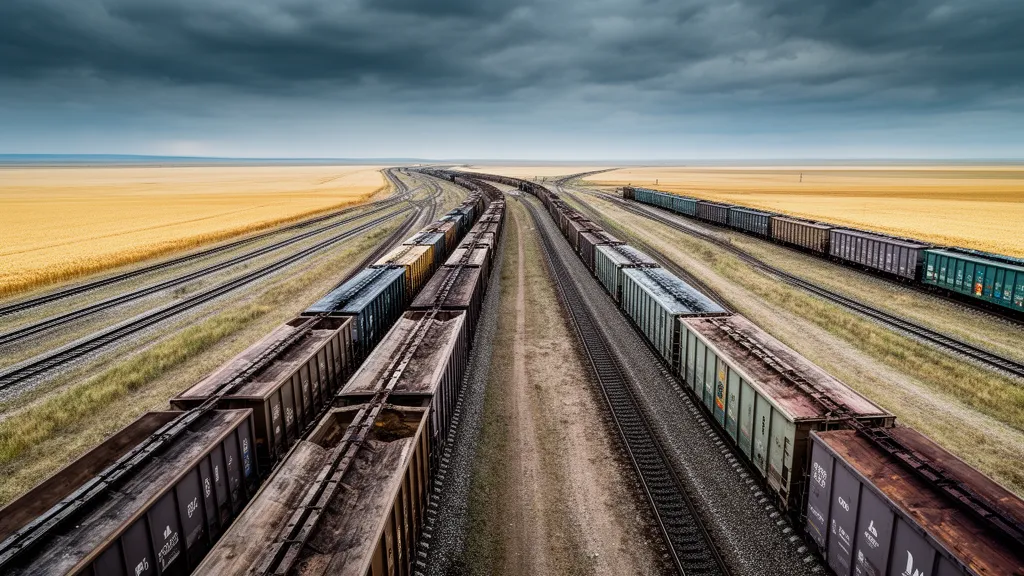
- Bearish logistics: Temporary limits on registering privately-owned freight cars in Kazakhstan reduce available rail capacity on a key Black Sea–Central Asia corridor.
- Infrastructure strain: Freight car numbers have exceeded the technological limits of Kazakhstan’s rail network, prompting safety and capacity control measures.
- Market protection: Large rolling stock owners pushed for these restrictions to protect domestic operator services amid overcapacity and rising competitive pressure.
- Cost risk: Tighter wagon supply during peak export seasons could increase transport costs and extend delivery times for grain and oilseed flows via Kazakhstan.
Kazakhstan Rail Network Policy Update
Kazakhstan’s national railway operator, JSC NC KTZ, has imposed temporary restrictions on the registration of privately-owned freight cars in response to mounting pressure on the country’s rail infrastructure. Internal analysis showed that the actual number of freight cars in operation already exceeds the network’s technological capacity, raising concerns over safety and operational stability.
The new limits have been codified through amendments to the Registration Rules, which received official approval from both the Agency for the Regulation of Natural Monopolies (AZRK) and the Ministry of Transport of the Republic of Kazakhstan. According to the operator, these steps aim to safeguard traffic safety while preserving uninterrupted freight flows across Kazakhstan’s mainline network.
The decision follows lobbying by major rolling stock owners, who argued that unchecked growth in wagon numbers and increasing competition were undermining the domestic operator services market. By curbing additional fleet registrations, authorities are seeking to rebalance capacity utilization and protect local service providers.
Market Impact on Black Sea Grain Logistics
From a market perspective, the move is bearish for Black Sea grain logistics. Kazakhstan is an important transit corridor linking Black Sea export terminals with Central Asian production and consumption regions. Reduced availability of freight cars, particularly those operated by private owners, is likely to tighten rail capacity on this route.
Capacity constraints could become especially acute during peak export windows for grains and oilseeds, when demand for wagons is highest. Market participants may face higher freight rates, longer delivery times, and increased scheduling uncertainty as operators prioritize limited rolling stock. These frictions could weaken the competitiveness of flows routed through Kazakhstan versus alternative corridors.
Traders and logistics providers should closely monitor whether the registration restrictions lead to congestion at key transshipment hubs, bottlenecks at border crossings, or a shift of volumes to other rail and port combinations in the Black Sea and Caspian regions. Any sustained disruption could influence basis levels, export margins, and route selection for regional grain and oilseed trade.
Source: Market Data
Leave a Reply