
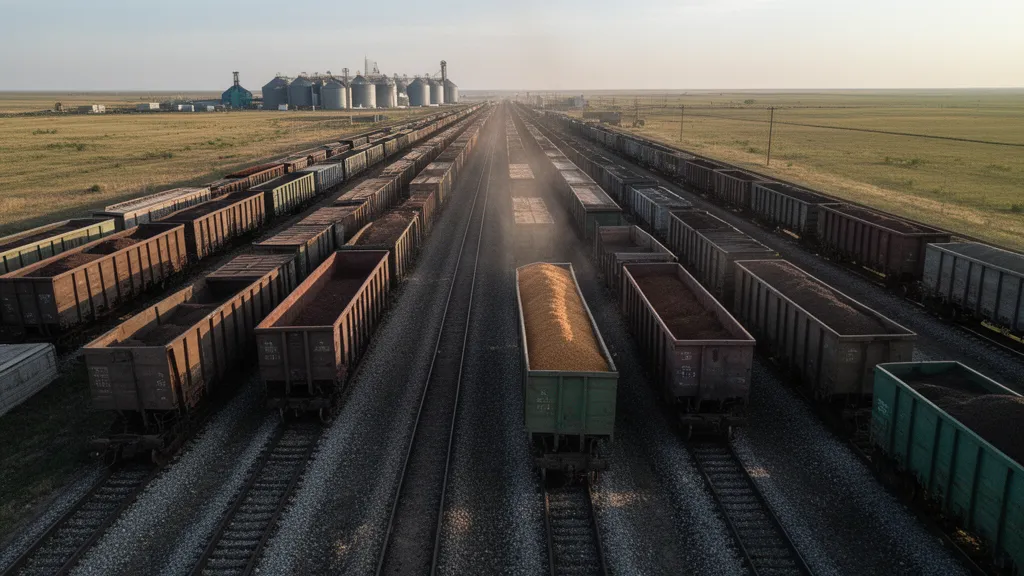
- Bearish Black Sea logistics: Long-term ban on empty railcars to Kostanay Station tightens capacity in a key grain export corridor.
- Structural bottlenecks: 12‑month+ restriction signals deep infrastructure constraints rather than short-term congestion.
- Route reshuffling: Grain shippers may divert volumes to other Kazakh stations or via Russia, impacting cross-border freight rates and availability.
Kazakhstan Railways Restricts Empty Railcars to Kostanay
Kazakhstan Railways (KTZ) has imposed a long-term ban on sending empty freight cars and flatcars with empty containers to Kostanay Station in northwestern Kazakhstan. The measure, effective immediately and valid until March 23, 2026, aims to address massive accumulation of both loaded and empty railcars at this critical hub.
The restriction applies to all empty wagon types and empty-container flatcars originating from any railway station in Kazakhstan and destined for Kostanay. By extending the operational limitations over a period exceeding 12 months, KTZ is signaling that congestion at Kostanay reflects structural infrastructure bottlenecks, not merely seasonal spikes in traffic.
Impact on Grain Flows and Black Sea Corridor
The Kostanay region is a major grain-producing area, and its rail links are integral to moving volumes toward Black Sea export terminals. With empty railcars barred from returning to Kostanay, shippers may struggle to reposition equipment, creating delays in grain loadings and onward movements.
These constraints are expected to exert bearish pressure on Black Sea grain logistics by tightening effective railcar availability and raising freight costs for alternative routing. Market participants should prepare for prolonged scheduling disruptions, possible diversion of flows to other Kazakh loading points, and increased reliance on Russian rail corridors, which could in turn influence cross-border freight rates and network congestion beyond Kazakhstan.
Source: Market Data
Leave a Reply