
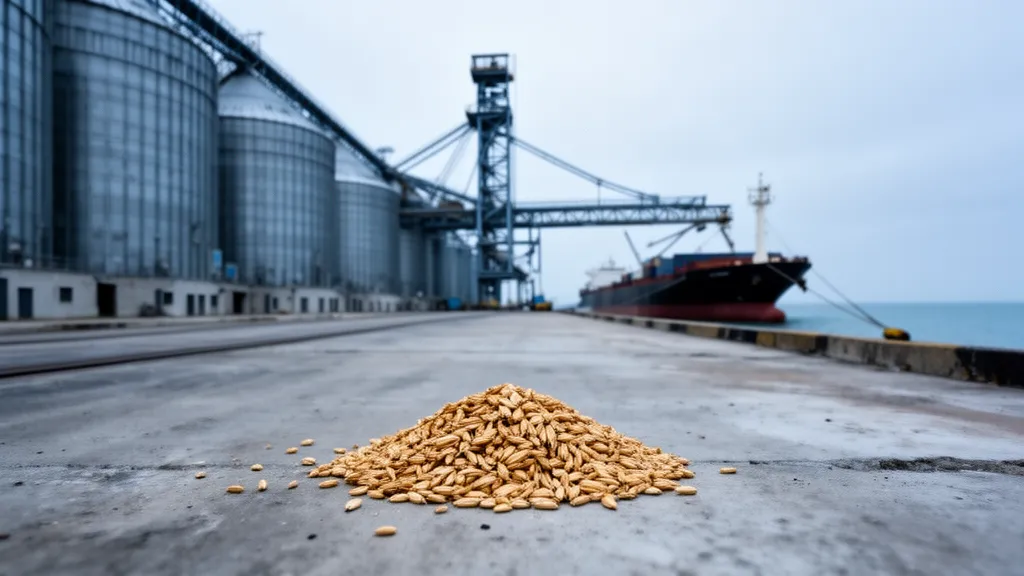
- Exports collapse 98%: Ukrainian oat exports totaled just 721 tons in Jan–Feb 2026, a 98% year-on-year decline.
- Major buyers withdraw: Turkey and India, which together accounted for over 94% of December 2025 shipments, have fully suspended purchases.
- Domestic prices stable: Despite the export shock, domestic oat prices remain steady at UAH 8,900–10,500/t CPT-port.
- Bearish for exporters: Loss of key markets pressures export-oriented producers and may force production or market reorientation.
Ukrainian Oat Export Market Update
Ukraine’s oat export market has entered 2026 under severe pressure, with outbound shipments collapsing as key foreign buyers abruptly halted purchases. Monitoring data indicate that total exports reached only 721 tons over January and February 2026, representing a dramatic 98% year-on-year contraction.
| Month 2026 | Oat Export Volume (tons) |
|---|---|
| January | 506 |
| February | 215 |
| Total Jan–Feb | 721 |
The collapse is closely tied to the withdrawal of Ukraine’s dominant oat buyers. Turkey, which accounted for 90.3% of Ukrainian oat exports in December 2025, has fully suspended purchases. India, the second-largest buyer with a 4% share in December volumes, has likewise halted imports, effectively shutting down the main export channels for Ukrainian oats.
Domestic Price and Market Dynamics
| Market | Price Range | Delivery Basis |
|---|---|---|
| Ukrainian Oats | UAH 8,900–10,500/t | CPT-port |
Despite the export shock, domestic demand prices for oats have remained stable within the UAH 8,900–10,500/t CPT-port range established earlier in 2026. This suggests that internal market fundamentals are relatively steady and that a portion of exportable supplies is being redirected to domestic consumption or held in storage rather than being aggressively discounted.
Market Impact and Outlook
The near-total loss of export demand is clearly bearish for Ukrainian oat exporters and producers reliant on overseas sales. With Turkey and India jointly representing more than 94% of recent export volumes, their withdrawal has left limited near-term alternatives for large-scale shipments. Unless new destinations are developed, market participants may need to consider production cuts, crop switching, or longer-term storage strategies heading into the 2026/27 season.
Traders will be watching closely for any signs of renewed buying interest from traditional partners or emerging demand from new markets. In the meantime, the key questions are how long domestic prices can remain insulated from export weakness and whether logistical or policy shifts can help reopen access to external demand.
Source: Market Data
Leave a Reply