
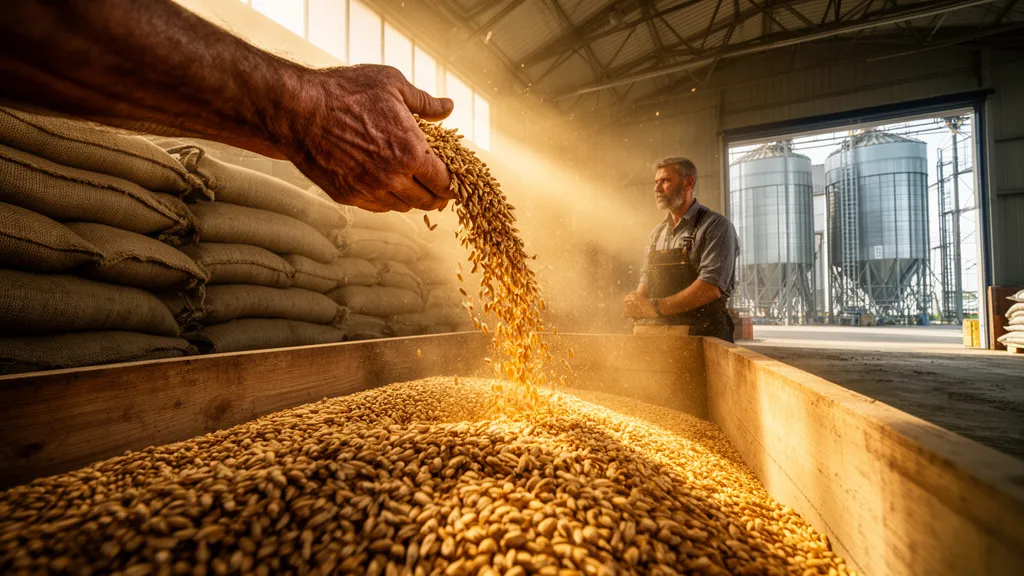
- Stable but firm prices: Ukrainian wheat values held steady with a gradual upward bias amid tight farmer selling.
- Strong domestic demand: Processors maintained solid demand for both milling and feed wheat across most facilities.
- Seasonal selling risk: Upcoming spring sowing may prompt selective farmer sales to secure working capital, adding limited supply.
- Neutral to bullish sentiment: Supply-demand imbalance and farmer reluctance to sell continue to underpin prices.
Market Update
The Ukrainian wheat market saw minimal price adjustments last week, with quotations largely unchanged but under gradual upward pressure. Tight farmer selling continued to support domestic prices despite buyers showing resistance to higher bids.
Domestic bid prices for class 2 milling wheat were in the range of UAH 9,600–10,800 per ton CPT, while feed wheat was quoted at UAH 9,000–10,100 per ton CPT. Processor demand remained strong across most facilities, yet many farmers chose to withhold grain from the market.
At Ukrainian ports, milling wheat prices were fixed at USD 213–220 per ton CPT, with feed wheat slightly lower at USD 208–215 per ton CPT. Only a limited number of producers opted to sell at current levels, mainly to secure liquidity ahead of the upcoming spring sowing campaign.
Price Overview
| Market Segment | Wheat Type | Price Range | Terms | Currency |
|---|---|---|---|---|
| Domestic (CPT) | Class 2 milling wheat | 9,600–10,800 | CPT Ukraine | UAH/ton |
| Domestic (CPT) | Feed wheat | 9,000–10,100 | CPT Ukraine | UAH/ton |
| Port (CPT) | Milling wheat | 213–220 | CPT port | USD/ton |
| Port (CPT) | Feed wheat | 208–215 | CPT port | USD/ton |
Market Analysis
Market Sentiment: Neutral to Bullish
The Ukrainian wheat market remains underpinned by a clear supply-demand imbalance. Strong processor demand and ongoing farmer reluctance to sell are creating a firm price floor, even as buyers resist significant increases. This tug-of-war is keeping prices broadly stable but with a slight upside bias.
The approaching spring sowing season introduces a potential catalyst for additional supply, as some farmers may be compelled to sell grain to finance fieldwork and input purchases. However, current indications suggest that any such selling will be selective, limiting the scale of downward pressure and preserving the overall neutral-to-bullish tone.
Traders should closely monitor the extent of seasonal farmer sales and any shifts in processor buying strategies. If farmer holding behavior persists despite sowing-related cash needs, the tight supply backdrop could sustain or gradually lift prices from current levels.
Source: Market Data
Leave a Reply