
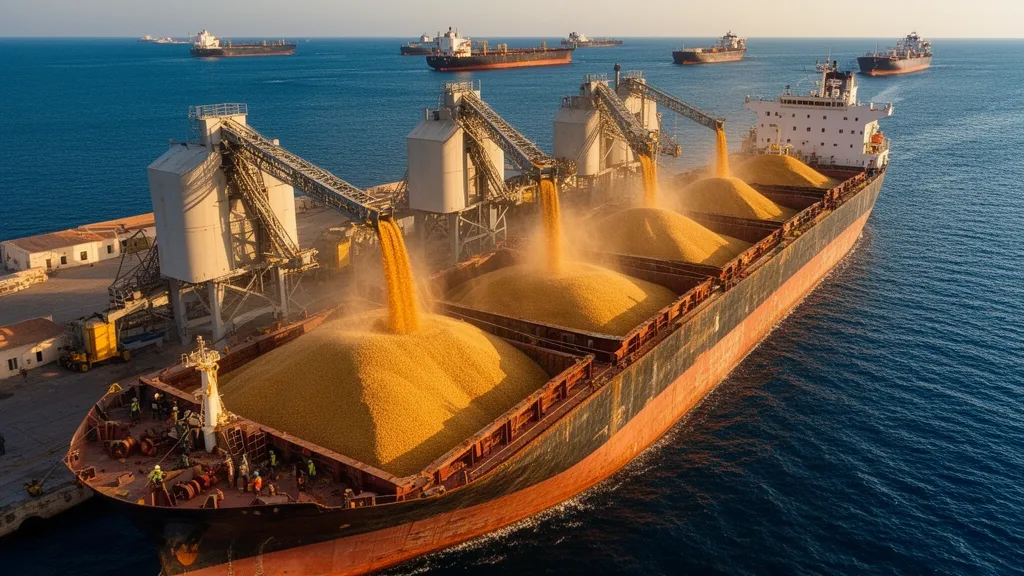
- Price Benchmark: Jordan booked 50,000 tons of feed barley at $260.50/ton C&F for June shipment, setting a key Eastern Mediterranean reference.
- Partial Coverage: Only 42% of the 120,000-ton tender was filled, implying potential follow-up tenders and sustained demand visibility.
- Competitive Pressure: Bunge undercut rival offers by up to $5.48/ton, signaling strong global supply competition and pressure on Black Sea sellers.
- Origin Flexibility: “Any origin” terms keep sourcing open, forcing traditional suppliers to match or beat current price levels.
Jordan Feed Barley Tender Results
Jordan’s state grain buyer MIT purchased around 50,000 tons of feed barley of any origin in an international tender held on March 4, 2024. The volume was awarded to Bunge at a price of $260.50 per ton C&F, with shipment scheduled for the second half of June 2024.
The tender initially sought 120,000 tons, meaning only 42% of the planned volume was covered in this round. This partial award leaves a notable residual demand that may be addressed through additional tenders.
Tender Pricing Comparison
| Operator | Volume (tons) | Price (C&F, $/ton) | Price vs. Bunge ($/ton) |
|---|---|---|---|
| Bunge | 50,000 | $260.50 | Baseline |
| CHS | — | $265.98 | +5.48 |
| Cargill | — | $264.95 | +4.45 |
| Total tender target | 120,000 | — | — |
| Volume awarded in this round | 50,000 | — | — |
| Tender coverage | 42% | — | — |
Market Impact and Analysis
The $260.50/ton C&F deal with Bunge establishes a visible benchmark for feed barley into the Eastern Mediterranean. With origin left unspecified, Jordan can tap a broad supplier base, intensifying competition across Black Sea, EU, and other export origins.
For Black Sea suppliers, the outcome is neutral to mildly bearish: the competitive price point and partial tender fill suggest that to secure Jordan’s remaining needs, exporters will likely have to align with or undercut this level. At the same time, the unfilled 70,000-ton balance implies scope for follow-up tenders, which should support ongoing demand and liquidity in regional feed barley trade.
Source: Market Data
Leave a Reply