
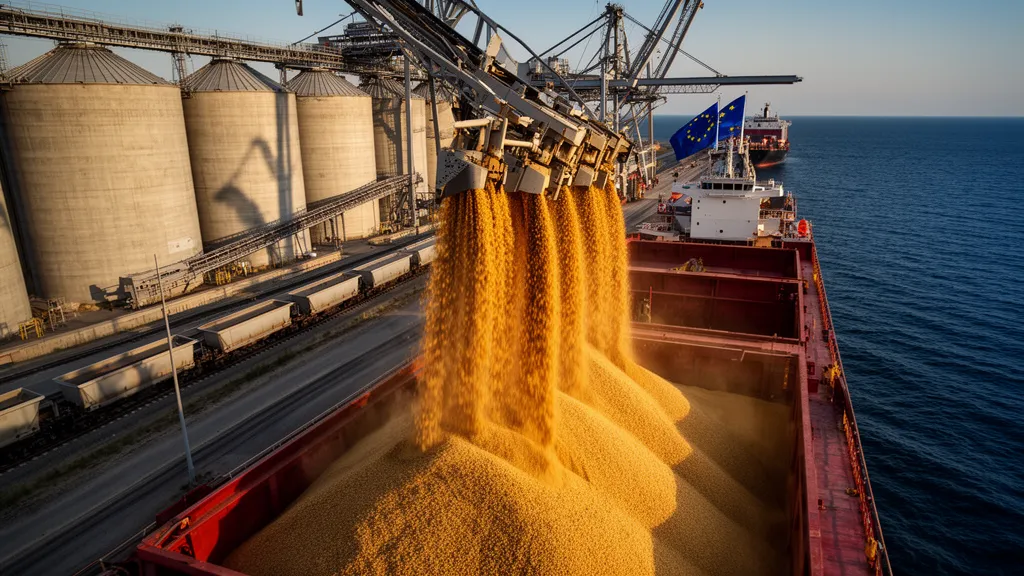
- Russian wheat exports trimmed: 2025/26 MY wheat export forecast cut by 0.3 MMT to 45.4 MMT as EU origins gain competitiveness.
- Grain exports overall steady: Total Russian grain exports for 2025/26 seen at 55.1 MMT, up 0.1 MMT vs. January on stronger barley and corn.
- Coarse grains offset wheat weakness: Barley and corn export forecasts both raised by 0.2 MMT to 4.3 MMT and 3.4 MMT, respectively.
- Forward outlook firmer: 2026/27 Russian wheat exports revised higher by 2.1 MMT to 41.7 MMT, signaling expectations of stronger future shipments.
- Neutral to slightly bearish tone: Loss of competitiveness vs. EU wheat may pressure Russian FOB values despite stable aggregate grain flows.
Russian Grain Export Forecasts
| Commodity / Season | Forecast | Change vs. Prior |
|---|---|---|
| Wheat 2025/26 | 45.4 MMT | -0.3 MMT |
| Barley 2025/26 | 4.3 MMT | +0.2 MMT |
| Corn 2025/26 | 3.4 MMT | +0.2 MMT |
| Total Grain 2025/26 | 55.1 MMT | +0.1 MMT vs. Jan forecast |
| Wheat 2026/27 | 41.7 MMT | +2.1 MMT |
Market Update
SovEcon has lowered its Russian wheat export forecast for the 2025/26 marketing year by 0.3 million tonnes to 45.4 million tonnes, citing weaker competitiveness versus European Union wheat in key import markets. The shift suggests that EU origins are currently offering more attractive pricing or quality, eroding Russia’s share in traditional destinations.
The consultancy simultaneously lifted its projections for other grains. Barley exports for 2025/26 are now seen at 4.3 million tonnes and corn at 3.4 million tonnes, both up 0.2 million tonnes from the previous outlook. As a result, total Russian grain exports for 2025/26 are expected to reach 55.1 million tonnes, a modest 0.1 million tonne increase compared with the January forecast.
Looking ahead to the 2026/27 marketing year, SovEcon raised its wheat export forecast by 2.1 million tonnes to 41.7 million tonnes, indicating expectations of a recovery in exportable surplus or competitiveness over the medium term.
Analysis and Trading Implications
The revisions are neutral to slightly bearish for Russian wheat in the near term. Reduced competitiveness versus EU origins may force Russian exporters to consider further price discounts to defend market share, particularly in price-sensitive North African and Middle Eastern demand centers. At the same time, the stability in overall grain exports, underpinned by higher barley and corn flows, limits broader bullish impetus for Black Sea grains as a complex.
Traders should closely track EU versus Black Sea wheat spreads and FOB indications, as any additional narrowing in the EU discount or widening of the Russian discount could reshape trade flows and basis levels into the new marketing year.
Source: Market Data
Leave a Reply