
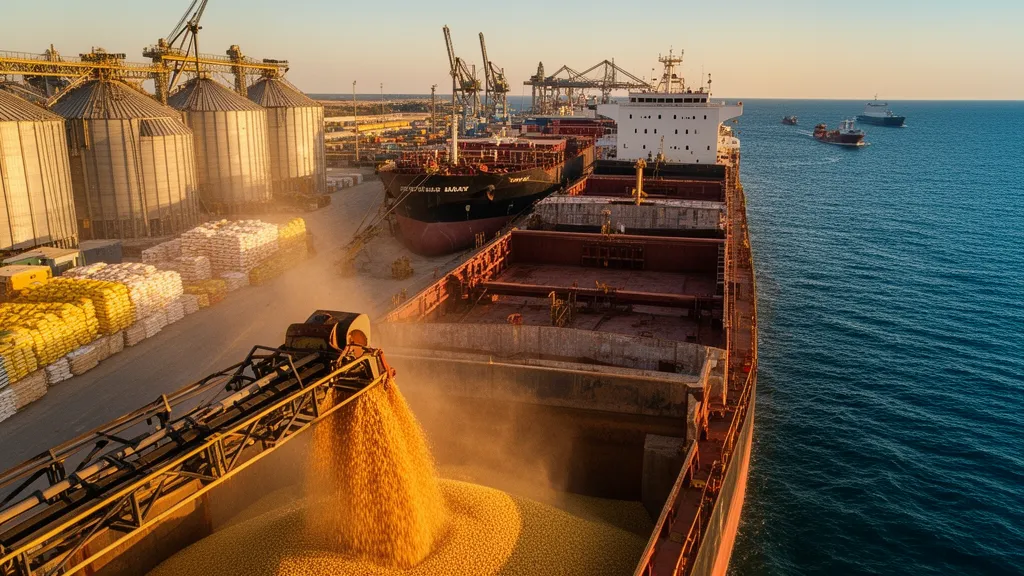
- Export Growth: Crimea targets an additional 150,000 tons of grain exports in 2026, driven by a new barley allocation alongside existing wheat shipments.
- Stable Wheat Flows: The region retains a 400,000-ton wheat quota for 2025, indicating steady year-over-year export volumes.
- Oilseed Diversification: Authorities are seeking 25,000 tons of oilseed export capacity (rapeseed and sunflower), which could broaden cargo mix and route options.
- Port Capacity Constraints: Kerch, Feodosia, and Sevastopol ports are running at full capacity, supporting strong flows but limiting spot flexibility.
- Freight Sentiment: Overall impact is neutral to slightly bullish for Black Sea freight, particularly into Middle East and North African markets.
Market Update
The Republic of Crimea plans to expand grain exports by 150,000 tons in 2026, according to Minister of Agriculture Denis Kratyuk. This growth will primarily come from a new barley allocation, complementing existing wheat shipments from the region.
For 2025, Crimea has secured a 400,000-ton wheat export quota, unchanged from the previous year. The additional 150,000 tons of grain earmarked for 2026 will be in the form of barley, potentially increasing the region’s share in key Middle East and North African (MENA) feed grain markets.
Regional authorities are also negotiating oilseed export quotas totaling 25,000 tons, comprising 15,000 tons of rapeseed and 10,000 tons of sunflower. The tariff quota for wheat and meslin will run from March 1 to December 31, 2025, and will apply to exports shipped outside the Eurasian Economic Union.
Cargo flows are supported by the region’s three major Black Sea ports—Kerch, Feodosia, and Sevastopol—which are currently operating at full capacity. In 2024, primary export destinations were markets in the Middle East and North Africa, underscoring Crimea’s integration into established regional trade lanes.
Export Volume Snapshot
| Category | Commodity | Volume (tons) | Year / Period |
|---|---|---|---|
| Confirmed Quota | Wheat & Meslin | 400,000 | 2025 (Mar 1 – Dec 31) |
| Planned Addition | Barley | 150,000 | 2026 |
| Negotiated Quota | Rapeseed | 15,000 | TBD |
| Negotiated Quota | Sunflower | 10,000 | TBD |
| Total Potential Oilseeds | Rapeseed & Sunflower | 25,000 | TBD |
Analysis: Freight and Competitive Dynamics
The planned 150,000-ton barley expansion provides modest incremental volume for Black Sea export flows and is neutral to slightly bullish for regional freight demand. With Kerch, Feodosia, and Sevastopol operating at full capacity, logistical throughput appears robust, but the lack of spare capacity may constrain spot availability and reduce flexibility during peak demand periods.
The diversification into oilseeds via a proposed 25,000-ton quota (rapeseed and sunflower) could open additional loading programs and support more varied vessel employment, particularly on regional routes serving crush capacity in neighboring markets. However, until quotas are finalized, these volumes remain an upside risk rather than a base-case assumption.
From a competitive standpoint, the unchanged 400,000-ton wheat quota for 2025 signals stable year-on-year flows, suggesting that Crimea will maintain rather than significantly expand its footprint versus Russian and Ukrainian origins in traditional MENA destinations. The new barley allocation could sharpen competition in feed grain tenders, particularly where buyers are sensitive to freight and execution risk from alternative ports.
Traders and shipowners should monitor quota negotiations and port congestion indicators, as any infrastructure strain or weather-related disruptions at already fully utilized ports could quickly translate into higher demurrage costs and firmer freight rates on Black Sea–MENA routes.
Source: Market Data
Leave a Reply