- Livestock output rising: Sector gross output reached 3.8 trillion tenge by end-2025, up from 3.3 trillion in 2024 and now accounts for 39% of total agricultural output.
- Consolidation push: Industry leaders are advancing a market consolidation framework to improve pricing transparency and secure export supplies.
- Policy support: Government plans include preferential lending at 5–6% and investment in feed and pasture infrastructure to accelerate sector expansion.
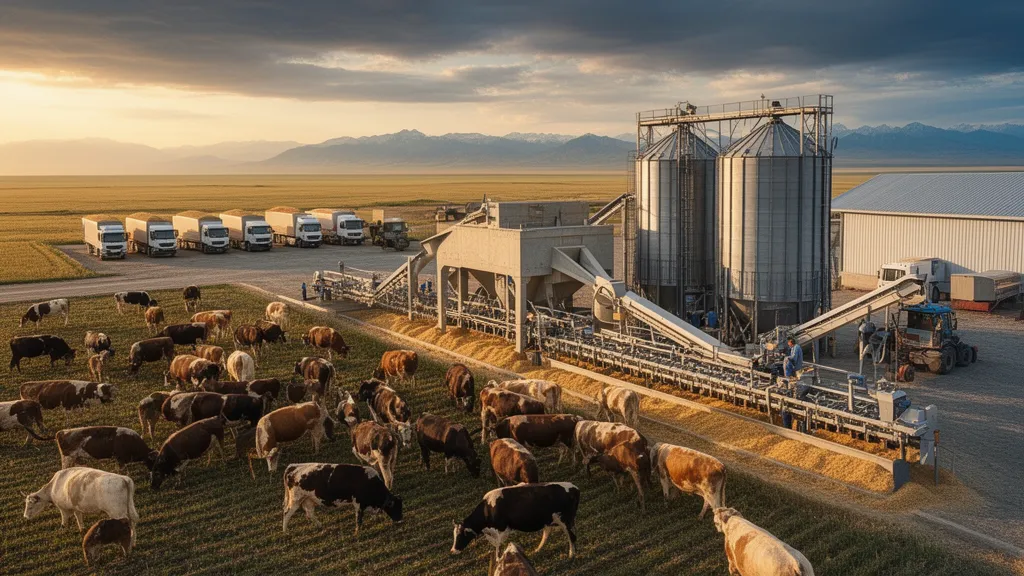
- Feed demand tailwind: Livestock growth and supply-chain upgrades are neutral to moderately bullish for regional demand for corn, barley, and protein meals.
| Indicator | 2024 | 2025 | Change |
|---|---|---|---|
| Livestock gross output (trillion KZT) | 3.3 | 3.8 | +0.5 |
| Share of total agricultural output | n/a | 39% | — |
| Planned preferential lending rate | n/a | 5–6% p.a. | Policy proposal |
Market Update
The Kazakhstan Livestock Breeders Association Turan has outlined an institutional consolidation framework for the national livestock sector at the international Dala.Camp Forum 2026, which brought together around 250 delegates from Kazakhstan, Central Asia, the United States, Brazil, France, the Netherlands, the UAE, and Turkey. Chairman Zhanibek Kenjebayev emphasized consolidating producers to improve pricing mechanisms, enhance market transparency, and secure guaranteed export channels for livestock products.
Vice Minister of Agriculture Amangaliy Berdalin noted that current annual growth of 2–3% in the livestock industry remains below potential, underscoring the need for structural reform. The government’s proposed support measures include preferential lending at 5–6% per annum for high-yield livestock acquisition, targeted breeding and genetics programs, and substantial investment into feed supply chains and pasture infrastructure to underpin long-term sector expansion.
Feed Grain and Protein Meal Implications
The policy focus on scaling Kazakhstan’s livestock base is neutral to moderately bullish for regional feed grain and protein meal demand. As herd sizes grow and productivity improves, domestic consumption of corn, barley, and protein meals is likely to trend higher over the medium term, particularly if financing and infrastructure projects are implemented on schedule.
At the same time, enhanced feed supply chains and stronger internal demand may reduce the volume of grains available for export, potentially tightening regional balances. Market participants should track the rollout of preferential lending, the pace of herd expansion, and execution of feed and pasture investments to refine expectations for Kazakhstan’s role in Central Asian grain and feed markets.
Source: Market Data
Leave a Reply