
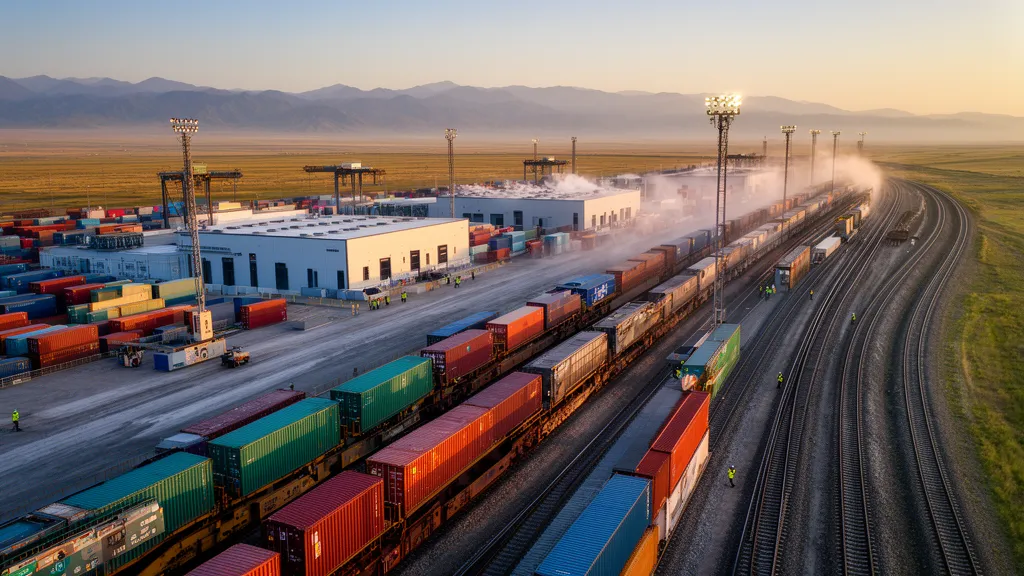
- Infrastructure Upgrade: Neptune Logistics launches a 13.3-hectare multimodal dry port at Alashankou, 3 km from the China-Kazakhstan border, boosting China–Europe/Central Asia rail capacity.
- Faster Transit: New facility enables cargo delivery to Central Asia in 3 days, Russia in 7 days, and Europe in 10 days via rail.
- Mixed Black Sea Impact: Enhanced rail corridor is neutral to moderately bullish for alternative routes, potentially challenging Black Sea exporters in Central Asia while creating new refrigerated cargo opportunities.
New Multimodal Dry Port at China-Kazakhstan Border Enhances Eurasian Freight Capacity
The Neptune Logistics Group has completed construction of a new multimodal dry port on the southern outskirts of Alashankou, China, located approximately 3 km from the Chinese-Kazakh border. The 13.3-hectare facility is designed to expand rail freight volumes between China and Europe/Central Asia as infrastructure ramps up to full operational capacity.
The dry port incorporates a container yard, customs warehouse, bonded warehouse, hazardous goods warehouse, and refrigerated storage. This integrated setup enables rapid cargo transit times: 3 days to Central Asia, 7 days to Russia, and 10 days to Europe, positioning Alashankou as a key node on the China-Europe rail corridor via Central Asia.
Market Impact
Market Impact: Neutral to Moderately Bullish for Black Sea Freight
The new Alashankou dry port strengthens the China-Europe rail corridor by providing an efficient alternative to traditional Black Sea maritime routes, particularly for flows into Central Asia. Shorter transit times from China to Central Asian destinations may pressure the competitive position of Black Sea agricultural exporters serving these markets.
At the same time, the increased rail capacity and availability of refrigerated storage create opportunities for temperature-sensitive agricultural and food products to move through diversified corridors. Traders and logistics providers should monitor whether growing rail volumes begin to displace demand for Black Sea port services on Central Asian lanes, or instead complement maritime flows through more specialized, time-sensitive cargoes.
Source: Market Data
Leave a Reply