
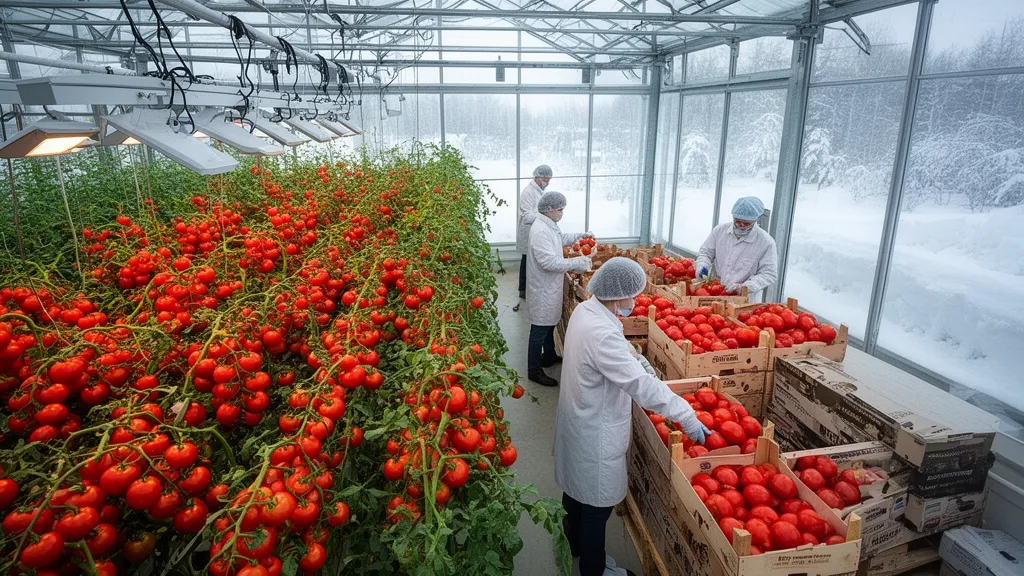
- Policy Shift: Russia’s Ministry of Agriculture has proposed raising the Turkish tomato import quota from 500,000 to 600,000 tons despite underutilization of the current limit.
- Domestic Pressure: Industry experts argue additional Turkish volumes are unnecessary, highlighting strong Russian and CIS production and quality advantages.
- Price Dynamics: Producer prices for tomatoes are down 18.2% year-on-year, while cucumbers show a 43% retail price surge since December, triggering an antimonopoly review.
- Logistics Constraints: Turkish tomatoes struggle to reach deficit regions like the Urals and Far North, where domestic greenhouse output typically covers winter shortages.
- Trade Implications: Black Sea tomato freight flows from Turkey to Russia may see only limited upside, while focus on domestic greenhouse expansion could support fertilizer and input demand.
Russia–Turkey Tomato Quota Update
Russia’s Ministry of Agriculture has released a draft order proposing an increase in the import quota for Turkish tomatoes from 500,000 tons to 600,000 tons. According to Andrey Kazakov, Executive Director of the Fruit and Vegetable Union, Russia’s tomato self-sufficiency rate is around 66%, leading to seasonal shortfalls, particularly in winter, which the ministry aims to address with additional import flexibility.
However, not all market participants support the proposal. Tamara Reshetnikova, CEO of Tekhnologii Rosta, notes that the 2025 quota was not fully used, indicating limited demand for additional Turkish volumes. She emphasizes that Turkish tomatoes are generally less preferred than Russian greenhouse produce and imports from Azerbaijan and Uzbekistan in terms of both quality and market acceptance.
Logistical factors further constrain Turkish shipments. Transport routes and costs make it difficult for Turkish tomatoes to reach structurally deficit regions such as the Urals and the Far North, where Russian domestic greenhouse production continues to dominate supply during the off-season.
Vegetable Price Movements
Producer-level price data across key vegetables show broad-based year-on-year declines, suggesting a relatively soft market for many staples even as specific retail segments, notably cucumbers, experience sharp seasonal tightening.
| Commodity | Price Level | Year-on-Year Change |
|---|---|---|
| Cabbage | Producer | -31.4% |
| Potatoes | Producer | -19.8% |
| Onions | Producer | -13.0% |
| Tomatoes | Producer | -18.2% |
| Cucumbers | Producer | Stable (≈0% change) |
| Cucumbers | Retail (since late December) | +43.0% |
While tomato producer prices have fallen 18.2% year-on-year, cucumber producer prices are roughly flat. Nevertheless, retail cucumber prices have surged 43% since late December, prompting an investigation by the Federal Antimonopoly Service following a request by State Duma Deputy Chairman Anatoly Vyborny.
Market and Logistics Implications
The quota expansion proposal underscores tension between regulatory intentions and market conditions. With tomato producer prices already under pressure and the existing quota not fully utilized, industry stakeholders remain skeptical that higher Turkish limits will significantly alter supply dynamics. Preferences for Russian and CIS-origin tomatoes, combined with logistical bottlenecks into deficit regions, limit upside for Turkish exporters and associated Black Sea tomato freight.
For logistics planners and agricultural input suppliers, policy emphasis on domestic greenhouse capacity suggests more sustained demand for fertilizers, energy, and protected-crop technologies. At the same time, sharp seasonal volatility in cucumber retail prices points to potential short-term bottlenecks in supply chains and distribution, reinforcing the importance of timely transport and storage strategies across Russia’s key consumption hubs.
Source: Market Data
Leave a Reply