
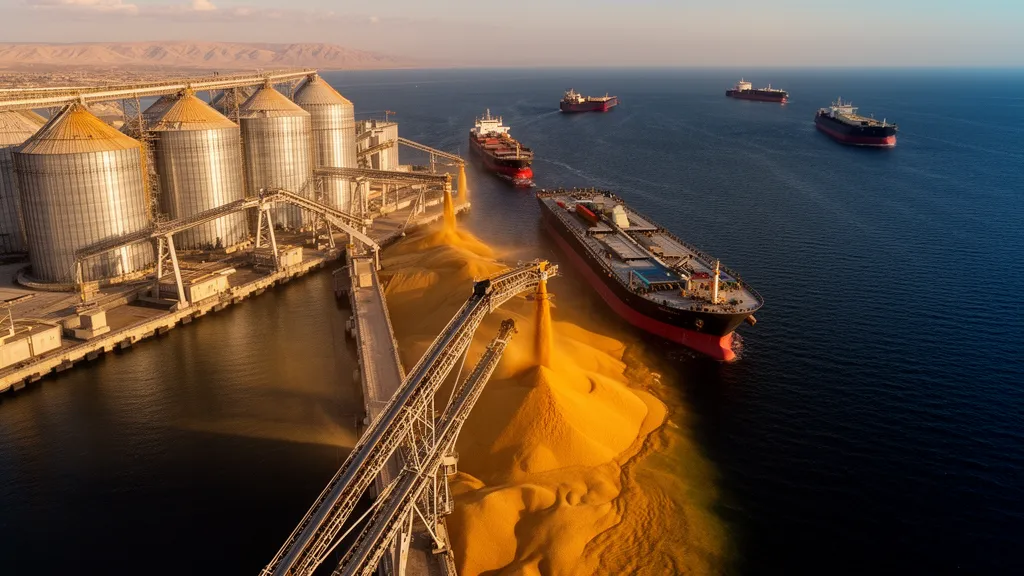
- Quota Expansion: Crimea plans to increase grain export quotas for 2026 by about one-third, adding 400,000 tons of wheat and 150,000 tons of barley.
- Oilseed Diversification: Additional export quotas under negotiation include 10,000 tons of sunflower and 15,000 tons of rapeseed, opening a new export direction.
- Stable Destinations: Egypt, Oman, Libya, and gradually Syria remain the primary buyers of Crimean grain.
- Freight Impact: Extra volumes are expected to provide modest support to Azov-Black Sea freight rates on specific routes but remain small versus total Black Sea flows.
Crimea Expands Grain Export Quotas for 2026
Crimean Minister of Agriculture Denis Kratyuk announced at AgroExpoCrimea-2026 that the region will increase its grain export quotas by roughly 33% in 2026. The new quotas include 400,000 tons of wheat and 150,000 tons of barley, expanding on the existing 2025 export program.
According to the ministry, the 2025 export quota of 400,000 tons of grain generated about a 30% increase in export revenues, providing a benchmark for the potential upside from the 2026 expansion. Authorities aim to leverage Crimean port capacity more efficiently and reduce logistical downtime for local exporters.
Emerging Oilseed Export Flows
Crimea is negotiating additional quotas for oilseed exports, including 10,000 tons of sunflower and 15,000 tons of rapeseed. While these volumes are modest compared with grain shipments, Kratyuk noted that establishing these routes represents a strategic diversification of the region’s export basket.
The development of oilseed export flows is intended to create new revenue channels for local producers and broaden the range of products shipped through Crimean ports, potentially improving asset utilization across the supply chain.
Key Export Destinations
Egypt, Oman, and Libya remain the primary buyers of Crimean wheat, underpinning stable regional demand. Syria is gradually re-entering the supply chain, adding another outlet for both existing and incremental volumes.
These markets are expected to absorb the increased quotas, with trade flows focused on North Africa and the Middle East via Black Sea routes.
Export Quotas Overview
| Year | Commodity | Export Quota (tons) | Notes |
|---|---|---|---|
| 2025 | Grain (total) | 400,000 | Generated ~30% increase in export revenues |
| 2026 | Wheat | 400,000 | New quota for expanded exports |
| 2026 | Barley | 150,000 | Additional grain volume from the region |
| 2026 (negotiation) | Sunflower | 10,000 | New export direction, under discussion |
| 2026 (negotiation) | Rapeseed | 15,000 | New export direction, under discussion |
Freight Market Implications
The combined 550,000-ton increase in wheat and barley quotas is expected to be neutral to slightly bearish for the wider regional freight market. While it will require additional capacity from Crimean ports and could create localized demand for short-haul Black Sea vessels, the added volume remains small relative to total Black Sea export flows.
Continued utilization of Crimean port infrastructure may offer modest support to Azov-Black Sea freight rates on targeted routes to North Africa and the Middle East, but is unlikely to materially shift broader regional pricing.
Source: Market Data
Leave a Reply