
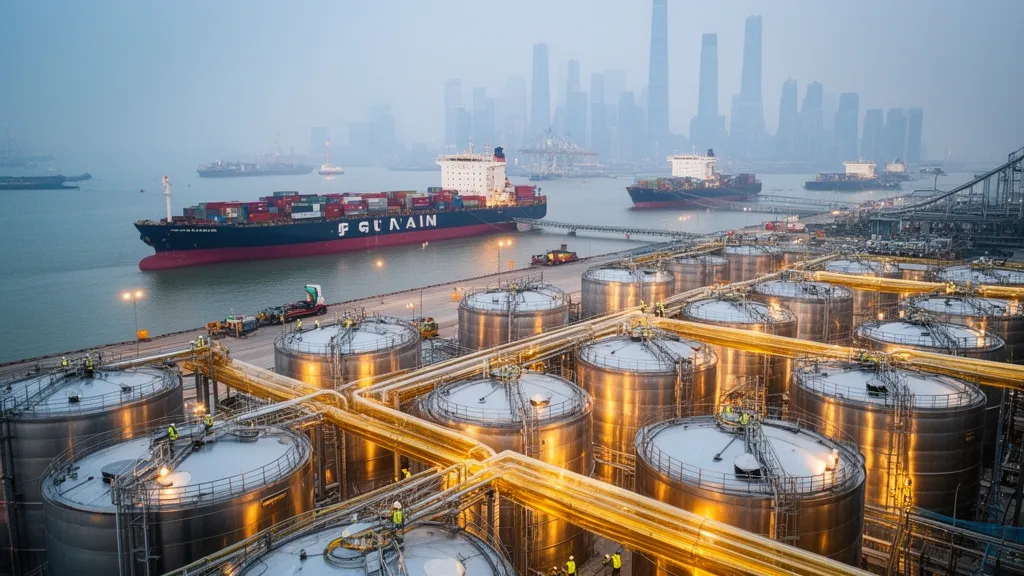
- Focus: Chinese Grains & Oils Congress 2026 will examine domestic oilseed processing expansion and vegetable oil export potential in Shanghai on March 5–6, 2026.
- Strategic Shift: China’s dual role as the world’s largest vegetable oil importer and a growing exporter of selected oils, especially soybean oil, could reshape global trade flows.
- Market Watch: Black Sea exporters face a neutral-to-watchful outlook as China reassesses its oilseed value chain, with potential impacts on sunflower oil demand and competition.
Conference Overview
The Chinese Grains & Oils Congress 2026, scheduled for March 5–6 in Shanghai, will spotlight China’s evolving oilseed processing sector and its export strategy for vegetable oils. The event will bring together policymakers, industry leaders, and market analysts to discuss how China’s domestic processing capacity and trade policies are likely to evolve over the coming years.
China remains the world’s largest importer of vegetable oils and oilseeds, particularly palm, soybean, and sunflower oils, which are crucial for meeting its expanding domestic consumption needs. At the same time, the country is emerging as a selective exporter of certain products, most notably soybean oil, reflecting a more complex role in global oilseed trade.
Key Speaker and Expertise
Zhang Liwei, Senior Economist at the National Data Center for Food and Materials of the People’s Republic of China, will lead the core presentation on China’s oilseed processing trends and vegetable oil export opportunities. His insights are expected to provide critical guidance for market participants tracking China’s policy and investment direction.
Zhang’s background includes serving as Deputy General Director at COFCO Oils & Grains Industries (Jiujiang) Co., Ltd., along with senior roles at the China National Grain and Oilseed Information Center (CNGOIC) since 2009. With over 30 years of experience spanning production management, spot and futures trading, and market research across China’s grain and oilseed sectors, he is well positioned to assess how domestic processing expansion could alter China’s import and export balance.
Market Implications and Strategic Context
The conference underscores a strategic reassessment of China’s position within the global oilseed value chain. Any acceleration in domestic crushing capacity, refining, and logistics could reduce China’s dependence on imported refined oils while potentially increasing its exports of selected vegetable oils, especially soybean oil.
For Black Sea exporters, including suppliers of sunflower oil, China remains a pivotal demand center. However, greater Chinese self-sufficiency or expanded export activity could gradually reshape established trade routes and intensify competition in key destination markets. Until concrete policy signals and investment commitments are revealed at the March 2026 congress, a neutral-to-watchful stance is warranted among global market participants assessing forward procurement strategies and pricing risks.
Source: Market Data
Leave a Reply