
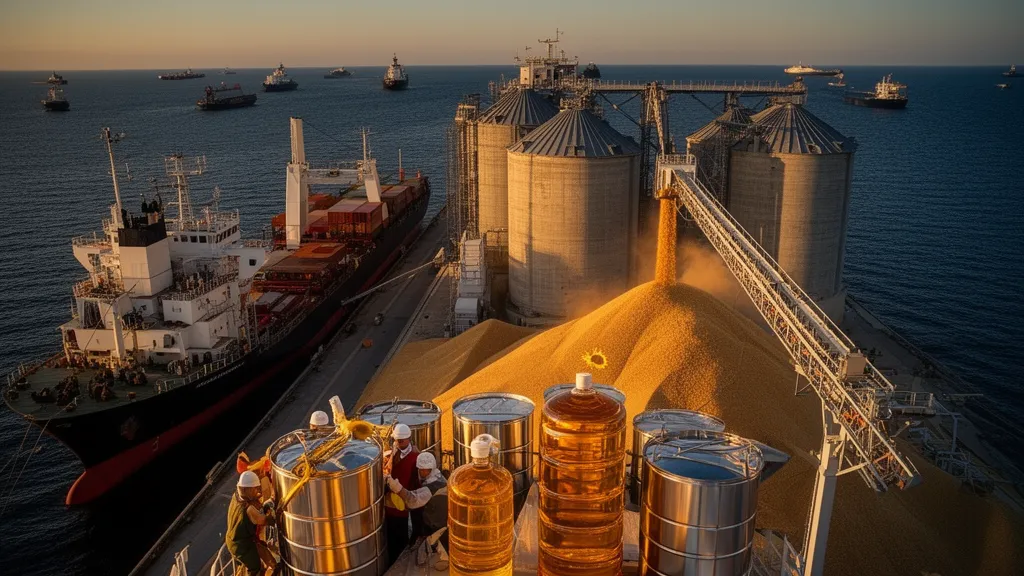
- Bearish (Food Prices): FAO Food Price Index fell 0.4% in January 2026, its fifth consecutive monthly decline, and now stands 22.7% below its March 2022 peak.
- Bullish (Sunflower Oil): Black Sea sunflower oil prices increased on persistent supply tightness and limited farmer sales after prior months of decline.
- Neutral (Wheat): Wheat prices remained broadly stable as weather risks in the Russian Federation were offset by ample global supplies and strong crop prospects in Argentina and Australia.
- Mixed (Vegetable Oils): Vegetable oil prices rose overall, led by sunflower, palm, and soybean oils, while rapeseed oil softened on comfortable EU inventories.
- Mixed (Meat): Meat prices edged down month-on-month, with weaker pork values in the EU partially offset by firmer poultry prices on strong global demand.
FAO Food Price Index Overview
The FAO Food Price Index averaged 123.9 points in January 2026, down 0.4% (0.5 points) from December 2025. This marks the fifth consecutive monthly decline and places the index 22.7% below its March 2022 peak and 0.6% below its level a year earlier.
Cereal Market Developments
The FAO Cereal Price Index edged up to 107.5 points in January 2026, a marginal 0.2% increase from December but 3.9% below the same month last year. Global wheat prices slipped 0.4% month-on-month as supportive supply fundamentals, including favorable crop prospects in Argentina and Australia, outweighed weather concerns over winter crop conditions in the Russian Federation and the United States. Corn prices declined by 0.2%, while barley prices strengthened on robust import demand, particularly for Argentine supplies.
Vegetable Oil and Black Sea Sunflower Oil Dynamics
The FAO Vegetable Oil Price Index rose 2.1% in January 2026 to 168.6 points, standing 10.2% above its January 2025 level. International sunflower oil prices turned higher after two months of declines in late 2025, supported by persistent supply tightness in the Black Sea region where limited farmer selling constrained export availability. Palm oil prices increased for a second month on seasonal production declines in Southeast Asia, and soybean oil prices strengthened amid reduced South American export availabilities. In contrast, rapeseed oil prices eased due to ample inventories in the European Union.
Meat Market Update
The FAO Meat Price Index slipped 0.4% in January 2026 to 123.8 points but remained 6.1% higher than a year earlier. Pork prices weakened on softening demand and elevated supplies in the European Union. Poultry prices, however, firmed, underpinned by resilient global demand, with Brazilian exports playing a prominent role in meeting import needs.
Price Index Summary Table
| Index | January 2026 Level | Monthly Change | Year-on-Year Change |
|---|---|---|---|
| FAO Food Price Index | 123.9 points | -0.4% (−0.5 points) | -0.6% |
| FAO Cereal Price Index | 107.5 points | +0.2% | -3.9% |
| FAO Vegetable Oil Price Index | 168.6 points | +2.1% | +10.2% |
| FAO Meat Price Index | 123.8 points | -0.4% | +6.1% |
Black Sea Market Impact and Trading Implications
Black Sea market signals are mixed. Tight sunflower oil supplies, compounded by farmer reluctance to sell, are underpinning prices and limiting export availability from the region. At the same time, stable wheat prices reflect ample global supply and supportive production prospects in key exporters, which are offsetting weather-related risks for Russian winter wheat. With the broader wheat environment exerting limited upside pressure, traders should focus on monitoring Russian winter crop development alongside farmer selling patterns in the Black Sea sunflower oil market for timing and positioning opportunities.
Source: Market Data
Leave a Reply