
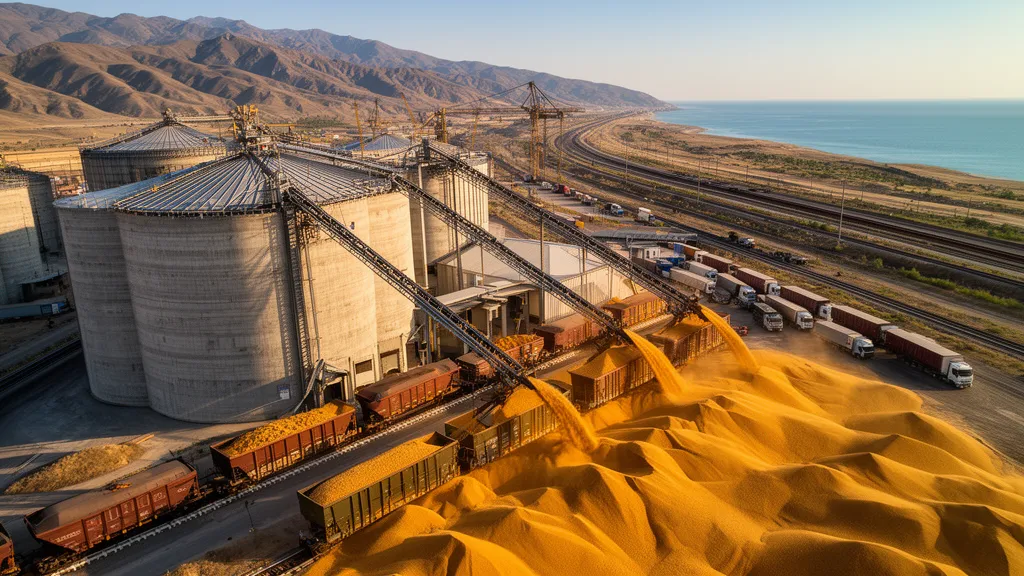
- AGT CARGO plans to build a new grain terminal at the Astara dry port to expand capacity beyond the current 500,000 tons per year.
- The company set a historic record by processing around 180,000 tons of grain via Georgia’s Poti port on the Trans-Caucasian route in 2025.
- AGT CARGO is exploring containerized grain shipments from Alat port to Mersin (Turkey) using the Baku-Tbilisi-Kars railway corridor.
- Expansion and containerization efforts are mildly bullish for the Trans-Caucasian freight corridor, signaling confidence in alternative routes to Black Sea ports.
AGT CARGO Expands Grain Terminal Capacity at Astara Dry Port
AGT CARGO, a leading Azerbaijani rolling stock operator, has announced plans to increase its grain transshipment capacity through the construction of a new terminal at the Astara dry port. The announcement was made by founder and CEO Javid Guliyev during the KAZAKH GRAIN & LOGISTIC FORUM held in Almaty on February 4.
The company currently operates a substantial freight fleet, including 750 grain trucks and 150 covered wagons, and runs an existing grain terminal in Astara with an annual throughput capacity of 500,000 tons. AGT CARGO also maintains active cooperation with the strategically important port of Alat, a key node on the Trans-Caucasian Transit Route.
Operational Milestones on the Trans-Caucasian Route
In cooperation with Kazakhstan’s Logsoft, Azerbaijan Railways, and Georgian Railways, AGT CARGO achieved a historic milestone in 2025 by processing approximately 180,000 tons of grain through the Poti port terminal in Georgia. This performance underscores the commercial viability of the Trans-Caucasian route for regional grain flows, even though volumes still trail traditional Black Sea export channels.
Containerization and BTK Railway Opportunities
Looking ahead, AGT CARGO is assessing containerization options for grain shipments from the port of Alat to Mersin in Turkey via the Baku-Tbilisi-Kars (BTK) railway. Containerized grain freight could offer exporters more flexible shipment sizes, improved cargo handling, and potentially lower logistics costs, particularly for deliveries targeting Turkish buyers and nearby Mediterranean markets.
Market Impact: Neutral to Mildly Bullish for the Corridor
The planned expansion at Astara and the growing use of the Poti terminal indicate increasing confidence in alternative grain transit routes that bypass congested or higher-risk Black Sea pathways. Additional capacity at Astara should improve Kazakhstan’s and other regional exporters’ options for routing grain south of the Caucasus. While current volumes remain modest in global terms, infrastructure investment and containerization initiatives on the BTK line are mildly bullish signals for the long-term development and competitiveness of the Trans-Caucasian freight corridor.
| Asset / Route | Metric | Volume / Capacity |
|---|---|---|
| Astara grain terminal (current) | Annual throughput capacity | 500,000 tons |
| Poti port terminal (2025) | Processed grain volume | ≈180,000 tons |
| AGT CARGO grain trucks | Fleet size | 750 units |
| AGT CARGO covered wagons | Fleet size | 150 units |
Source: Market Data
Leave a Reply