
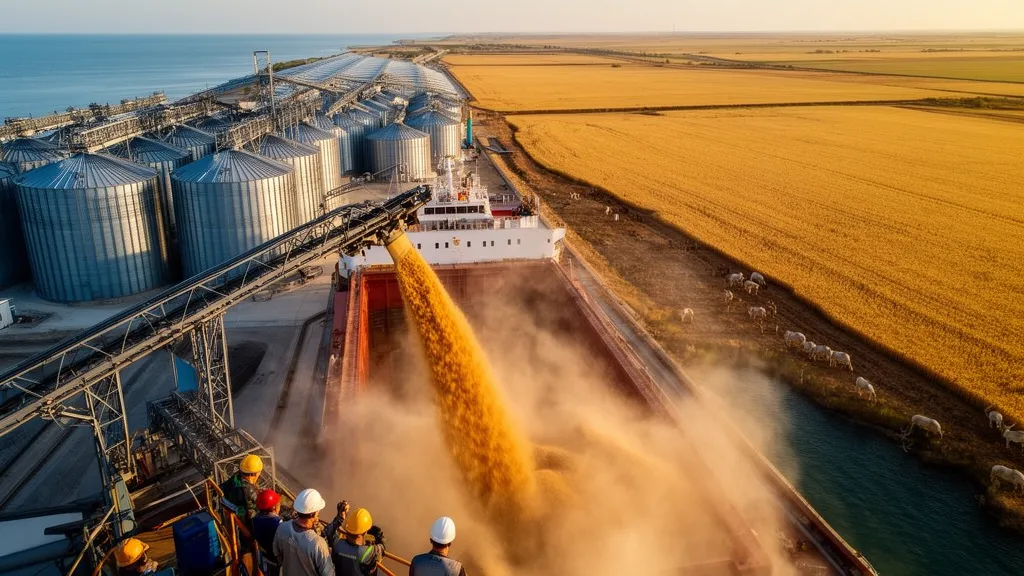
- Record exports vs. weak margins: Kazakhstan shipped a record 1.7 million tonnes of soft wheat in December 2025, yet farmer profitability remains under pressure from tenge devaluation and tight liquidity.
- Import paradox: Despite a bumper 2025 harvest, Kazakhstan continues importing around 1.5 million tonnes of Russian grain annually because exchange rate disparities make Russian wheat cheaper for domestic feed.
- Bearish 2026 outlook: Wheat area is projected to fall to 10–11 million hectares amid poor weather and saiga damage, with farmers shifting land into barley and signaling potentially tighter Black Sea wheat supply in 2026/27.
- Neutral to bearish for Black Sea wheat: Strong current exports support freight from Central Asia, but deteriorating 2026 production and constrained farmer margins could limit future Kazakh export availability and reshape regional trade flows.
Kazakhstan Grain Market Under Pressure Despite Record December Exports
Kazakhstan’s grain sector is facing mounting structural pressure even as export volumes reach historic highs. In December 2025, the country shipped a record 1.7 million tonnes of soft wheat, underscoring strong external demand and robust logistics capacity from Central Asian origins.
According to Viktor Aslanov, Chairman of the Union of Field Growers of Kazakhstan, speaking at the KAZAKH GRAIN & LOGISTIC FORUM in Almaty on February 3, domestic producers are not fully benefiting from this export strength. Farmer margins remain constrained by the devaluation of the national currency and persistent cash flow shortages, which limit working capital and investment in productivity.
Paradox of Record Harvest and Continued Russian Imports
The market is characterized by a paradoxical trade pattern. Despite a strong 2025 wheat harvest, Kazakhstan continues to import roughly 1.5 million tonnes of Russian grain annually. Exchange rate differentials currently make Russian wheat economically attractive for domestic feed meal production, undercutting local supplies and highlighting the competitiveness gap faced by Kazakh farmers.
This ongoing reliance on Russian imports signals that domestic wheat prices struggle to compete with Russian-origin grain, reinforcing pressure on farm-gate returns. While export volumes demonstrate Kazakhstan’s role as a key shipper, the internal market remains distorted by currency dynamics and cost structures.
2026 Production Outlook: Reduced Wheat Area and Shift to Barley
The 2026 production outlook is deteriorating. Aslanov expects wheat yields to decline due to insufficient autumn precipitation and low snow cover across major growing regions, which heighten risks for winter moisture reserves and spring crop establishment. Additionally, uncontrolled growth in saiga antelope populations has caused crop damage, adding to yield and area pressure.
Wheat planted area is projected to fall to 10–11 million hectares as farmers respond to weather risks, wildlife damage, and tight margins. In parallel, growers plan to reallocate some land to barley, with sown area forecast to rise from 2.2 million hectares in 2025 to about 2.5 million hectares in 2026. However, total barley production is expected to plateau at around 3.56 million tonnes because weaker yields are likely to offset the acreage gains.
Implications for Black Sea Wheat and Regional Trade Flows
For Black Sea wheat markets, the signal is neutral to bearish in the near term but potentially supportive further out. Current record exports from Kazakhstan underpin solid freight demand from Central Asia, adding volume to regional trade lanes. At the same time, the country’s continued dependence on competitively priced Russian grain points to ample Russian supply and a strong pricing edge.
Looking ahead to the 2026/27 marketing year, the anticipated reduction in Kazakh wheat area and weaker yield prospects could limit exportable surpluses. This may modestly tighten regional supply and shift trade flows, especially if weather risks extend into the broader Black Sea zone. For traders, Kazakhstan’s ongoing import dependency creates arbitrage opportunities between Russian and Kazakh markets, but it also underlines domestic price competitiveness challenges that may persist if currency and structural issues are not addressed.
Source: Market Data
Leave a Reply