
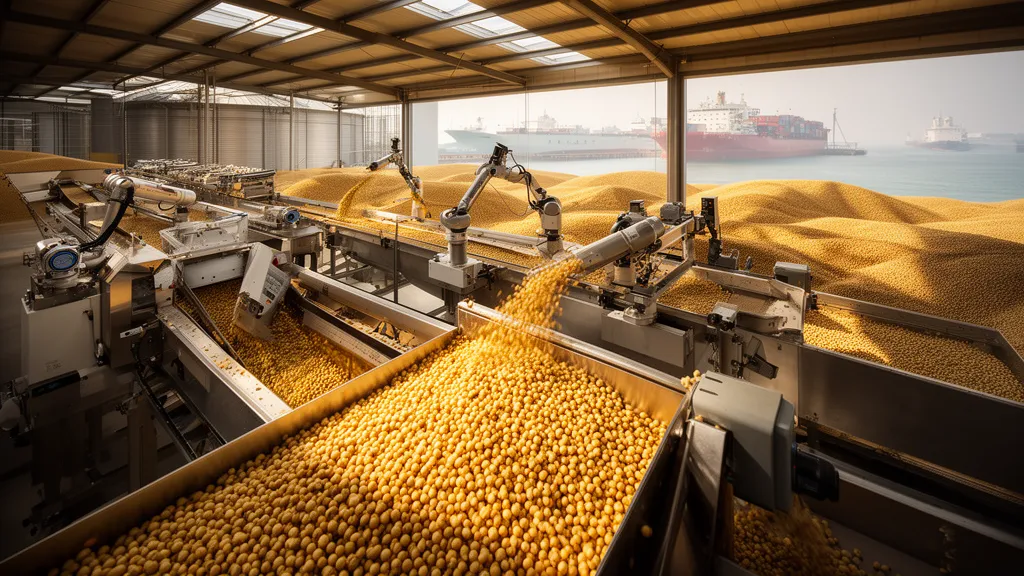
- Strategic pivot: China is shifting its soybean policy from expanding planted area to boosting yield and quality through technology and mechanization.
- Import diversification: Beijing aims to reduce reliance on traditional suppliers like the US and Canada by broadening agricultural import partners, especially in the Global South.
- Record grain output: China’s total grain production is forecast at a record 715 million tons in 2025/26, up 8 million tons year-on-year, reinforcing its focus on self-sufficiency.
- Soybean demand risk: Higher domestic productivity suggests a long-term intention to curb soybean import growth, a neutral to bearish signal for some exporters.
- Quality focus: Rising standards for soybean quality may favor origins able to meet tighter specifications, impacting competitiveness among suppliers.
China’s Policy Shift on Soybeans
China’s latest “No. 1 Document” on rural development marks a clear pivot in soybean strategy: away from expanding acreage and toward maximizing yield and quality. The policy positions food security around domestic self-sufficiency, with less emphasis on relying on foreign supplies for key crops.
For soybeans, Beijing plans to drive productivity gains via investments in agricultural machinery, seed technology, biotechnology, and integration of artificial intelligence into crop management. This aligns with broader efforts to modernize agriculture while stabilizing domestic output.
Grain Production Outlook
According to FAS USDA projections, China’s total grain production in the 2025/26 marketing year is forecast to reach a record 715 million tons. This represents an increase of 8 million tons compared with the previous year, underscoring the effectiveness of yield-focused policies and continued prioritization of food security.
| Marketing Year | Total Grain Production (million tons) | Year-on-Year Change (million tons) |
|---|---|---|
| 2024/25 (est.) | 707 | – |
| 2025/26 (f) | 715 | +8 |
Despite this record harvest, China remains structurally dependent on imported oilseeds, particularly soybeans, to satisfy its crushing and feed demand. However, incremental domestic gains could gradually temper import growth over the medium to long term.
Import Diversification and Trade Implications
The document also highlights Beijing’s intention to diversify the geography of agricultural imports. This could reduce reliance on traditional suppliers such as the United States and Canada, especially against the backdrop of persistent trade tensions. China is expected to deepen ties with Global South producers, broadening its supplier base for key commodities.
For exporters, this approach means future Chinese buying patterns may place greater weight on political risk, supply security, and quality consistency, not just price. Suppliers able to offer stable volumes within a diversified sourcing framework may benefit.
Impact on Black Sea Soybean Exporters
The implications for Black Sea soybean exporters are mixed. On one hand, China’s diversification drive could open doors for origins such as Ukraine and other regional suppliers to gain market share if they can meet China’s logistical and quality requirements.
On the other hand, the strategic emphasis on domestic yield and quality improvement signals a long-term effort to curb the growth of soybean imports overall. This is neutral to slightly bearish for Black Sea exporters, particularly if China’s self-sufficiency gains outpace domestic demand growth in feed and crushing sectors.
Additionally, the policy focus on higher quality standards may raise the bar for imported beans. Origins capable of consistently delivering superior specifications—such as higher protein content and lower impurity levels—are likely to be favored in China’s procurement mix, potentially reshaping competitive dynamics among exporters.
Source: Market Data
Leave a Reply