- Neutral to Slightly Bearish for Ukrainian logistics: Grain rail flows are increasingly concentrated on the Hungarian corridor, while volumes through Slovakia, Poland, and Romania decline, reducing route diversification.
- Neutral for Russian freight and fertilizer: Stable export volumes from Rostov Oblast and sustained global leadership in fertilizer exports underline Russia’s continued freight capacity, but highlight buyer concentration risk in Turkey.
Ukrainian Rail Grain Corridor Shifts
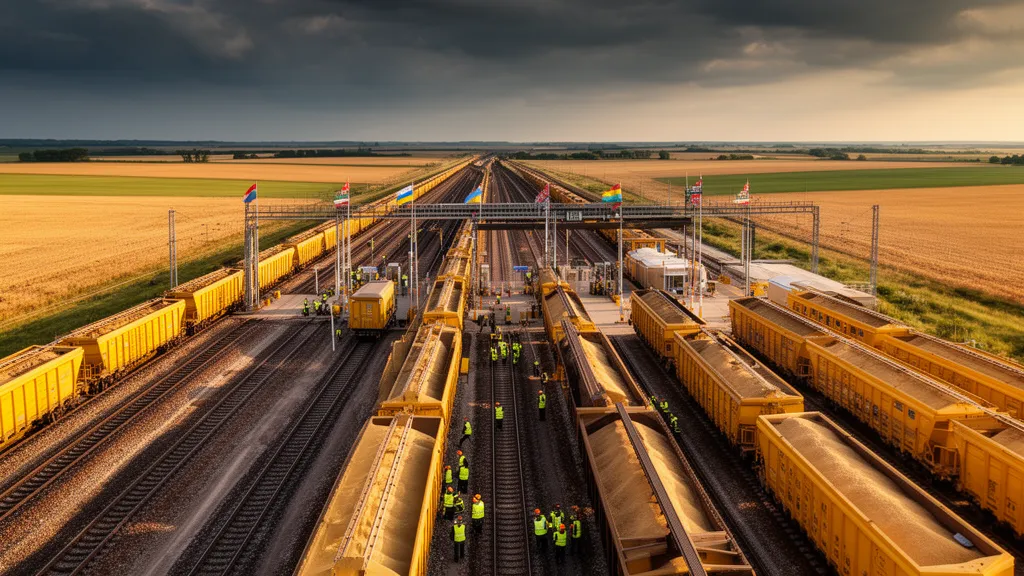
Ukrainian rail freight patterns in January show Hungary as the only growing outlet for grain exports. Daily grain car movements to Hungary averaged 57.3 units as of January 27, marking a 16% increase over December. In contrast, border crossings via Slovakia, Poland, and Romania all posted lower activity, pointing to either weaker demand or operational constraints on these routes.
Russian Rostov Region Export Performance
Rostov Oblast exported 522,000 tons of agricultural products in January 2026, combining 302,000 tons of direct shipments and 220,000 tons transshipped through the Kavkaz port. Wheat remained the anchor commodity alongside corn, wheat bran, and barley. Turkey absorbed 55% of total volumes, with smaller parcels routed to Albania, Israel, and Egypt, underscoring both entrenched trade links and buyer concentration risk.
Russia’s Fertilizer Export Position
For 2025, Russia maintained its role as the world’s largest mineral fertilizer exporter, shipping around 43 million tons worth over $11 billion. This confirms resilient export logistics across agricultural inputs and supports continued influence over global fertilizer availability and pricing.
Key Rail and Export Metrics
| Route / Region | Metric | January Level | Change vs Previous Period |
|---|---|---|---|
| Ukraine → Hungary (rail grain) | Daily grain cars | 57.3 cars/day | +7.9 cars/day vs December (~+16%) |
| Ukraine → Slovakia (rail grain) | Daily grain cars | 24.1 cars/day | -6.9 cars/day vs December |
| Ukraine → Poland (rail grain) | Daily grain cars | 9.0 cars/day | -2.9 cars/day vs December |
| Ukraine → Romania (rail grain) | Daily grain cars | 4.9 cars/day | -3.0 cars/day vs December |
| Rostov Oblast (Russia) | Total ag exports (Jan 2026) | 522,000 tons | — |
| Rostov Oblast (Russia) | Direct shipments | 302,000 tons | — |
| Rostov Oblast (Russia) | Transshipment via Kavkaz port | 220,000 tons | — |
| Turkey share of Rostov exports | Share of total | 289,000 tons (55%) | — |
| Russia (fertilizers, 2025) | Total fertilizer exports | 43 million tons | Value > $11 billion |
Market Implications
The growing reliance on the Hungarian rail corridor heightens route concentration risk for Ukrainian grain exporters and may impact freight pricing and reliability if disruptions occur. Russian freight flows, supported by diversified modes and strong fertilizer exports, remain operationally stable, but the heavy dependence on Turkey as a buyer warrants ongoing monitoring from traders and risk managers.
Source: Market Data
Leave a Reply