- Policy shift: Poland is pushing for stricter EU-level border checks and monitoring of agricultural imports from third countries to address competitive imbalances.
- Farmer support: Proposed monthly import monitoring and a compensation fund could trigger support or tighter measures when imports pressure domestic markets.
- Supply shock in Ukraine: Oilseed output on irrigated lands fell 98% after the Kakhovka Reservoir destruction, with major declines in grains, legumes, and vegetables.
- Market impact: Neutral to bearish implications for Black Sea exports as higher compliance costs, slower clearances, and possible future restrictions weigh on trade flows.
Poland’s Push for Stricter EU Agricultural Import Controls
Polish Agriculture Minister Stefan Krajewski has called for tighter quality and safety inspections on agricultural imports entering the EU from third countries, arguing that current protective measures do not ensure parity with EU production standards. Warsaw contends that this gap distorts competition by exposing EU farmers to imports produced under looser environmental and safety rules.
The proposal, presented at the Agrifish ministerial meeting in Brussels, has gained support from several EU member states, including Ukraine’s neighbors and Austria. It reflects growing sensitivity within the bloc to the impact of trade liberalization on domestic agriculture, particularly in frontier member states exposed to Black Sea and other third-country shipments.
Core Elements of the Polish Proposal
The Polish initiative centers on three main components designed to tighten oversight and mitigate market shocks from import surges.
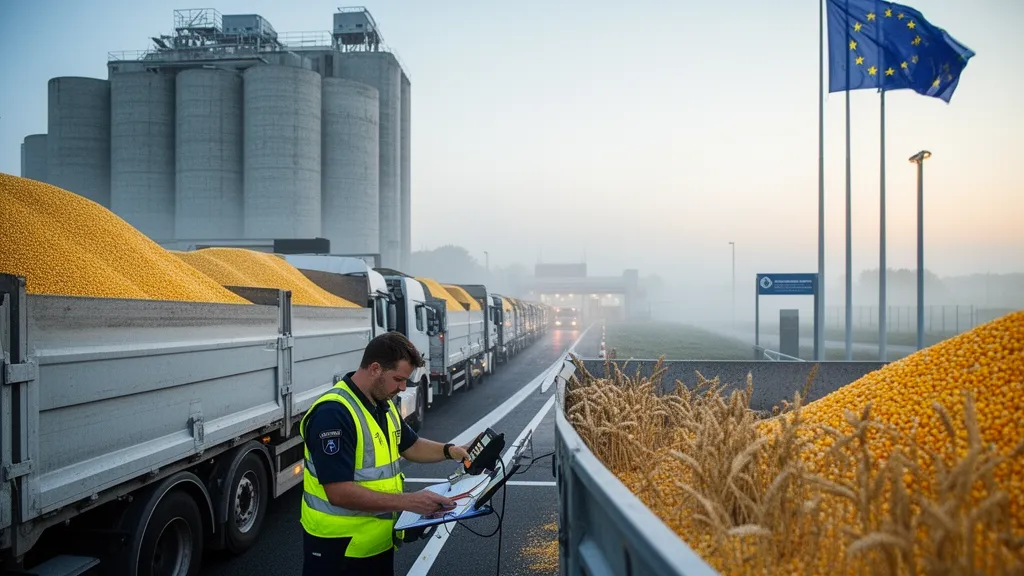
- Enhanced border control procedures: Stricter quality and safety checks at EU external borders for agricultural imports from third countries, aiming to align imported goods with standards imposed on EU producers.
- Monthly import monitoring: Systematic tracking of import volumes with regular impact assessments on domestic markets, improving early warning for price and margin pressure on EU farmers.
- Compensation fund for EU farmers: A financial mechanism to support farmers that incur losses linked to excessive inflows of goods under free trade agreements, covering current and future arrangements, including potential Mercosur deals.
Krajewski underscored that farmers facing losses due to excessive inflows under free trade deals should receive targeted support, stressing that European agriculture should not be a casualty of trade liberalization, whether in relation to Ukraine or other partners.
Ukraine’s Irrigated Production Collapse
Parallel to the policy debate, new data illustrate the severity of production losses in Ukraine’s irrigated agricultural regions following the destruction of the Kakhovka Reservoir. The collapse of irrigation infrastructure has had an outsized impact on high-value and water-intensive crops.
| Category | Previous Output (tons) | Current Output (tons) | Change (tons) | Change (%) |
|---|---|---|---|---|
| Oilseeds (irrigated) | 588,500 | 13,100 | -575,400 | -98% |
| Grains & Legumes (irrigated) | 608,900 | 44,400 | -564,500 | -93% |
| Vegetables (irrigated) | N/A | N/A | -84,000 | N/A |
The near-total collapse in irrigated oilseed production and the sharp declines in grains, legumes, and vegetables highlight structural supply constraints in southern Ukraine. These losses likely contributed to heightened sensitivities among EU farmers to import competition and volatility in regional trade flows.
Market Impact and Black Sea Export Outlook
The combined effect of Polish-led policy initiatives and Ukrainian supply disruptions is neutral to bearish for Black Sea export flows into the EU. On the policy side, stricter border inspections, tighter monitoring, and the prospect of compensation-triggered measures introduce additional friction for exporters, even if outright quotas or bans are not immediately implemented.
Exporters shipping grains and oilseeds to the EU via Poland and neighboring states may face longer clearance times, stricter documentation demands, and higher compliance costs. Over time, the monitoring framework and compensation fund could be used to justify targeted restrictions or safeguard-type actions when domestic markets come under pressure.
On the supply side, Ukraine’s irrigated-land production collapse reduces available volumes for export, particularly in oilseeds, and may tighten regional balances. However, the protectionist tilt within parts of the EU suggests that limited supply alone may not translate into straightforward support for import flows, as political pressure from EU farmers remains elevated.
Implications for Traders and Logistics
Traders should closely monitor evolving EU-level discussions around import controls and compensation mechanisms, especially any movement toward codified thresholds for intervention. Forward contracts and basis strategies may need to incorporate the risk of additional checks or temporary slowdowns at key border crossings.
Logistics coordinators moving Black Sea-origin cargoes into Poland and neighboring transit states should build in extra time for documentation review and physical inspections. Diversification of routes, flexibility in discharge ports, and early engagement with inspection agencies will be important to minimize demurrage and maintain schedule reliability.
Source: Market Data
Leave a Reply