
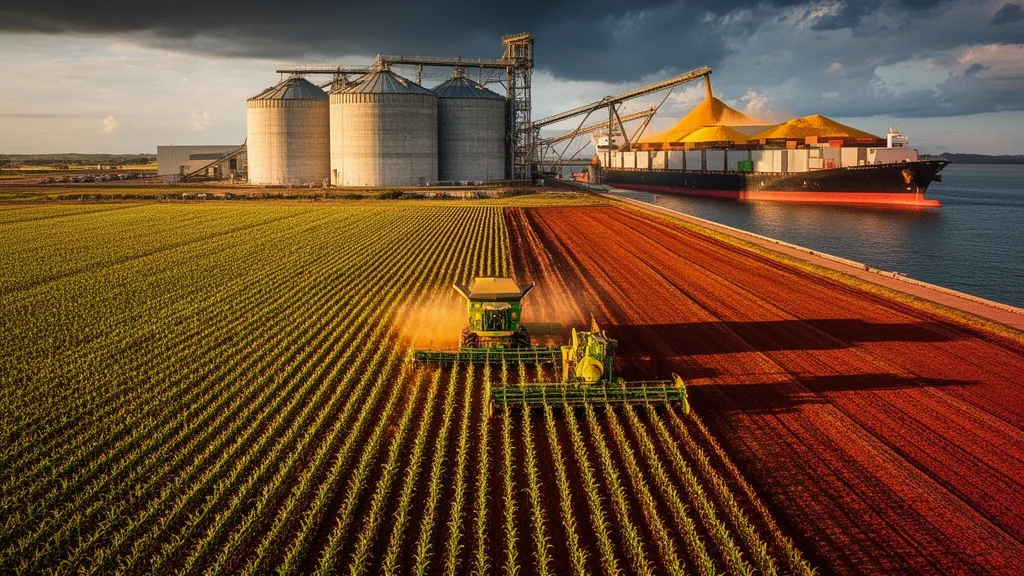
- Accelerated planting: Brazil’s safrinha corn planting has reached 4.7% of planned area, more than double last year’s 2.2% pace.
- Higher output outlook: 2025/26 Brazilian corn production forecast raised to 136.6 million tonnes, adding 0.6 million tonnes to expected global supply.
- Export competition: Larger Brazilian supplies in mid-2025 could weigh on Black Sea corn export premiums and competitiveness.
Brazilian Corn Market Update
Brazil’s 2025/26 safrinha (second-crop) corn season is off to a fast start. As of January 22, AgRural reports that 4.7% of the planned safrinha area has been planted, more than double the 2.2% completion rate seen on the same date in 2024. The quick planting pace improves the likelihood that pollination and grain filling will occur within the most favorable weather window.
In contrast, first-crop corn harvesting is lagging last year. Brazilian farmers have harvested 5% of the planned first-crop area versus 8.6% by this point a year ago. The slower harvest could influence short-term internal supply dynamics but does not materially alter the improving outlook for total 2025/26 production.
| Metric | Current Season | Previous Year / Estimate |
|---|---|---|
| Safrinha corn planting progress (Jan 22) | 4.7% of planned area | 2.2% of planned area |
| First-crop corn harvest progress (Jan 22) | 5.0% of planned area | 8.6% of planned area |
| Brazilian 2025/26 corn production forecast | 136.6 million tonnes | 136.0 million tonnes (previous estimate) |
Implications for Global and Black Sea Corn Markets
The combination of accelerated safrinha planting and a higher production forecast to 136.6 million tonnes points to a potentially larger Brazilian exportable surplus entering world markets from mid-2025 onward. This is broadly neutral to slightly bearish for global corn prices as additional South American supply competes for demand, particularly in price-sensitive destinations.
For Black Sea corn, the impact skews neutral to bearish. Brazil is a key competitor in the Middle East and Asian markets, and abundant Brazilian supplies during the second half of 2025 could pressure Black Sea FOB premiums and narrow arbitrage opportunities. Traders should closely track Brazilian weather during the critical February–March development window, as any adverse conditions could quickly reshape yield expectations and export spreads.
Source: Market Data
Leave a Reply