
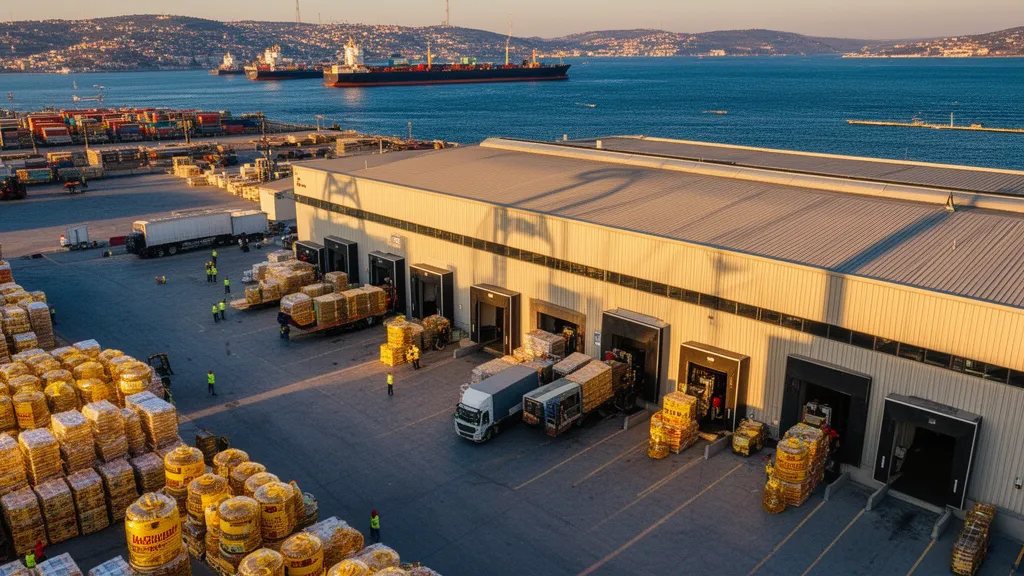
- Logistics Upgrade: Russia’s Export Center will open a temporary storage warehouse near Istanbul in February to streamline Black Sea agricultural exports, especially oilseeds.
- Strategic Market: Turkey imports around 912,000 tons of Russian sunflower oil annually and leads in sunflower meal purchases at an expected 783,000 tons.
- Value-Added Services: The facility offers competitive rates, Russian-speaking staff, labeling, repackaging, and other services to reduce delays and improve market readiness.
- Market Impact: Neutral to slightly bullish for Russian oilseed exports as improved logistics support competitiveness and margins rather than dramatically increasing volumes.
Russia Opens Strategic Istanbul Warehouse
The Russian Export Center (REC) is launching a temporary storage warehouse (TSW) near Istanbul starting in February, targeting improved freight logistics and delivery efficiency for Russian agricultural products entering the Turkish market. The warehouse will primarily serve residents of the Russian national pavilion in Turkey, consolidating flows and offering exporters more control over their supply chain.
Located close to Istanbul’s key trading zones, the facility is designed to help exporters optimize storage and logistics costs while reducing dependence on third-party warehouses. This setup aims to cut handling times, lower operational risks, and provide greater predictability in delivery schedules for agricultural cargos, including oilseeds and processed products.
Operational Features and Services
The new TSW will be staffed with Russian-speaking personnel who can support documentation, provide market consultancy, and guide exporters through local regulatory requirements. This is expected to help minimize customs-related delays and improve coordination with Turkish buyers.
Beyond basic storage, the warehouse offers value-added services such as labeling, repackaging, photography, and pre-sale sample preparation. These services allow exporters to tailor products to local retail standards and buyer specifications, potentially improving margins and brand positioning in the Turkish market.
Turkey’s Role in Russian Oilseed Trade
Turkey is a critical destination for Russian oilseed and derivative exports. OleoScope analysts note that Turkey is the second-largest buyer of Russian sunflower oil, with annual imports around 912,000 tons. It is also the leading purchaser of Russian sunflower meal, with volumes expected to reach 783,000 tons by year-end.
Despite a year-on-year decline in sunflower meal volumes, imports over the past three years show a 10% growth, indicating structurally robust demand. This makes Turkey a strategic outlet for Russian oilseed products, especially given its role as a regional processing and re-export hub.
| Product | Turkish Imports of Russian Supply (tons/year) | Trend |
|---|---|---|
| Sunflower Oil | 912,000 | Stable high demand |
| Sunflower Meal | 783,000 (expected) | +10% over three years, slight y/y decline |
Global REC Footprint
The Istanbul warehouse complements REC’s broader international infrastructure. The organization operates national pavilions across eight countries, including China, Vietnam, Egypt, the UAE, Saudi Arabia, India, and Jordan. These platforms collectively provide Russian exporters with market entry support, promotion, and logistics coordination in key importing regions.
Market Impact and Trading Implications
The opening of the Istanbul TSW is assessed as neutral to slightly bullish for Russian oilseed exports. It primarily removes logistical frictions—cutting storage and handling costs, shortening delivery times, and improving documentation flows—rather than creating new demand. Turkey’s underlying import appetite appears steady, supported by the positive three-year trend in sunflower meal purchases.
Improved logistics could still translate into marginal competitive gains for Russian exporters, particularly through better speed-to-market and reduced operational risk. This may put mild pressure on alternative Black Sea suppliers if Russian product becomes more readily available or more reliably delivered into Turkish buyers’ schedules. For traders, the key variables to monitor will be any acceleration in shipment pace and whether margins improve more for exporters than for end buyers.
Source: Market Data
Leave a Reply