
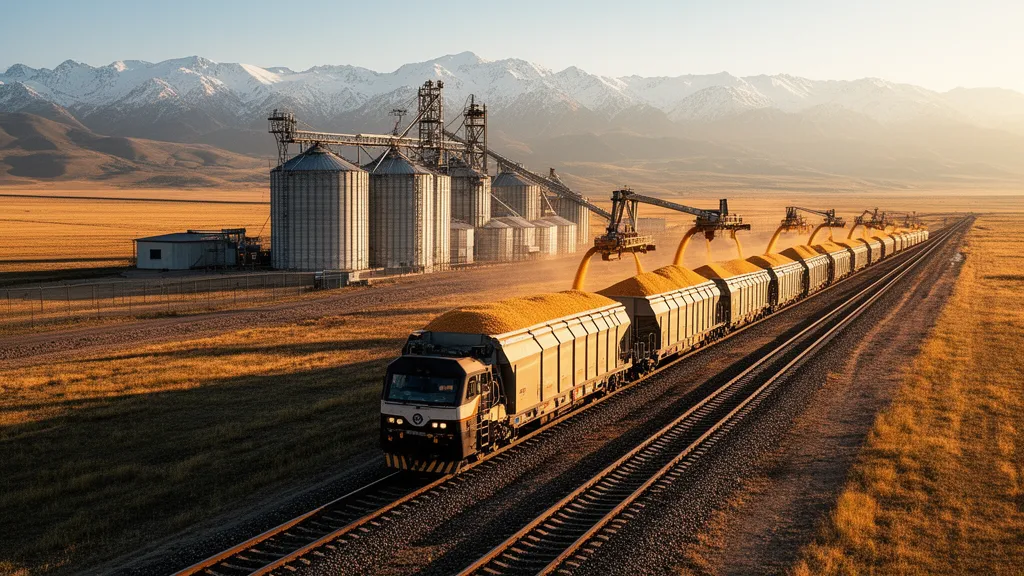
- Central Asian demand surges: Kazakhstan’s grain exports rose 18.6% year-on-year to 5.1 million tonnes, led by strong growth in Uzbekistan, Kyrgyzstan, and Afghanistan.
- Shift to value-added in Russia: Russia’s average food export value per tonne increased 25% in 2025 as the country pivots from bulk grain to higher-margin processed products.
- Freight mix changing: Outlook is neutral to bearish for bulk grain freight, but bullish for Central Asian rail corridors and logistics for processed, value-added agricultural goods.
Kazakhstan Grain Export Performance
Kazakhstan exported 5.1 million tonnes of grain from September 2025 to January 15, 2026, an 18.6% increase versus 4.3 million tonnes in the same period of the 2024/25 marketing year. Rail data from JSC NC Kazakhstan Temir Zholy highlights strong flows along established Central Asian routes, underscoring both resilient demand and improved logistics efficiency.
| Destination | 2024/25 Volume (tonnes) | 2025/26 Volume (tonnes) | Change (tonnes) | Change (%) |
|---|---|---|---|---|
| Total Grain Exports | 4,300,000 | 5,100,000 | +800,000 | +18.6% |
| Uzbekistan | 1,670,000 | 2,340,000 | +670,000 | +40.2% |
| Kyrgyzstan | 85,000 | 150,000 | +65,000 | +76.5% |
| Afghanistan | 204,000 | 350,000 | +146,000 | +71.6% |
Uzbekistan remained the primary buyer, taking 2.34 million tonnes, up 40.2% year-on-year. Kyrgyzstan’s imports rose to 150,000 tonnes, while Afghanistan increased purchases to 350,000 tonnes. This concentration of flows consolidates Kazakhstan’s role as a critical grain supplier to Central Asia and reinforces the strategic importance of regional rail links.
Russia’s Pivot to Value-Added Agricultural Exports
Russia’s agricultural sector reported a 25% increase in average export value per tonne in 2025, reflecting a structural shift away from bulk grain exports toward processed, higher-margin products. Government data indicate that meat exports reached 1 million tonnes, while dairy export revenues are projected to grow 13% year-on-year, exceeding $500 million excluding December EAEU intra-trade flows.
This transition is aligned with Russia’s goal to raise non-resource, non-energy exports by 67% by 2030, emphasizing industrial processing and value-added agro-industrial output. However, earlier government statements noted an 8% decline in total agricultural export value, suggesting that overall volumes remain under pressure despite the per-tonne value gains.
Logistics and Market Implications
Kazakhstan’s export surge signals firm regional demand and improved throughput on rail corridors, particularly into Uzbekistan, Afghanistan, and Kyrgyzstan. This underpins supportive conditions for rail operators and cross-border logistics providers serving Central Asia.
Russia’s ongoing pivot to processed goods may gradually weigh on bulk grain freight volumes through Black Sea ports, even as new trade flows in meat and dairy products emerge. The logistics mix is likely to rebalance toward cold-chain and containerized shipments for finished goods, while bulk grain freight demand faces a more neutral to bearish backdrop.
Overall market sentiment remains neutral to bearish for bulk grain freight, but increasingly constructive for value-added product logistics and Central Asian rail corridors as regional trade patterns evolve.
Source: Market Data
Leave a Reply