
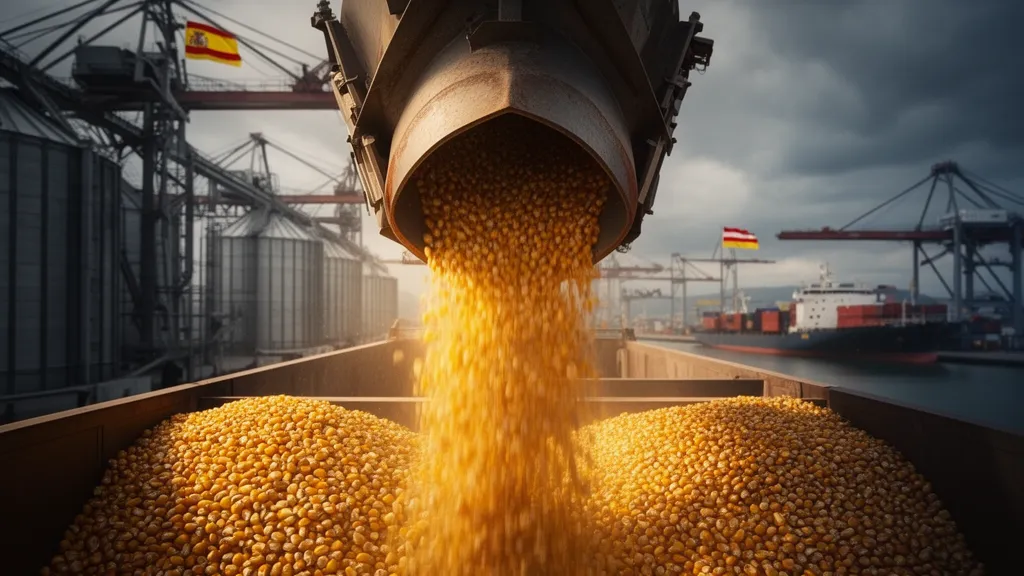
- Potential EU tariffs on US corn would affect only 300,000–400,000 tons, mainly Spanish imports.
- Historical EU practice is to exempt corn in trade disputes to protect Spain’s livestock and feed sector.
- Even in a tariff scenario, incremental demand for Ukrainian corn in the EU would be marginal.
- Overall impact on Ukrainian corn exports is assessed as neutral; traders should wait for concrete tariff details.
EU-US Trade Tensions and Corn Market Overview
Escalating political tensions between the United States and European Union over Greenland have increased uncertainty in agricultural markets, including corn. Washington has threatened 10% tariffs on a range of European goods, while Brussels is preparing potential retaliatory measures that could affect up to €93 billion in American business operations.
Within this broader framework, market participants are closely watching whether US corn exports to Europe could be targeted. Barva Invest estimates that any EU tariffs on American corn would put at risk approximately 300,000–400,000 tons of supply, concentrated largely in the Spanish market. This volume is relatively small in the context of both EU feed demand and Ukraine’s annual export potential.
Implications for Ukrainian Corn Exports
On the surface, reduced competitiveness of US-origin corn in Europe could open space for Ukrainian supplies. However, analysts stress that the real upside is “significantly smaller than it might initially appear.” Even a complete replacement of the at-risk US volume would represent only a marginal increase in Ukrainian exports to the EU.
The larger uncertainty is whether corn will be included at all in any EU retaliation list. In previous rounds of transatlantic trade disputes, Brussels has consistently avoided targeting corn, primarily to shield Spain’s intensive livestock and feed industries from higher input costs. This structural policy bias suggests that, despite public threats, corn may once again be exempted from punitive measures.
Market Assessment
From a market positioning standpoint, the current situation is best characterized as neutral for Ukrainian corn. The hypothetical gains from displaced US volumes are limited, and there is no clarity yet on the exact design of any EU tariffs. For now, speculation is driving sentiment more than concrete policy decisions.
Traders and hedgers should continue monitoring official EU communications and tariff lists rather than reacting solely to headlines. Until corn is explicitly included in any retaliatory package, expectations of materially higher Ukrainian exports to the EU remain premature.
Source: Market Data
Leave a Reply