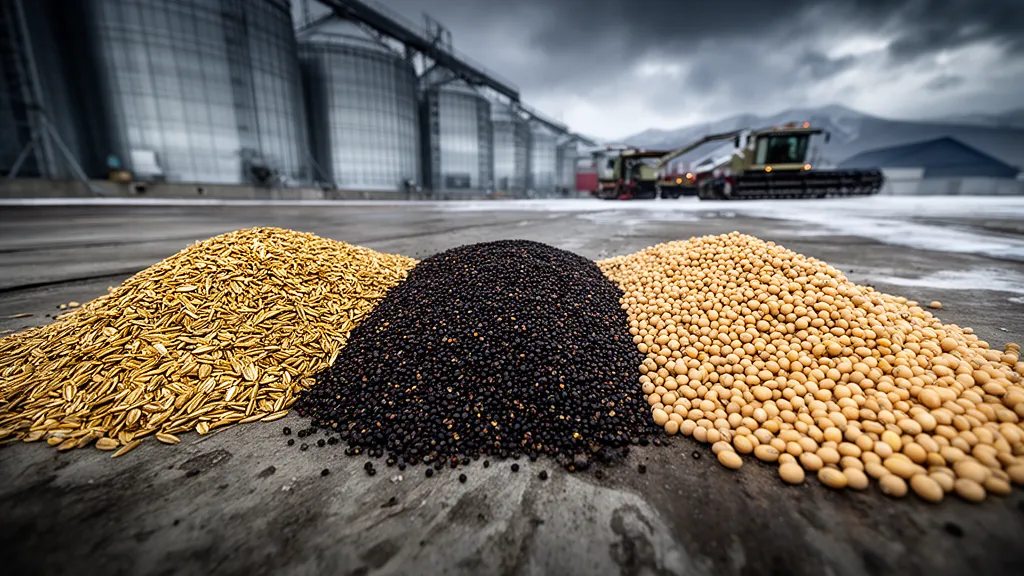
- Oilseed Growth: Russia’s total sunflower, rapeseed, and soybean harvest rose 10% year-on-year to 31.5 million tons in 2025, driven by strong gains in rapeseed and soybeans.
- Sunflower Constraint: Sunflower seeds output stagnated at 17 million tons (+0.6%), trimming its share of the total oilseed harvest from 59% to 54% and supporting a neutral-to-bullish price outlook.
- Siberian Rapeseed Surge: Rapeseed production jumped 19.6% to 5.6 million tons, with Siberian regions like Altai Krai and Novosibirsk Oblast recording increases above 48%.
- Soybean Expansion: Soybean harvest climbed 27% to 9 million tons, with Amur Oblast remaining the top producer and Altai Krai showing particularly strong growth.
- Market Implications: Tight sunflower supplies and expanding rapeseed/soybean output signal shifting regional trade flows and warrant close monitoring of crush margins and export availability through Q1–Q2 2025.
Russia’s Oilseed Harvest Overview
Russia’s 2025 gross harvest of major oilseeds (sunflower, rapeseed, and soybeans) reached 31.5 million tons, a 10% increase versus 2024, according to preliminary data from the RUSEED analytical center. Growth was concentrated in rapeseed and soybeans, while sunflower production remained largely flat despite record planting.
Production by Crop
| Crop | 2025 Harvest (million tons) | Y/Y Change | Share of Total Oilseeds |
|---|---|---|---|
| Sunflower seeds | 17.0 | +0.6% | 54% |
| Rapeseed | 5.6 | +19.6% | ~18% |
| Soybeans | 9.0 | +27.0% | ~29% |
| Total | 31.5 | +10.0% | 100% |
Sunflower seeds remained the largest component at 17 million tons but lost share in the total oilseed balance. Rapeseed and soybeans continued to expand rapidly, reflecting ongoing diversification away from traditional sunflower dominance.
Regional Breakdown: Sunflower Seeds
| Region | Sunflower Seeds (million tons) | Y/Y Change |
|---|---|---|
| Saratov Region | 2.3 | +11.0% |
| Orenburg Region | 1.9 | 0.0% |
| Altai Krai | 1.5 | +17.1% |
| Volgograd Oblast | 1.5 | +4.8% |
| Voronezh Oblast | 1.2 | +5.0% |
Despite expanded acreage, national sunflower yields underperformed, limiting output growth to just 0.6%. This stagnation, combined with firm domestic demand, supports a neutral-to-bullish stance on sunflower oil and meal prices from the Black Sea region.
Regional Breakdown: Rapeseed
| Region | Rapeseed (million tons) | Y/Y Change |
|---|---|---|
| Altai Krai | 0.5 | +48.8% |
| Krasnoyarsk Krai | 0.5 | +28.5% |
| Novosibirsk Oblast | 0.4 | +60.7% |
| Omsk Oblast | 0.4 | +56.7% |
| Total Russia | 5.6 | +19.6% |
Siberian regions led rapeseed expansion, underscoring the growing role of non-traditional producing areas. This shift could gradually alter internal logistics and export routes as infrastructure improves.
Regional Breakdown: Soybeans
| Region | Soybeans (thousand tons) | Y/Y Change |
|---|---|---|
| Amur Oblast | 1,740 | +22.7% |
| Kursk Oblast | 840 | +5.6% |
| Altai Krai | 750 | +67.1% |
| Tambov Oblast | 710 | +39.1% |
| Belgorod Oblast | 640 | +22.2% |
Soybean output reached 9 million tons (+27%), with Amur Oblast maintaining a dominant position. Strong growth in Altai Krai and other regions reflects both expanding acreage and improving yields.
Market Impact and Outlook
The disconnect between flat sunflower production and rapid growth in rapeseed and soybeans suggests near-term tightness in sunflower-based products, while overall oilseed availability remains comfortable. For Q1–Q2 2025, traders should monitor crush margins, domestic demand, and export program pace, particularly for Black Sea sunflower oil and meal.
Government-backed efforts to improve river transport and logistics from Siberia could, over the medium term, enhance the flow of rapeseed and soybeans toward Black Sea terminals and Asian markets. Until those projects materialize at scale, regional imbalances and internal freight costs will remain key drivers of basis levels and export competitiveness.
Source: Market Data
Leave a Reply