
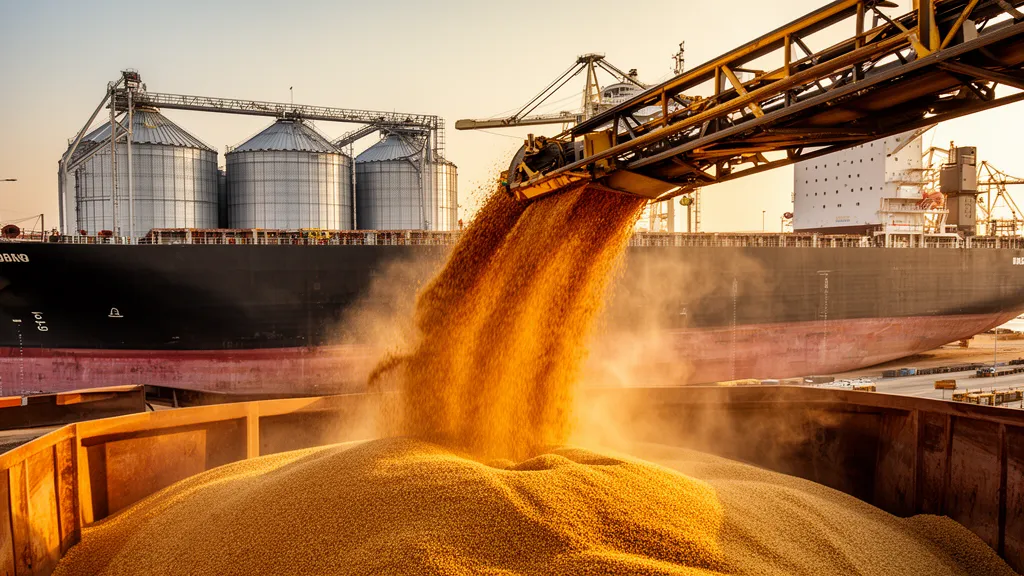
- Russian exports: January 2025 wheat exports projected at 2.8–3.0 million tons, up 12–20% year-on-year.
- Saudi demand: GFSA issues a 595,000-ton milling wheat tender (12.5% protein, any origin) closing January 16.
- Shift in buyers: Turkey and Iran sharply increase Russian wheat imports after domestic crop shortfalls.
- Competitive pressure: Bangladesh reduces Russian purchases amid stronger competition from Argentina, Brazil, and Australia.
- Market tone: Neutral to slightly bearish for Black Sea wheat as competitiveness erodes despite pockets of strong demand.
Russian Wheat Export Outlook
Russia is forecast to export 2.8–3.0 million tons of wheat in January 2025, compared with 2.5 million tons in January 2024, according to JSC Rusagrotrans. This represents a 12–20% year-on-year increase and signals a solid start to the calendar year despite broader headwinds.
From July to December 2025, Russian wheat exports reached 26.7 million tons, down from the record 29.7 million tons shipped during the same period in 2024. The 3 million ton decline underscores waning competitiveness versus alternative origins, even as Russia maintains a dominant presence in several key importing markets.
Key Importers and Volume Shifts
| Importer | July–Dec 2025 Volume (Mt) | July–Dec 2024 Volume (Mt) | Change / Multiple | Key Driver |
|---|---|---|---|---|
| Egypt | 5.10 | 5.50 | -0.40 | Stable demand, slight reduction in volumes |
| Turkey | 4.40 | ~2.00 | 2.2x increase | Weaker 2025 harvest after spring frosts |
| Iran | 1.70 | ~0.59 | 2.9x increase | Domestic crop decline, higher import reliance |
| Bangladesh | 1.45 | 2.23 | -0.78 | Switching toward Argentina, Brazil, Australia |
| Israel | 1.10 | n/a | n/a | Steady demand from Black Sea origins |
| Sudan | ~1.00 | ~0.45 | 2.2x increase | Rising import needs, stronger Russian presence |
| Total Russia (all buyers) | 26.70 | 29.70 | -3.00 | Reduced competitiveness vs. competing exporters |
Egypt remains Russia’s largest wheat buyer, taking 5.1 million tons in July–December 2025, down from 5.5 million tons a year earlier. Turkey has emerged as the second-largest importer with nearly 4.4 million tons, more than doubling its purchases on the back of a sharply reduced 2025 harvest following damaging spring frosts.
Iran has moved from eighth to third place among Russian wheat importers, increasing volumes 2.9 times to 1.7 million tons as domestic production declines. Bangladesh has slipped to fourth place with 1.45 million tons, down from 2.23 million tons, as it leans more heavily on Argentina, Brazil, and Australia. Israel ranks fifth with 1.1 million tons, while Sudan has increased shipments 2.2 times to nearly 1 million tons, reflecting growing reliance on Russian supply.
Saudi Arabia’s Wheat Tender
The General Food Security Authority of Saudi Arabia (GFSA) has launched a tender for 595,000 tons of hard-grain milling wheat with 12.5% protein content, of any origin. The tender closes on January 16, with delivery scheduled for April–May 2025.
The “any origin” clause opens the door to intense competition among Black Sea, European, and Australian suppliers. For Russian exporters, success in this tender will hinge on price competitiveness, freight dynamics into the Red Sea and Gulf ports, and quality alignment with GFSA’s specifications.
Market Implications and Trade Strategy
The overall tone for Black Sea wheat is neutral to slightly bearish. January’s projected export increase offers some support, but the 3 million ton year-on-year decline in July–December shipments points to erosion in Russia’s competitive edge. Turkey and Iran’s elevated import needs due to crop failures provide a critical outlet for Russian grain in the near term.
However, Bangladesh’s pivot toward Southern Hemisphere suppliers illustrates rising competitive pressure in price-sensitive destinations. Traders should closely track the outcome of the Saudi tender and subsequent pricing from Australian and European origins to gauge whether Black Sea wheat can maintain market share in key import programs through mid-2025.
Source: Market Data
Leave a Reply